by WorkSafe Saskatchewan WorkSafe Saskatchewan

Know Your Rights

A construction worker in an orange safety jacket watches the ongoing work at a construction site during the day

In heavy construction, every project comes with tight timelines, complex work sites and, at times, significant, but manageable, risks. Saskatchewan’s recent record-low injury rates show how far the province has come, but serious injuries and fatalities remain a challenge across the province.

As a result, WorkSafe Saskatchewan wants all workers to be aware of their rights on the job. That includes the right to work in a safe environment.

In 2024, the province recorded its lowest total injury rate in history at 3.91 injuries per 100 workers, down from 3.95 per 100 workers in 2023. Since the WorkSafe Saskatchewan partnership between the Saskatchewan Workers’ Compensation Board and the Ministry of Labour Relations and Workplace Safety was established in 2002, the province’s total injury rate has dropped by more than 65 per cent. The time-loss injury rate in 2024 also reached its lowest level in Saskatchewan’s history at 1.72 per 100 workers, down from 1.78 per 100 workers in 2023.

This data reflects the collective efforts of workers, employers, safety associations and safety leaders across the province. However, serious injuries remain high, averaging about 2,400 cases per year. They represent 11 to 15 per cent of all injuries, but account for approximately 80 per cent of compensation costs. Specific to the construction industry, from 2010 to 2024:

  • More than 51 per cent of fatalities were from occupational diseases in the construction industry.
  • 95 per cent of occupational disease fatalities in the construction industry were from exposure to asbestos.
  • 89 per cent of the public was not aware of the risk of asbestos exposure during home renovation work.

Learn more about commercial construction safety statistics on WorkSafe Saskatchewan’s website at worksafesask.ca/commercial-construction-stats. All workers in Saskatchewan are covered by three important rights that are intended to keep them safe on the job. Those rights are protected under the Saskatchewan Employment Act.

The right to know

If you are employed in Saskatchewan, you have the right to know about any safety hazards in your workplace. A hazard is anything that might cause an injury or illness. This knowledge is important in protecting yourself and your co-workers. As a worker, you have the right to receive the training, information and supervision needed to do your job safely. Your employer should provide you with instructions on how to stay safe before you start your job and before work begins on a new project.

Safety information, including training and instructions, can be given online, in writing or in person. The information and training may come from a supervisor, co-worker or someone outside of your workplace, but your employer must pay for all training that is part of your job. Clear communication is also a key component of the right to know. Your employer needs to give you the information you require to do your job safely in a way that you can understand. Ask questions whenever any safety instructions aren’t clear.

The right to participate

Each worker has the opportunity and freedom to get involved in their workplace’s health and safety activities. You have the right to share your concerns and ideas about how to make your workplace safer. If you encounter an unsafe situation on the job, this right gives you the opportunity to help rectify the situation, preventing injuries to you and your co-workers. There are several ways for workers to exercise their right to participate, including:

  • Reporting your concerns to your supervisor or manager about any health and safety issues that could cause harm to you or your co-workers.
  • Making suggestions to your supervisor or occupational health committee about how to make your workplace safer.
  • Joining your occupational health committee if your workplace requires one.
  • Acting as an occupational health and safety representative for your workplace if given the opportunity.

The right to refuse

Every workplace has hazards, most of which are not likely to cause serious injuries or fatalities. This right applies to the hazards that are considered unusually dangerous to yourself or others. An unusual danger or hazard could include:

  • A danger that would normally stop work, such as operating a forklift with a flat tire.
  • Something that is not normal for the job, like repairing a roof in bad weather with dangerous winds.
  • A situation you haven’t been properly trained for, or where you don’t have the right equipment or experience to do the work safely. For example, cleaning windows on a tall building without any training or fall protection equipment.

The right to refuse is only used when the first two rights have failed to protect your health and safety in the workplace. In other words, exercising your right to refuse is a serious matter and should not be taken lightly; it should be used as a last resort when other measures have been unsuccessful.

However, you should also not be afraid to speak up when you believe your work is unusually dangerous. If you or the people around you are at risk, you can say no. You absolutely cannot be disciplined or fired for exercising your right to refuse, as the right to refuse is protected under the Saskatchewan Employment Act. There are several steps to take when opting to refuse unsafe work, in this order:

  1. Stop performing the task. Tell your supervisor what you think is unusually dangerous about the task.
  2. Consult with your workplace’s occupational health committee if you and your supervisor can’t reach a solution.
  3. If the matter is still not resolved, contact the Ministry of Labour Relations and Workplace Safety’s Occupational Health and Safety Division at 1-800-567-7233. An occupational health officer will provide their decision in writing to you and your employer.
  4. If you don’t agree with the occupational health officer’s decision, you have a right to appeal.

Each year in Saskatchewan, approximately 21,000 workers are injured on the job. Working together, we can make Saskatchewan a safer place to work.

For more information on the three rights, including videos and other resources for workers and employers, visit the WorkSafe Saskatchewan website at worksafesask.ca.

by WorkSafe Saskatchewan WorkSafe Saskatchewan

Safer Workplaces for a Stronger Saskatchewan

Construction worker with a bandaged arm filling out paperwork
andreypopov/123rf

WorkSafe Saskatchewan, the injury prevention partnership between the Saskatchewan Workers’ Compensation Board (WCB) and the Ministry of Labour Relations and Workplace Safety, is calling attention to the strides made in improving workplace safety and the work still ahead to prevent injuries and save lives.

Today, Saskatchewan workplaces are safer than ever before. The total injury rate of 3.91 per 100 workers was a historic low in 2024, declining for the second straight year. In fact, since WorkSafe Saskatchewan was established in 2002, the total injury rate has dropped by more than 65 per cent. Similarly, in 2024, the province recorded its lowest time loss injury rate ever at 1.72 per 100 workers. For the fifth year in a row, 90 per cent of Saskatchewan workplaces reported zero injuries and zero fatalities.

“This new historic low in our total injury rate represents the focus and hard work of workers, employers, safety associations, safety leaders across the province and [their] labour to enable worker safety in Saskatchewan,” said Gord Dobrowolsky, WCB chair. “Safety starts with us on every job, every shift. It is our combined efforts that continue to reduce injury rates. While these numbers are heading in the right direction, even one injury is too many.”

In 2024, 27 workers lost their lives due to work-related incidents or illnesses. Each of these tragedies leaves behind grieving families, friends, coworkers and communities. Every year in the province, approximately 2,400 workers suffer serious injuries. Between 11 and 15 per cent of all claims in the province continue to be serious injury claims, which make up more than 80 per cent of the costs to the Saskatchewan compensation system.

For the fifth year in a row, 90 per cent of Saskatchewan workplaces reported zero injuries and zero fatalities.

“While workplace injuries and fatalities in Saskatchewan are decreasing, we must never forget that workplace fatalities still tragically impact spouses, children, families, workplaces and communities every year,” said Dobrowolsky. “This must drive us to continually work toward making workplaces safe for every Saskatchewan worker.”

To further the province’s efforts in eliminating workplace fatalities and serious injuries, in 2023, WorkSafe Saskatchewan launched the 2023-2028 Fatalities and Serious Injuries Strategy. The strategy is enhancing efforts to reduce injuries and fatalities through new regulatory, enforcement, prevention and learning initiatives. It is largely focused on three priority industries that include high-risk work: health care, transportation and construction.

“This strategy is playing an important role in helping us to implement initiatives that act to prevent injuries and fatalities, and enhance worker safety on the job,” said WCB CEO Phillip Germain. Learn more about the strategy at worksafesask.ca/fatalities-and-serious-injuries. “We are committed to ensuring safer workplaces in our province,” said Germain. “While safe workplaces are good for business, the most important part of every job is for each worker to come home safely.”

Continued collaboration between workers, employers, industry associations and government remains essential in creating safer workplaces for all. By strengthening prevention efforts, supporting safety leadership and prioritizing education and enforcement, Saskatchewan can continue to build on these historic gains.

by WorkSafe Saskatchewan WorkSafe Saskatchewan

Know Your Rights

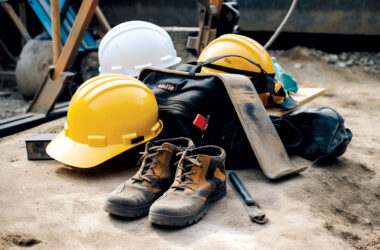
A pair of work boots, a hard hat, and a helmet on the ground of a construction site
liudmilachernetska/123rf

As Saskatchewan’s economy continues to grow, it’s important for all workers, especially those in heavy construction, to be aware of their rights on the job. WorkSafe Saskatchewan, the partnership between the Saskatchewan Workers’ Compensation Board and the Ministry of Labour Relations and Workplace Safety, is committed to ensuring that every worker knows their right to work in a safe environment.

In Saskatchewan, all workers are protected by three fundamental rights under The Saskatchewan Employment Act that are crucial for maintaining safety on the job.

The right to know

If you are employed in Saskatchewan, you have the right to know about any safety hazards in your workplace. Hazards in construction and trades can range from operating heavy machinery to working at heights. Being informed about these risks is essential to protect yourself and your fellow workers.

You also have the right to receive the necessary training, information and supervision to do your job safely. Before you start a job or begin work on a new project, your employer should ensure you understand how to work safely. Safety information, including training and instructions, can be provided online, in writing or in person. It might come from a supervisor, a co-worker or an external expert, but your employer must cover the cost of all job-related training.

Do not be afraid to speak up if you believe a task is too dangerous. Your safety and the safety of those around you are paramount. You cannot be disciplined or fired for refusing unsafe work.

Clear communication is key. Your employer must give you safety information in a way that you can understand. If any safety instructions are unclear, it is your right to ask questions until you fully understand how to perform your tasks safely. If you are unsure how to do a task safely, do not hesitate to ask for clarification or additional training. This right ensures that you can speak up whenever necessary, especially when you are assigned a new task, tool or material.

The right to participate

As a worker in heavy construction, you have the right to participate in your workplace’s health and safety activities. Your insights and observations can help make your workplace safer for everyone. There are various ways to exercise your right to participate:

  • Report any safety concerns that could cause harm to you or your co-workers to your supervisor or manager.
  • Offer suggestions to your supervisor or occupational health committee on how to improve workplace safety.
  • Join your workplace’s occupational health committee (if one is required).
  • Volunteer as an occupational health and safety representative if the opportunity arises.

The right to refuse

Construction sites and other trade workplaces inherently have hazards, but when a situation presents an unusually dangerous risk, you have the right to refuse to perform the work. An unusual danger could be something like:

  • Operating a crane or heavy equipment that hasn’t been properly maintained.
  • Working at heights without the necessary fall protection.
  • Undertaking a task for which you have not received proper training or where you do not have the correct equipment to do it safely.

This right allows you to refuse work that you believe is unusually dangerous to yourself or others. It is a protection enshrined in The Saskatchewan Employment Act, meaning you cannot be fired or penalized for exercising it. The right to refuse should be used when the other two rights – knowing and participating – have not addressed a safety issue. It is a serious step, but it is there to protect you and your colleagues when other measures have failed.

Clear communication is key. Your employer must give you safety information in a way that you can understand. If any safety instructions are unclear, it is your right to ask questions until you fully understand how to perform your tasks safely.

Do not be afraid to speak up if you believe a task is too dangerous. Your safety and the safety of those around you are paramount. You cannot be disciplined or fired for refusing unsafe work. If you decide to refuse unsafe work, follow these steps:

  1. Stop the task and inform your supervisor about what you believe to be the unusually dangerous condition.
  2. If you and your supervisor cannot resolve the issue, consult with your workplace’s occupational health committee.
  3. If the issue remains unresolved, contact the Ministry of Labour Relations and Workplace Safety’s Occupational Health and Safety Division at 1-800-567-7233. An occupational health officer will review the situation and provide a written decision.
  4. If you disagree with the occupational health officer’s decision, you have the right to appeal.

Each year, more than 21,000 workers in Saskatchewan are injured on the job. WorkSafe Saskatchewan is focused on ensuring the health, safety and well-being of all workers in the province, with the goal of working together to make Saskatchewan the safest place to work in Canada. 

For more information on your three rights, including videos and other resources, visit WorkSafe Saskatchewan at worksafesask.ca/know-your-rights-at-work. You can also reach out via email at worksafeinquiry@wcbsask.com.

by WorkSafe Saskatchewan WorkSafe Saskatchewan

Psychological Health and Safety in Construction

Workplace safety is evolving

Man sitting at desk wearing white hard hat, holding temples looking at laptop.
peopleimages12/123RF

In the bustling world of construction, where physical labour and stringent deadlines dominate the landscape, psychological health often takes a backseat. However, recognizing and addressing psychological health issues in the construction industry is not only crucial for the well-being of the workforce, but also for the overall productivity and safety of the industry.

Construction work is inherently demanding, involving long hours, physically strenuous tasks and often dangerous working conditions. Workers face constant pressure to meet tight deadlines, which can lead to high levels of stress. The nature of the job often requires employees to work in harsh environments, endure extreme weather conditions and operate heavy machinery, all of which contributes to physical and mental fatigue.

Moreover, the transient nature of construction projects can disrupt workers’ personal lives, leading to instability and a lack of consistent social support. Frequent relocations and time spent away from family can exacerbate feelings of isolation and loneliness, further impacting psychological health.

Global statistics paint a concerning picture of psychological health in the construction sector. The latest U.S. Bureau of Labor Statistics annual report on occupational injuries revealed a 7.7 per cent increase in construction fatalities and a 13.1 per cent increase in suicides in 2022 over 2021.

In Saskatchewan, from 2014 to 2023, the Workers’ Compensation Board (WCB) accepted 1,848 workplace psychological injury claims. In 2023, 235 workplace psychological injury claims were accepted, with 181 of those claims being time loss claims. Sadly, there was one fatality in the province, as a result of a psychological injury claim. These alarming trends underscore the urgent need for psychological health and safety awareness and support within the industry.

The implications of poor psychological health extend beyond the individual, affecting the overall efficiency, productivity and safety of construction projects. Psychological health issues can impair concentration, decision-making abilities and overall cognitive function. This can lead to increased errors, safety incidents and injuries on the job site, posing risks not only to the affected worker, but also to their colleagues.

Productivity also suffers when workers are grappling with psychological health challenges. Absenteeism and presenteeism (when employees are physically present, but mentally disengaged) can lead to project delays and increased costs. In an industry where deadlines and budgets are critical, the economic impact of untreated mental health issues can be substantial. One Prince Albert-based general contracting company has been focusing on building their psychological health and safety program.

“We see mental health in the workplace as the next logical step in our health and safety program,” said Keith Bird, internal operations manager at RNF Ventures. “We see this as an important part of the evolution of workplace safety. We just want to be part of it, if not out in front.” Bird says there are challenges to overcome in order to build an effective mental health program in this industry.

One of the biggest barriers to addressing mental health in construction is the stigma associated with it. The industry has long been characterized by a “tough guy” culture, where showing vulnerability is often seen as a sign of weakness. This cultural norm discourages workers from seeking help or even acknowledging their struggles.

“We see this as an important part of the evolution of workplace safety. We just want to be part of it, if not out in front.”

– Keith Bird, RNF Ventures

“I think there’s still a stigma out there. I compare a job crew to a sports team. The days of coaches ruling through fear and intimidation [have come] to an end,” said Bird. “We’re seeing the same thing in our industry. Workers aren’t afraid any longer to ask questions and challenge decisions. That helps eliminate the stigma.”

To combat this stigma, it is essential to foster an environment where mental health is openly discussed and prioritized. Employers and industry leaders must take proactive steps to create a supportive culture that encourages workers to speak up about their mental health without fear of judgment or repercussions.

“[Our] end goal would be that we’d have a situation in our workplace where we would have our guys feel comfortable with the people that they’re working with, or feel that it’s a safe enough space that if they’re having some difficulty, they could say, ‘Hey, you know guys this needs to change,’ or, ‘I need to do something different here.’”

Three years ago, WorkSafe Saskatchewan launched the psychological health and safety program on its website, worksafesask.ca. This program supports employer awareness and development of psychological health and safety knowledge.

In 2023, WorkSafe Saskatchewan launched its first community of practice for the construction industry in collaboration with Dr. Joti Samra of My Workplace Health and Merit Contractor Association. The group met every month in 2023 and used resources available through WorkSafe Saskatchewan to support RNF Ventures and another Saskatchewan construction company in developing an action plan to address key psychological health and safety issues in their organizations.

The WCB’s prevention team supported a research study in partnership with Ian Lewis, an occupational therapist and employee well-being practitioner based in Regina. The research published in Frontiers in Rehabilitation Sciences (frontiersin.org/journals/rehabilitation-sciences) in March 2024 identified powerlessness in a subtheme, “I’m not the same as I was, but I really don’t have a choice but to work.” One participant expressed this powerlessness as “my opinion and experience didn’t really factor in when I was on my road to wellness.” Study participants indicated that co-worker, supervisor and employer-level characteristics play an important role in helping workers return to work. Worker input into a return-to-work plan is critical to psychological well-being.

Bird says that the psychological health and safety program gives RNF Ventures a competitive advantage in the industry. “Our hope is that it makes our company better and … makes it a better place to work and … maybe that’s one of the reasons that we get a new hire,” he said.

The construction industry, with its unique set of challenges, cannot afford to overlook the importance of mental health. By breaking the stigma, implementing effective mental health initiatives and fostering a supportive work environment, the industry can not only improve the well-being of its workforce, but also enhance productivity and safety. It is time for the construction sector to build a foundation of mental health awareness and support, ensuring a healthier and more resilient future for all its workers.

“The communication alone that’s going on around mental health within the industry … it’s top of mind with lots of industry organizations,” Bird said. “You see people talking about it [and] that’s a big first step and I think I think we’re moving in the right direction.”

WorkSafe Saskatchewan is developing a mental health awareness campaign for the province, with a focus on supporting leadership to work toward reducing the stigma of mental health in the workplace. To learn more about the psychological health and safety supports that WorkSafe Saskatchewan offers, go to worksafesask.ca/resources/psych-health-safety-resource-centre.