by SHCA SHCA

Rowan’s Ravine Sees $10.7 Million in Road and Highways Improvements

One of Saskatchewan’s most popular provincial parks is seeing benefits from the Government of Saskatchewan’s $2 billion stimulus funding, thanks to $10.7 million in new paving and road improvements at Rowan’s Ravine Provincial Park and the highways leading to it.

“Highways 322 and 220 are essential gateways to those traveling to Rowan’s Ravine and the surrounding area,” said Highways Minister Fred Bradshaw. “These improvements keep our roads safe so that families and visitors can enjoy their time in our parks.”

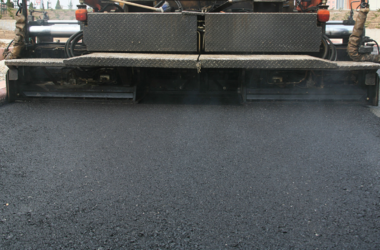
Work has been completed on Highway 322 from just north of the Glen Harbour access road to its junction with Highway 220, then on Highway 220 west to Rowan’s Ravine Provincial Park. Numerous paving improvements have also been carried out inside the park, including paving of the Underwood campground loops, boat launch and day use parking lot.  

“This was an incredible season for Saskatchewan’s parks as families got out and rediscovered our province’s natural beauty,” said Parks, Culture and Sport Minister Laura Ross. “I am grateful to Minister Bradshaw and the Highways Ministry for including park improvements in their work this summer.”

“COVID-19 has shown us that the best place to get away from it all is in our provincial parks,” said Last Mountain-Touchwood MLA Travis Keisig. “This infrastructure investment benefits all of Saskatchewan by getting people back to work and providing a better experience for all those who come and enjoy our parks.”

by SHCA SHCA

WCB Announces 2022 Preliminary Average Premium Rate

Last week, the Saskatchewan Workers’ Compensation Board (WCB) announced the 2022 preliminary average employer premium rate at $1.23 per hundred dollars of payroll, compared to the 2021 rate of $1.17. The announcement was made Oct. 13 at the WCB’s annual preliminary rate information meeting with Saskatchewan employers, workers and stakeholders.

To help mitigate this increase in the 2022 preliminary average premium rate, the board will set the preliminary average premium rate at $1.23, which is below what the rate model is requiring at $1.25.

“While this is a rate increase, the decisions we have made have allowed us to continue to have among the lowest premium rates in Canada,” said the WCB’s CEO Phillip Germain. “The two key drivers of the 2022 average premium rate are claim costs and payroll. The positive downward trend in claims experience over the past several years is flattening out and, in some cases, reversing. While the number of injury claims has gone down, inflation in claims-related costs, like healthcare, are increasing faster than payroll. This has put upward pressure on our premium rates in 2021 and 2022.”

Despite this year’s increase, Saskatchewan’s premium rates are likely to continue to remain among the lowest rates in Canada behind Manitoba and Alberta.

In 2021, the average premium rate was held at $1.17, below the required $1.23, to help lift pressure on employers due to the COVID-19 pandemic. Not charging the required premium rate in 2021 and 2022 will save employers about $13.4 million in 2021 and $3.3 million in 2022. The 2022 preliminary average premium rate is the first increase to the average premium rate since 2004.

While 90 per cent of employers achieved Mission: Zero in 2020, the WCB has been advising employers over the last couple of years that they could expect to see increases in the Saskatchewan premium rates if serious injuries, fatalities and durations did not improve. For the past several years, serious injuries accounted for approximately 12 per cent of total injuries, but more than 80 per cent of compensation costs. Learn more about WorkSafe’s Fatalities and Serious Injuries Strategy at www.worksafesask.ca/prevention/serious-injuries-and-fatalities/.

“We recognize the difficult economic situation employers faced in 2020 and many are continuing to face in 2021 as we slowly begin to recover and adjust to the new pandemic norms,” said Germain. “Economic and investment market uncertainty, a consistent number of serious injuries and fatalities, and increasing healthcare costs are putting this pressure on premium rates. However, recent positive economic announcements in agriculture, construction, government and mining have signaled that 2022 is likely to be more positive than 2020 and 2021.”

With the 2022 rate proposal:

  • The overall 2022 proposed average employer rate will be $1.23 per hundred dollars of payroll.
  • Actual industry premium rates for approximately 95 per cent of Saskatchewan’s employers covered by the WCB will increase next year.
  • Actual industry premium rates for approximately five per cent of Saskatchewan’s employers covered by the WCB will see a decrease or no change for 2022.

Despite this increase in 2022, there are ways employers can influence their premium rates. Industry premium rates are affected by the degree to which employers in an industry are able to eliminate workplace injuries. In early 2021, the WCB launched its Business Transformation Program, which is focused on how the organization serves its customers and will transform every major aspect of the organization as it relates to the WCB’s people, processes and technology. Through the program, the WCB is working with customers, employers’ associations, labour organizations and safety associations to further reduce durations and serious injuries, as well as improve customer service. With a fully functioning safety program and a solid return-to-work program, employers can help prevent and manage work-related injuries. 

“With 90 per cent of employers achieving Mission: Zero in 2020, it’s evident that Saskatchewan workers and employers are focusing their attention on safety efforts and creating safer workplaces in the province,” said the WCB’s chair Gord Dobrowolsky. “But we know there is still more work to be done to eliminate fatalities, injuries and suffering. As the economy continues to ramp up, let’s all focus on getting this work done on time, on budget and without injuries.”

by SHCA SHCA

Meet in Maui 2022

Save the date!

The Road Builders of the West are heading back to Maui and you’re invited! Meet in Maui 2022 Conference will be taking place at the Wailea Beach Resort in Maui, Hawaii, Feb. 6–10, 2022. 

Registration will be opening soon. Click here for more information about the Meet in Maui conference!

by SHCA SHCA

SUMA Convention 2022: Connect

The Saskatchewan Urban Municipalities Association (SUMA) is excited to announce the return of its in-person convention for 2022 – with a bit of a twist. 

The SUMA Board of Directors approved the Convention Planning Committee’s proposal to move convention from February to April for 2022 and beyond.

Convention 2022 will be held in Regina from April 3–6. 

The 2022 SUMA Convention will be a full in-person event, with the theme Connect. Connect with your council, connect with your peers, connect with SUMA, connect with vendors at our Municipal Marketplace, and connect with provincial leaders.

For more information and to book your hotel room, click here.

by Shantel Lipp Shantel Lipp

Construction Safety Associations: Critical to Industry Safety

Safe and healthy workplaces matter to industry.

Industry is most qualified to identify current hazards in their workplaces that could lead to injuries and to determine best practice to prevent injuries. Industries at higher risk of injuries, such as heavy construction, demonstrate safety is a priority by maintaining safety associations to support workplaces. 

Practical and relevant safety training as well as advice and support is developed and delivered by these safety associations. These services are based on direct knowledge that industry provides these associations. Saskatchewan is fortunate to have seven safety associations, including the Heavy Construction Safety Association of Saskatchewan.

As a Saskatchewan Heavy Construction Association member, you should know about recent changes by Saskatchewan’s Workers’ Compensation Board (WCB). These changes undermine the work and credibility of the province’s industry safety associations. 

Agreements about the delivery and accountability of funding as well as WCB’s requirements of these associations are being reinterpreted and revised. This has the potential to radically change the nature and purpose of safety associations in Saskatchewan as well as the role of the WCB.

I am working closely with these safety associations so that we can preserve them as well as industry’s role in developing relevant and effective safety training. Through our research, we have mapped out the moves being made by WCB that undermine the safety associations. These moves are primarily around funding, but also include presenting safety data and injury numbers without including necessary context. (That context would reveal WCB’s indirect knowledge of industry. Its decisions and actions based on indirect industry knowledge impact safety outcomes.)

As safety leaders, our group’s advocacy efforts with government are not just defending the safety associations. We are on the offense, proposing our own vision for the organization and administration of safety in Saskatchewan, including enforcement.

Industry organized, sponsors and funds these safety associations so the resources that workplaces need to maintain and improve safety on worksites exists. These safety associations provide valued guidance and support to workplaces, and I ask you to keep this issue in mind as you prepare for 2022’s work season.