by SHCA SHCA

The SHCA Hot Seat

1. Where are you from?

I am from Langham, Sask., born and partially raised here. I now have a wonderful family (wife and two kids) firmly rooted in this community that we are happy to call home.

2. How did you get your start in the heavy construction industry and/or what do you credit to getting you where you are today?

Road construction has always been a way of life for my family. I am a third-generation road builder and got my start picking stones and staking up grid roads at the age of 10. The encouragement, leadership and support of grandparents, parents and others in our family business has fostered in me a love for dirt, business and people.

3. What is your career history?

From the age of 10 years old, I have been an earthmover with Nemanishen Contracting Ltd. As the years have gone by, my roles have changed, but my love for our company and what we do has not.

4. What’s the best piece of business or career advice you have or have been given?
Your integrity is one of the most valuable things you can give to your business. A reputation of honesty is tough to gain and easy to destroy. As C.S. Lewis aptly put it, “Integrity is doing the right thing when no one is watching.”

5. What’s your favourite thing about Saskatchewan and working in the industry?
Although I have enjoyed a great deal of things in this industry over the years, getting to know and work with other companies and the satisfaction of completing a challenging project would certainly have to be at the top of the list.

6. What is your greatest extravagance?

I take particular enjoyment in a fine glass of scotch – the subtle orange zest finish of one to the sea salt and peatiness of another. I can’t think of many better ways to enjoy an evening than sitting back in the recliner to watch a game of pigskin with a glass of Glenmorangie Signet in hand.

7. What is the quality you most like in a person?

I appreciate a person who builds their life around humility and integrity. I believe these two traits emulate a selfless individual that is willing to place others before himself.

8. Who is your favourite writer?

W.E.B. Griffith would have to be one of my favourites. His attention to detail when he recounts historical events and times in his novels brings the pages to life.

9. Where would you most like to live?

Amongst the many great places around the world, I think one of the most amazing locations to live would be Tuscany, Italy. Tuscany encompasses such a laid-back atmosphere along with food, art, history and ambiance. “Mangia bene, ridi spesso, ama molto” – Eat well, laugh often, love much!

10. What is it that you most dislike?

I find it ironic that as much as I enjoy food, I despise mushrooms. This is indeed a shame as the individuals who like them seem to love them. Alas, maybe one day my palate will change for the better.

by SHCA SHCA

Government of Saskatchewan Completes Year Two of $100 Million Intersection Safety Strategy

The Government of Saskatchewan has completed $40 million in highway safety improvements all over the province since 2019. This marks year two of a five-year, $100 million strategy to improve safety at intersections and highways in Saskatchewan.

“Our government made a commitment to make significant investments in intersection safety,” said Highways Minister Fred Bradshaw. “I am pleased to see the progress that has been made in the first two years of this strategy and look forward to much more in the next three.”

After the tragic Humboldt Broncos bus crash, the Government of Saskatchewan made a commitment to review every intersection in the province. That review is now complete and safety improvements are being made all across the province as a result. This includes at the intersection of Highway 35 and 335, where all but two of the 13 safety recommendations made by an independent traffic safety engineer are complete. The two remaining recommendations are scheduled for completion in 2021.

“These investments mean a lot to our members,” said Saskatchewan Trucking Association executive director Susan Ewart. “Improved intersections and highways contribute to an overall climate of road safety in Saskatchewan.”

Some of the completed road safety projects include:

  • Intersection improvements at:
    • Highway 1 and Kalium Road, west of Regina
    • Highway 3 east of Prince Albert
    • Highway 11 and Davidson South Commercial Access
    • Highway 20 at Lumsden
  • Intersection and lighting improvements at Highway 21 and Highway 307
  • Pedestrian crosswalk improvements on Highway 155 in Buffalo Narrows
  • Railway crossing warning system upgrade on Highway 14 east of Biggar
  • Pedestrian crosswalk improvements on Highway 55 at Flying Dust First Nation
  • Numerous intersection sight triangle improvements

The Government of Saskatchewan is meeting its target of improving more than 1,000 km of provincial highways this year, the first of its 10-year Growth Plan goal to build and upgrade 10,000 km of highways. Another $300 million in highways stimulus funds is being invested over the two years in thin-membrane surface upgrades, passing lanes and improvements to municipal roads and airports.

The Government of Saskatchewan has invested more than $9.8 billion in highways infrastructure since 2008, improving more than 15,800 km of Saskatchewan highways.

by SHCA SHCA

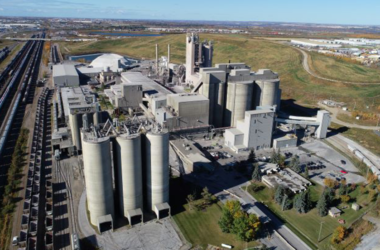
Lehigh Cement Develops a Sustainable Blended PLC for the Canadian Prairies

Lehigh Hanson is pleased to announce the launch of EcoCem®PLUS at its Edmonton cement plant in Alberta. EcoCem®PLUS is an innovative blended Portland Limestone Cement (PLC) available in Alberta, Saskatchewan and Manitoba.

Lehigh’s latest cement product provides strength and durability while significantly reducing the carbon footprint in concrete. Along with supporting the company’s vision of sustainable cement and concrete, EcoCem® PLUS provides the following benefits to its consumers:

  • EcoCem®PLUS is produced by inter-grinding clinker, fly ash, limestone and gypsum
  • Combining materials at the Edmonton cement plant provides the highest level of quality control and assures our customers, engineers and end-users consistent proportions
  • EcoCem®PLUS outperforms traditional HS cement in resisting sulphate attack, a common concern found throughout the prairies. Designated as HSLb by CSA (High Sulphate Limestone Blended), its superiority makes it ideal for use in most applications. 
  • All-in-one product reduces the need for additional silos and coordination of multiple deliveries at concrete plants and project sites
  • Through Lehigh’s strong network of terminals and raw material supply, EcoCem®PLUS provides customers a stable supply of cement and fly ash
  • Environmental Product Declaration (EPD) for EcoCem®PLUS clearly states the immediate reduction in Global Warming Potential (GWP) versus other types of cement

“The motivation behind the EcoCem brand of products is to reduce the embodied carbon of cement and concrete,” said Shawn McMillan, vice president, Cement for Lehigh Hanson’s Canada Region. “The introduction of EcoCem®PLUS to the prairie market builds on our commitment to providing environmentally responsible types of cement that deliver excellent performance while dramatically reducing CO2 emissions.” 

HeidelbergCement, Lehigh Cement’s global parent company, has committed to reducing 30 per cent of its carbon emissions by 2025 and providing carbon-neutral concrete by 2050. EcoCem®PLUS is the latest of several new products recently developed to help achieve those goals.

by SHCA SHCA

Clifton Associates Selected as Lead Engineering Team for First Stage of Lake Diefenbaker Irrigation Expansion Project

Regina-based Clifton Associates Ltd. has been selected to begin engineering work for the Westside Irrigation Project. 

Clifton was selected after successfully completing a two-staged transparent procurement process consisting of a request for qualifications and a request for proposals. Clifton’s work will encompass the first stage of the Lake Diefenbaker Irrigation Expansion – the largest infrastructure project in Saskatchewan’s history, which is being undertaken in order to double the amount of irrigable land in the province.

“This is an important step forward to realizing the irrigation potential of Lake Diefenbaker,” said Minister Responsible for SaskBuilds and Procurement Jim Reiter. “Our government looks forward to the commencement of the first phase of this generational project.”

Clifton’s team will start work immediately to complete the overall engineering preliminary design for Phases 1 and 2. Their work is expected to take 12 to 18 months, and will inform the next phases of work, including:

  • Preliminary engineering design for Phases 1 and 2
  • Geotechnical, soil suitability and geographical mapping
  • Environmental consulting services
  • Playing a central role in the extensive consultations with First Nations and other stakeholders, which will also start in the near future

“As prime consultant, Clifton is proud to lead the Saskatchewan-based Westside Irrigation Canal Project engineering team in association with Stantec and Associated Engineering,” Clifton Associates Ltd. CEO Wayne Clifton said. “Our team has deep Saskatchewan roots; each firm brings more than four decades of successful delivery of major projects in this province. We are delighted to be a part of this legacy project that will further reinforce Saskatchewan’s position as a leader in global food security while building on the vision made possible by the creation of Lake Diefenbaker a half a century ago. We look forward to continuing the tradition of prairie innovation – applying Saskatchewan talent to deliver a legacy project for the people of Saskatchewan.”

Clifton has spent more than a decade intensively involved in a variety of irrigation studies within Saskatchewan. They are among the most experienced engineering firms across Western Canada and have delivered on other large-scale infrastructure projects in the past. Clifton provides a strong team to review the environmental scope of the work required to complete the initial stages of the necessary provincial and federal regulatory approvals and permits. There will be careful assessment of potential impacts to environmental protection, downstream users and communities, including consultations with First Nations and other stakeholders as part of the process.

Announced in July 2020 by Premier Scott Moe, the Lake Diefenbaker Irrigation Project is expected to double the amount of irrigable land in Saskatchewan, a significant step to completing goals set out in the 2030 Growth Plan.

Phase 1 of the Lake Diefenbaker Irrigation Expansion Project will include the rehabilitation and expansion of the existing Westside irrigation canal system, increasing irrigable land in Saskatchewan by 80,000 acres. Phase 2 will further expand and buildout the Westside Irrigation Project, adding an additional 260,000 acres of irrigable land. Phase 3 will see the buildout of the Qu’Appelle South Water Conveyance Project, adding an estimated 120,000 acres of irrigable land.

The Lake Diefenbaker Irrigation Expansion Project is expected to offer several future benefits, including:

  • An estimated $35.5 to $83 billion increase in the Province’s Gross Domestic Product over the next 50 years
  • Up to $20 billion in tax revenues to support public services including health, education and social services
  • An estimated 2,500 jobs per year during the 10-year construction phase.
by Shantel Lipp Shantel Lipp

Gearing Up for a Busy 2021!

With the start of a new year often comes a feeling of optimism. We are starting fresh and putting the difficult year that was 2020 in our rear-view mirror.

Our industry was one of the few that weathered the storm and persevered through some challenging times. Yes, many of us adapted to changes and altered our routines to meet new health and safety guidelines to keep working through government-issued shutdowns and to keep our employees healthy.

Our hope is that a new year brings a semblance of normalcy back to our lives, both at work and at home. We already can look forward to a busy year ahead. If there was a positive to pull from last year it was several big-ticket projects are planned for our province over the next few years.

Saskatchewan will likely be the main beneficiary in a $10-billion commitment from the federal government to support irrigation projects in the prairies. This infrastructure plan will span the next three years, with approximately $1.5 billion expected to result in 700,000 acres of irrigated land. It’s expected to create close to 60,000 jobs.

The Lake Diefenbaker irrigation project is a top candidate to receive much of this federal support. And we should expect to play a major role in the development of this project for years to come.

Combine this funding from the federal government with a record $437.4 million in tendered projects announced last summer by the provincial government. That’s a full plate for our members.

Early in 2020, we heard Premier Scott Moe say, “Over the next two years, our government will invest $7.5 billion dollars in…highways, municipal infrastructure and other important capital projects designed to build a strong Saskatchewan.”

Obviously, this is great news for our industry as it assures there’s work to be done for the foreseeable future.

This funding represents a $2 billion increase over the government’s existing capital plan. The resulting projects are expected to support 10,000 jobs. More than $300 million of the funds are intended for highway projects, including surface upgrades and passing lanes, with almost $50 million dedicated to upgrades to municipal roads and airports.

The pandemic that still lingers today wreaked havoc on global economies. The road to economic recovery here and across the country starts with our industry.

Here’s to a busy season for our members and a prosperous and healthy new year!

by SHCA SHCA

Canadian Construction Association calls on members to stay vigilant amid rising COVID-19 cases

With COVID-19 cases on the rise, new strains cropping up and a slower than hoped rollout of vaccines, it is essential to remain vigilant and follow worksite health and safety protocols as well as general public health measures, says the Canadian Construction Association (CCA).

The health, safety and wellbeing of our workers and the communities in which we operate has always been the top priority of the more than 20,000 member firms of CCA.

“We are proud of our industry and the firms of all sizes who quickly adapted and consistently implemented health protocols across Canada,” said Mary Van Buren, CCA president. “This pandemic highlighted the value of past infrastructure investments, including maintenance, that ensured that the increased volume of goods, food and medical supplies moved efficiently across our roads and bridges, that we could work from home because of broadband connectivity, that we have clean water to drink and for hygiene and that we have hospitals where we receive excellent care.” 

The Canadian construction industry already has in place and implements highly disciplined health and safety protocols on construction sites and at manufacturing facilities. Companies have significantly amplified these by adhering to CCA’s COVID-19 Standardized Protocols for All Canadian Construction Sites. CCA and our partner associations have a wealth of resources available to member firms to assist them during the pandemic.

“It is vital to Canada’s health and economy that our strong track record of safety in the first wave continues into this second and potentially more challenging wave,” said Van Buren. “I know many of us are frustrated by this long road, are experiencing pandemic fatigue, and making personal sacrifices. Together, we can stay the course so that Canadians continue to benefit from the essential work and services provided by construction. There is light at the end of the tunnel.”

With cases steeply rising and ICU units reaching full capacity in some locations throughout Canada, there is also a growing urgency around following general health guidelines and other government measures to prevent the spread of COVID-19, such as eliminating all non-essential travel, wearing a mask in public, getting a flu shot, limiting your contacts and washing your hands frequently. 

The construction sector is one of Canada’s largest employers. The industry, 70 per cent of which are small and medium-sized enterprises (SMEs), employs more than 1.4 million Canadians and contributes 7.5 per cent of Canada’s Gross Domestic Product. The risk is high if we do not maintain our vigilance in the fight against COVID-19.

by SHCA SHCA

Major Updates Coming in 2021 to SHCA’s Website!

Keep a close eye on www.saskheavy.ca in 2021 – big changes are on the way!

SHCA is working hard to update its current website to an all-new format, which will include new sections and benefits for SHCA members.

The new website will feature a Road Builder Hall of Fame, honouring long-time SHCA members and the impact they’ve had on their communities; a new open-access member services directory that will allow site users to search SHCA members for products and services they require; a new, dedicated section to Think BIG magazine, including the digital archives; and more.

We’re excited to be working on this project and the value that it will bring to the association and our members!