by SHCA SHCA

Infrastructure Investments Support Canada’s Future Strength

Takeaways from the Saskatchewan Chamber of Commerce’s Business Conference


By Martin Charlton Communications

Canada is at an inflection point and, if our nation is going to keep up in the world, we’ll have to make some important choices that will determine the quality of life that future generations will enjoy in this country, according to Goldy Hyder, speaking to a crowd of business leaders gathered in Regina.  

Hyder is the president and CEO of the Business Council of Canada. He spoke at the Saskatchewan Chamber of Commerce’s Business Conference in May, delivering a presentation titled, “Building Our Future: A Call to Action.”

The Business Council of Canada supported and contributed to the report by the Canada West Foundation (CWF), From Shovel Ready to Shovel Worthy: The Path to a National Trade Infrastructure Plan for the Next Generation of Economic Growth. The Western Canada Roadbuilders and Heavy Construction Association (WCR&HCA) helped initiate the report, which was endorsed by numerous associations and organizations concerned with the current investment, the lack of coordination (and planning) on a long-term strategy and the state of the federal trade corridors fund. 

When the Shovel Ready report was released last year, Hyder said, “Strategic investments in infrastructure – including roads, bridges, airports, rail lines and port facilities – are essential to helping businesses compete, grow and create more jobs for Canadians.

“In a world where our supply chains are increasingly exposed to geopolitical risks, Canada needs strong transportation and trade corridors so that it can supply the world with the products it needs to achieve both our economic and environmental goals,” said Hyder.

During his speech in Regina, Hyder said the world will not wait for Canada. He explained his appreciation for Western Canada, where “you can see the economy in action” with people working hard to produce fuel, fertilizer and food to supply the world. He described Western Canadian people as those who solve problems and bring about positive change. There is a bounty available across the prairies, he said, pointing out the potash, oil and gas, uranium and agricultural technology that is produced here.

Hyder is concerned about how we move those goods through the country and beyond to the world markets, and he wonders whether it is possible to build and support all the infrastructure required by the country to be competitive on the world stage – the highways, bridges, ports, rail terminals, electrical grids and more. He described this infrastructure as forming “the arteries of our economy” and being the “heart and soul of moving things around.”

“In a world where our supply chains are increasingly exposed to geopolitical risks, Canada needs strong transportation and trade corridors so that it can supply the world with the products it needs to achieve both our economic and environmental goals.”

– Goldy Hyder, Business Council of Canada

Constructing this infrastructure creates well-paying jobs, not just during construction but also after, due to the trade that construction enables. Those present at the conference were reminded that Canada is a trading nation, with 60 per cent of our gross domestic product (GDP) relying on trade. Hyder pointed out how what is produced in one province also generates  the GDP of at least one other province in the country, creating jobs across jurisdictions. He said we must continue to ask ourselves if we can get our goods to market efficiently and effectively and whether the commitment to do massive energy projects (that will allow for a low carbon future) is there.

Canada’s recent track record isn’t sending a confident message to the world, Hyder said. He pointed out the visit by German Chancellor Olaf Scholz in August 2022. Germany was concerned about its population being able to warm their homes because of the country’s dependence on Russian natural gas and the invasion of Ukraine. Germany needed to determine which country shared its values and had the resources and capacity to successfully make a trade.

Canada was its first choice, but Hyder said that rather than focus on delivering the liquefied natural gas (LNG) Germany needed, the federal government wanted to look at the future by discussing hydrogen, which would be available in an estimated three years. 

That decision, he said, overlooked Germany’s immediate need to secure LNG because a cold winter was months away. So, Germany found what it needed in Australia, signing a 16-year agreement (which Hyder said showed that Germany does not agree hydrogen will be a viable option within the timeframe Canada proposed).

Canada’s focus on a carbon-free future – and projects to support that – has created a gap. Hyder said Canada must recognize that there is a real need for energy now that can’t be backfilled with renewable energy options anytime soon, making a transition period necessary. While it is important to look at where the puck is going, Hyder said you should also know where it is now and take advantage of both opportunities. 

Hyder encouraged business leaders to speak up about the challenges they face that the government has a role in addressing – labour shortages, approval delays and more – and how those challenges are limiting growth, which has an impact on communities and the population.

That situation with Germany sent a message to Canada’s allies: we are not prepared to supply them. Hyder said Japan has urged Canada to play a role in its energy needs while a senior government official in Korea has wondered if our country is choosing to hoard the energy products needed by the world to move towards decarbonization. Other diplomats have expressed similar confusion about Canada, Hyder said.  

One reason for this is our difficulty getting our products to market. 

Permitting at the federal level has also caused issues for those trying to develop projects, including those producing green energy. Hyder described the Bay of Fundy project that Sustainable Marine halted because of federal bureaucracy. This project’s technology worked to generate power from the energy of the world’s highest tides to put into Canada’s electrical grid. Millions of dollars were invested, and millions of federal tax dollars in funding were secured for the project. 

There were, however, concerns at the federal level about the technology’s potential to harm marine species, which baffled Sustainable Marine. Hyder said a lack of transparency and no regulatory pathway at the federal level led the company to suspend the project. 

Permitting is a major concern of those investing in projects in Canada and could become even more critical if the U.S. achieves what it has planned.

Permitting is a major concern of those investing in projects in Canada and could become even more critical if the U.S. achieves what it has planned. Hyder relayed what he heard from the president and CEO of the U.S. Chamber of Commerce, Suzanne Clark. During a visit to Ottawa, Clark described how the U.S. is aiming to approve most projects in seven years while complex projects could take up to 10 years to be approved. 

That would put incredible pressure on Canada to react because otherwise capital is going to funnel to the U.S. to develop infrastructure there. That is not a political decision, but a business one, Hyder said. Investment flows to where there is the least resistance and projects form there. Those who miss out on this investment also miss out on the taxes that would have been paid, the social programs that would have been supported and the jobs that would have been created.  

He pointed out Canada’s earlier reputation of being great at building major projects that helped to modernize and advance our economy so that we could provide a quality of life that attracted people from around the world to want to locate here. The examples he provided opened within the last 65 years.

For example, the Trans-Canada Highway opened in 1962 to become one of the world’s longest highways, passing through all the provinces. The Montreal-Lake Ontario Section of the St. Lawrence Seaway was completed in 1959. The Trans-Canada pipeline – carrying natural gas across Alberta, Saskatchewan, Manitoba, Ontario and Quebec – was the longest in the world until the 1980s. Developing that infrastructure was vital to having a unified country. Hyder questions whether there would be 10 countries instead of one if Canada was founded today. 

He encouraged the business leaders listening to ask if we have the vision to build modern infrastructure that connects supply chains to move goods, lowers carbon emissions, supports job creation and ensures our economy continues to grow. He said the federal government is making statements that building big matters and permitting must be more efficient to allow projects to move ahead faster, to decarbonize and develop critical mineral projects. 

The Business Council of Canada had high hopes for the 2023 federal budget, and it said the federal government will propose steps to ensure effective reviews of major projects that support the growth of Canada’s clean economy, while upholding high standards for the environment. This included a plan to improve the efficiency of the impact assessment and permitting processes. Many in business agree that these steps need to be taken but are now waiting for actions to confirm that will occur, Hyder said.

Practical ideas for how the government could address this are in a Business Council of Canada report, titled Innovate, compete and win: A roadmap for Canada’s energy transition. The report sets out how the public and private sectors can work together on the most critical elements that will drive the country’s economic and environmental security.

It points out the case for fast-tracking projects that are in the national interest and meet one or more of the following criteria:

  • Contribution to global energy security
  • Ability to substitute Canadian products for more greenhouse gas (GHG)-intensive options in importing countries
  • Low-carbon fuel production (e.g., hydrogen, renewable natural gas, biofuels and uranium)
  • Electricity transmission within and between provinces that would lead to a net decrease in GHGs
  • Development of low-carbon electricity (e.g., renewables, nuclear, battery storage, pumped hydro)
  • Critical mineral mining and processing facilities
  • Projects that are Indigenous led, have an Indigenous ownership component or have Indigenous support based on early engagement by the proponent

The private sector is leading with major employers committing to being net zero by 2050, according to Hyder. While not all have completely worked out what they will do to achieve net-zero, there are many interested in supporting the innovation required to meet that goal. Canada has the capacity and know-how within the energy and natural resource sectors, which have already proven we can lead the world in innovation, he said.

There is leadership in action within the private sector, but they need willing partners in the public sector to expedite projects to benefit all Canadians by providing a more predictable regulatory process. That includes one review per project rather than requiring multiple reviews by various levels of government or provinces, Hyder said.

He explained the need for provinces to discuss their interdependence. For example, Saskatchewan depends on British Columbia’s ports to export its commodities. Saskatchewan has an interest in port expansion because without it, what it is producing will be exported through the U.S., which means handing over the decision about when those commodities will be sent out to another country.  That, Hyder said, is “outsourcing our sovereignty.”

Canada should be developing the infrastructure needed to lead growth, Hyder said, instead of a cycle of infrastructure catching up to growth. That infrastructure needs to support trade – both exports and imports – while also modernizing so we have the digital infrastructure the rest of the world is adopting. 

Hyder encouraged business leaders to speak up about the challenges they face that the government has a role in addressing – labour shortages, approval delays and more – and how those challenges are limiting growth, which has an impact on communities and the population. Business leaders need to speak up because they can’t wait for academics, which take years, and media to point out the problems. Politicians need to be reminded of the positive impacts of businesses – including generating tax revenue that supports healthcare and education, said Hyder.

He has faith that the Canadian population is prepared for an intelligent conversation about these concerns and that, by framing the conversation around what is fair and what supports this country, maintaining its sovereignty will help people focus on what matters to bettering our future. 

by SHCA SHCA

News From the Field

Sharing news that SHCA members need to know

CAA 2023 top 10 worst roads

From April 4 to 25, 2023, Saskatchewan road users – including pedestrians, motorists, cyclists, transit riders and motorcyclists – nominated and voted for their worst, unsafe roads. The common safety concerns for worst, unsafe roads are crumbling pavement, potholes, lack of maintenance or repair, congestion, not enough signage and poor infrastructure.

Here are the CAA 2023 Top 10 Worst Roads:

  1. Saskatchewan 44, Eston
    Major problem: Potholes
  2. Saskatchewan 30, Eston
    Major problem: Potholes
  3. Coteau Street West, Moose Jaw
    Major problem: Potholes
  4. Highway 13: Redvers
    Major problem: Potholes
  5. Saskatchewan 5, Buchanan
    Major problem: Poor road maintenance
    (#5 in 2022 CAA Worst Roads campaign)
  6. Butte Street, Pilot Butte
    Major problem: Potholes
  7. Saskatchewan 9, Whitewood
    Major problem: Potholes
  8. Saskatchewan 123, Petaigan/Ravendale/Pemmican Portage
    Major problem: Potholes
  9. Highway 9, Hudson Bay
    Major problem: Potholes
    (#3 in 2022 and 2021 and #5 in 2018 CAA Worst Roads)
  10. Old Highway 35, White Fox
    Major problem: Potholes

A total of 292 roads were nominated and voted on during this year’s CAA Worst Roads campaign. These included roads and highways from across the province that have made CAA’s Worst Roads Top 10 list in previous years such as Saskatchewan 47 Springside (#2 in 2022 and #2 in 2018), 9th Avenue Southwest in Moose Jaw (#10 in 2022 and in 2018), as well as some new additions including Regina’s Connaught Street, Weyburn’s 1st Avenue Northeast, and Wanuskewin Road in Saskatoon. The collection of roads nominated and voted during this year’s campaign indicates that Saskatchewan road users are concerned about their safety while travelling on our roads and highways, with this year’s top 10 list indicating the roads that received the majority of the votes.

The CAA 2023 Worst Roads roving reporter stakeholder and road user interviews are on the CAA Saskatchewan YouTube channel and feature City of Saskatoon’s Todd Grabowski talking about improvements to Circle Drive, Mayor Clive Tolley from Moose Jaw, who provided insight on Moose Jaw’s 4th Avenue Viaduct, Ministry of Highways Assistant Deputy Minister Tom Lees, who addressed changes to Saskatchewan 155 La Loche, which was the #4 CAA Worst Road in 2022 and the #1 in the 2017 CAA Worst Roads, avid cyclist Sarah Bilawski, who shared her safety concerns, and City of Regina’s Kim Onrait on location in Regina’s Whitmore Park – home of two of the 2022 CAA Worst Roads, Grant Drive and Mayfair Crescent.

Weather conditions, age of the roads, heavy traffic and lack of maintenance can cause road deterioration. In cold climates like Saskatchewan, the freeze-thaw cycle plays a key role in creating potholes – a problem that occurs when temperatures regularly go above and below the freezing point. When rain or snow seeps through cracks and openings in the pavement, it freezes and expands, causing the pavement to heave upward. As temperatures rise, the ground underneath the pavement returns to its normal level, leaving a cavity or hole that breaks apart with continued road user traffic over the fractured pavement.

Saskatchewan is a landlocked province and has almost 250,000 km of roads, the highest length of road surface compared to any other province in Canada. These roads, often a lifeline for many residents, are used on a regular basis for business and leisure road travel and when these roads are allowed to deteriorate, road users pay the price.

CAA Saskatchewan is a dedicated safety advocate, and the CAA Worst Roads is an online engagement campaign aimed at drawing attention to our province’s worst, unsafe roads. This year’s top 10 list of worst roads will be distributed to government and business leaders in hopes of sparking conversation and action.

Working towards better roads and safety for all road users is a priority for CAA Saskatchewan.

Saskatchewan is a landlocked province and has almost 250,000 km of roads, the highest length of road surface compared to any other province in Canada. These roads, often a lifeline for many residents, are used on a regular basis for business and leisure road travel and when these roads are allowed to deteriorate, road users pay the price.

Highway construction season in full swing

When the daylight hours become longer and warmer weather rolls in, construction equipment rolls out onto Saskatchewan highways. The Government of Saskatchewan is reminding travellers to keep an eye out for highway construction zones across the province. 

“The Ministry of Highways has crews working all over the province making improvements to our transportation network,” said Highways Minister Jeremy Cockrill. “Let’s keep them safe, so everyone gets home safe at night. We have lots of work going on and these slowdowns are only temporary.”

Some major construction projects will continue or be completed to improve safety and traffic flow, including:

  • Continuing passing lanes and widening on Highway 5 from Saskatoon to Highway 2; 
  • Beginning construction of twinning projects near Rowatt and Corinne on Highways 6 and 39 between Regina and Weyburn; and
  • Beginning upgrades on Highway 15 east of Kenaston between Highways 11 and 2.

“Provincial road builders employ close to 30,000 workers, making our industry one of the largest employers in the province, and they are working to build Saskatchewan,” said Shantel Lipp, Saskatchewan Heavy Construction Association president. “We want to remind drivers to be patient and drive with caution while our builders go to work on the roads this season. This will help ensure their safety as well as yours.”

“Provincial road builders employ close to 30,000 workers, making our industry one of the largest employers in the province, and they are working to build Saskatchewan. We want to remind drivers to be patient and drive with caution while our builders go to work on the roads this season. This will help ensure their safety as well as yours.”

– Shantel Lipp, SHCA

“Our members are pleased to work with our partners at the Ministry of Highways to make strategic improvements to the transportation network,” said Bev MacLeod, executive director of the Association of Consulting Engineering Companies – Saskatchewan. “These improvements will make the highway system better and safer for all the people of Saskatchewan.”

There are plans to improve another 1,000 km of highways, for a total of more than 4,600 km of highways improved over the last four years. Improvements this year include:

  • 230 km of repaving;
  • 300 km of medium treatments, like micro surfacing;
  • 340 km of pavement sealing;
  • 115 km of thin membrane surface (TMS) and rural highway
    upgrades; and
  • 35 km of gravel rehabilitation.

Highways will also invest $62.8 million to repair or rebuild 14 bridges and replace more than 100 culverts across the province. Significant bridge projects include replacing the Montreal River Bridge on Highway 2 near Weyakwin and rehabilitating the Highway 6 bridge over Regina’s Ring Road for traffic heading north into the city.

The WCB remains fully funded, which means it remained within the targeted funding percentage range of 105 per cent to 120 per cent in 2022. 

WCB releases 2022 operating results

The Saskatchewan Workers’ Compensation Board (WCB) remained fully funded within the targeted range in 2022, which means it can cover the future costs of all claims in the system.

“Under The Workers’ Compensation Act, 2013, the WCB is legislated to have sufficient funds in our injury fund to cover current and future claim costs for injured workers. The range protects against unexpected claim activity or fluctuating economic conditions,” said WCB chair Gord Dobrowolsky. “This includes providing benefits and assistance such as earnings loss, physical and vocational rehabilitation, prevention initiatives and other obligations under the Act.”

The WCB remains fully funded, which means it remained within the targeted funding percentage range of 105 per cent to 120 per cent in 2022. The funding policy is currently under review to align with new accounting standards that will be effective for the fiscal year ending Dec. 31, 2023.

The WCB also reported that the 2023 employer premium rates increased to $1.28, a five-cent increase from the 2022 rate of $1.23.

Financial highlights of the WCB’s 2022 results included:

  • Claim costs were $189.4 million in 2022, down from $336.2 million
    in 2021.
  • The WCB’s injury fund was at $436.0 million as of year-end 2022, compared to $549.4 million in 2021.
  • The WCB had premium revenues of $304.0 million in 2022 (up from $259.5 million in 2021) and an investment loss of $132.1 million in 2022 (compared to investment income of $254.1 million in 2021). Investment losses includes realized investment income of $98.0 million less $5.4 million for investment expenses, less a $230.1 million decrease in unrealized investment gains for the year.
  • The WCB covered 400,392 full-time equivalent (FTE) workers in 2022, compared to 392,813 in 2021.

Last year, the WCB advanced the second year of the major corporate initiative, the Business Transformation Program, which is a $150-million, multi-year investment. Through this initiative, the WCB is engaging customers, partners and WCB staff in this multi-year journey to implement the changes that it believes are necessary to meet customers’ expectations now and into the future.

“Our program involves improving customers’ experience and outcomes, updating, replacing or introducing new technologies, and improving our processes and approach to service delivery,” said WCB CEO Phillip Germain. “The ongoing transformation of our organization enables us to further enhance our business functions and better respond to the needs of our customers, who are the workers and employers of Saskatchewan.”

To support the WCB’s vision to eliminate injuries and restore abilities, the organization promotes workplace safety and injury prevention for workers and employers across the province.

“While we’ve seen some improvements in our injury rates over the last decade, there is still more for all of us to do,” said Germain.

Injury data highlights in 2022 included:

  • In 2022, 90 per cent of Saskatchewan workplaces reported zero injuries or fatalities for the third year in a row. Last year, 39 workplace fatalities were reported, up from 31 in 2021.
  • The workplace total injury rate in 2022 decreased to 4.33 injuries per 100 workers, representing a five per cent decrease from the 2021 total injury rate of 4.56 per 100 workers.
  • The 2022 Time Loss injury rate increased to 2.04 injuries per
    100 workers, up 0.49 per cent from the 2021 rate of 2.03 injuries per 100 workers.

Saskatchewan construction investment and housing stats grow

According to numbers released by Statistics Canada in April, Saskatchewan continues to see growth in building construction investment. Year-over-year, investment in building construction saw a 2.7 per cent increase compared to February 2022 (seasonally adjusted), with a total of $356 million invested in building construction in February 2023.

“These numbers are another example of how much people want to invest in Saskatchewan long-term,” said Trade and Export Development Minister Jeremy Harrison. “These investments result in a strong economy that creates more jobs and more opportunities for the people of this province.”

As well, urban housing starts rose by 76.4 per cent February 2022 and 2023, ranking first among the provinces. In the first two months of 2023, urban housing starts in Saskatchewan increased by 49.7 per cent.

In the first two months of 2023, urban housing stats in Saskatchewan increased by 49.7 per cent.

Canada Infrastructure Bank invests $27.3 million in wastewater treatment facility

Canada Infrastructure Bank (CIB) and English River First Nation (ERFN), through their economic development arm Des Nedhe Group, closed on a $27.3 million financing agreement in March. The loan will support the construction of a new wastewater treatment facility and infrastructure on ERFN’s Grasswoods Urban Reserve near Saskatoon. 

“The CIB is proud to partner with English River First Nation and Des Nedhe Group to invest in critical infrastructure at the Grasswoods Urban Reserve. Our $27.3 million investment will accelerate construction of a new wastewater treatment facility, providing the community with the certainty they need to plan for future development. As part of our mandate, the CIB is committed to collaborating with First Nation, Métis, and Inuit communities to help deliver inclusive and sustainable infrastructure which will benefit future generations,” said Ehren Cory, CEO, Canada Infrastructure Bank with the announcement on March 15.

Construction on the facility is expected to complete in 2024. 

by SHCA SHCA

SHCA 2023 Infrastructure Summit

First-of-its-kind event for Saskatchewan: Save the date for Nov. 29–30 in Regina

The SHCA 2023 Infrastructure Summit is a two-day conference, taking place Nov. 29–30, 2023, at the Delta Hotel & Convention Center in Regina, held in partnership by the Saskatchewan Heavy Construction Association (SHCA), the Saskatchewan Ministry of Highways and the Association of Consulting Engineering Companies – Saskatchewan. 

This year’s inaugural event celebrates the significant socio-economic return of transportation investments by the Province of Saskatchewan.

The conference and tradeshow will provide excellent networking opportunities, bringing together leaders and innovators from policymakers, owners, builders and engineers to explore the emerging technologies and partnerships that will enable clean, efficient and accessible transportation systems. The conference will explore advancements in transportation efficiency, accessibility, safety, environment and community across the transportation infrastructure that connects Saskatchewanians and grows Saskatchewan’s economy. 

Highlights of the event include presentations from Pamela Barnum and Mark Nesbitt.

Pamela Barnum

Since 2012, Pamela Barnum has been coaching and consulting on sales and trust-building. In 2015, she began sharing strategies to improve negotiations and increase sales through intentional communication and body language. Prior to this, Barnum spent over 20 years working in the criminal justice system, first as an undercover police officer in the drug enforcement section and later as a prosecuting attorney. 

Mark Nesbitt

Mark Nesbitt is the founder of Nesbitt Training and active member of the aggregate community. Bringing in 30 years as a veteran in the aggregate, mining, trucking and construction industry, Nesbitt has fostered a passion for helping people develop a multitude of personal and professional assets as they strive to grow and improve upon themselves. 

Throughout his career, Nesbitt has been committed to further improving his leadership skills – an important skillset for continual development. By attending leadership seminars and additional alternate training sessions, not only did Nesbitt ensure he developed a well-rounded perspective of leadership practice, he also acknowledged one frequently missed key component to most training and leadership programs – valuable background knowledge and subject matter directly pulled from industry experience.

The Summit will conclude with the 2024 Industry Awards Gala in the evening of
Nov. 30.  

by Shantel Lipp Shantel Lipp

GrowingOur Economy

The Saskatchewan Legislative building as seen from the shore of Wascana Lake in Regina, Saskatchewan.
ryanautumn77/123RF

I am seeing evidence that a conversation very important to our industry is being taken seriously by others who matter in this province.  

Last May, I explained in my President’s Message the report titled From Shovel Ready to Shovel Worthy: The Path to a National Trade Infrastructure Plan for the Next Generation of Economic Growth, which was completed by the Canada West Foundation. 

We know it is a report that matters not just to our industry, but to our province, our entire country and its future. Saskatchewan people continue to hear announcements about private businesses increasing their production to meet the world’s needs. As the report explains, we need the world to have confidence that what Canada produces for export will be moved through the country efficiently and reliably so we, as a trading partner, are competitive in the world. 

For more than a decade, those in the know have watched Canada spend lots of money on projects that are ready for construction. Instead, a better use of that money would be to invest in projects that will provide a return on that spending by improving Canada’s supply chain competitiveness. 

The Western Canada Roadbuilders & Heavy Construction Association (WCR&HCA) helped initiate the Shovel Worthy report, but it has been endorsed by several associations and organizations concerned with the current investment, the lack of coordination and planning on a long-term strategy and the state of the federal trade corridors fund. 

Many stakeholders were involved in the preparation and release of the report and since then, they have been sharing why this report matters. A coalition of five national organizations – the Business Council of Canada, the Canadian Chamber of Commerce, the Canadian Construction Association, the Canada West Foundation and the WCR&HCA – are approaching the three orders of government to advocate for a nation-building strategy to invest in Canada’s trade corridors to enable and harness trade-based economic growth. 

We hope their advocacy will persuade the federal government to commit to a national plan for trade corridor infrastructure in budget year 2024, so that Canada can begin to reinvest in the assets that have shaped Canada as country and can make our country even better going forward.

When we invest in the infrastructure Saskatchewan produces to market more efficiently, our province becomes more competitive in the world 

– which means even more trade.

Restoring Canada’s global reliability reputation ranking is critical and will require leveraging a coordinated investment commitment of the municipal, provincial and federal government partnering with the private sector. Goldy Hyder of the Business Council of Canada explained the significance of that during his speech at the Saskatchewan Chamber of Commerce Business Conference at the end of May. 

The Saskatchewan Chamber of Commerce represents the Saskatchewan business community and is known as the Voice of Saskatchewan business. The theme of their 2023 conference was “Transportation and Infrastructure: Connecting Saskatchewan to the World.” 

The speakers at the event addressed how we can unlock Saskatchewan’s transportation and infrastructure potential to position our province as a global supplier. 

Hyder spoke about how Canada’s economy depends on reliable physical infrastructure to connect supply chains, enable people and goods to move freely, support millions of jobs, facilitate the energy transition and ensure that the economy continues to grow. I encourage you to read more about his presentation in this issue because he provides some encouragement to those in business to speak up about the challenges they face that are limiting Canada’s growth, which will have an impact on the quality of life future generations enjoy in this country.

Also speaking at this conference was Highways Minister Jeremy Cockrill. Just last month, I applauded Cockrill for signing a memorandum of understanding with Manitoba and Alberta to strengthen the economic corridors between our provinces. 

That MOU focuses on four areas of cooperation between the three governments. First, improve efficiency of inter-provincial highway and rail networks. Second, encourage the federal government for infrastructure funding and national supply chain solutions. Third, keep their economies competitive and grow capital investment. And fourth, harmonize regulations to support businesses, industries and shippers. He discussed this MOU during his presentation, which also covered what was contained in the latest budget to develop that transportation infrastructure and how earlier commitments have been fulfilled. 

Our industry knows the economic growth that investing in infrastructure would encourage in this province and the benefits that has for us living here. When we invest in the infrastructure Saskatchewan produces to market more efficiently, our province becomes more competitive in the world – which means even more trade. That grows our economy, so even more revenues can be generated to support areas such as healthcare, education and social programming to make Saskatchewan an even better place to live. 

Knowing that the voice of Saskatchewan business (also known as the Saskatchewan Chamber of Commerce) values this province’s infrastructure enough to dedicate an event to discussing its importance is highly encouraging. The ideas and information shared by Hyder and Cockrill at this event suggests to me that what our industry is advocating for is being taken seriously by other key players in the province and country. 

by SHCA SHCA

Old Claims Come Back to Life

Here’s what to do if you receive a letter about an old WCB claim

By Clifford Gerow, Injury Solutions Canada Inc.

During this last year, Injury Solutions Canada Inc. has noted a trend in old claims being resurrected by different Workers’ Compensation Boards and being dropped on employers that, in most cases, do not even remember the claim or employee.

What do you do as an employer? How do you handle this sudden and unexpected letter from your respective WCB?

The one thing you can’t do is ignore it. Trust that when the WCB sends you a letter, they are looking for a response or they will continue with the claim and invoice you for all the costs. These costs can very quickly add up to a significant amount, impacting your premiums, safety record and your ability to be competitive in the bidding market.

Injury Solutions Canada strongly suggests you immediately look back in your records to find out everything you can about the alleged incident – was this person an employee of yours, first and foremost, and was an incident reported to your business on the date of the alleged claim? This is where you cross your fingers – do you have any records of the claimed injury?

In a perfect world, you can answer yes to all the above questions, and you can provide good, detailed information to the requesting WCB to answer their questions in sufficient detail that exonerates your business from any further financial risk, and you can move on because you, at the time, did everything as you should have.

Now, as it has been our experience, not all employers are able to answer those questions fully and completely.

In that case, what do you do? Roll over and take whatever is coming without putting up a defence?
Of course not!

The one thing you can’t do is ignore it. Trust that when the WCB sends you a letter, they are looking for a response or they will continue with the claim and invoice you for all the costs.

We start from the very basics, beginning with your return-to-work (RTW) program. Provide the WCB with a copy of your documented RTW program that states your company is fully capable and willing to accommodate any and all documented restrictions for injured workers. Next, you will, if possible and available, provide any documentation of the injured workers onboarding from human resources/management that clearly states the worker was made aware of and understood the RTW program and their duties to mitigate their wage loss by cooperating with the RTW program and the duties of the employer to accommodate the injured worker and their restrictions at work.

Next, if this was not done at the time of injury, get as much information as possible about the incident from any employees who are still with the company. If there are none, we fall back on the documents that you have or the normal actions your company takes in all injuries to accommodate injured workers at work. This may take getting statements from other injured workers that have been accommodated in the past and from company executives stating that is normal practice for the company.

It is very important to make note in the response to the requesting WCB if accommodation was offered and the injured worker preferred not to accept or if he/she made mention of any previous injuries to the injured part of their body in the past for whatever reason. Previous injuries to the same general area of the body can be very important in an appeal process and can lessen your financial risk and at the same time does not lessen the benefits allowed to the injured worker.

Ensure when you respond to the requesting WCB that this allegation is addressed fully and with all the documentation you have and what you can gather. The more information your business can provide, the better-informed decision the trier of facts can make for everyone involved.
Please do not leave it to just chance. Chance is not your friend. 

Clifford Gerow is the executive director of Injury Solutions Canada Inc.

by SHCA SHCA

Line Locate Timeframe Change ProtectsSafety, Improves Efficiency

Line locates in Saskatchewan are now valid for 30 calendar days

By Shannon Doka, Saskatchewan Common Ground Alliance

When real life happens, it’s often people at the ground level who see the need for change first.
Consider Saskatchewan’s previous 10-day standard for locate expiry for underground facilities. In theory, it was meant to ensure that construction projects happen expeditiously and safely before markings got stale.

However, as Donna Gibson, a human resources consultant in workplace health and safety for the City of Regina, learned, the reality was different when it came to a common problem – multiple water leaks on multiple worksites.

Gibson recalls a situation where some 20 simultaneous water leaks in the city, combined with the unpredictability of mother nature, forced crews (as well as locators) to rapidly move from site to site. The goal was always to get the work done within 10 days but instead it was causing rushing, additional delays and potential safety risks.

“The crews were asking me, ‘Why do we have a 10-day limit?’ and then, ‘What happens if we do have real emergencies?’” said Gibson. “When we have multiple water leaks throughout the city, we need the ability to go to other sites, and the crews were asking for the flexibility of not having to deal with the 10-day requirement.”

From the industry perspective, Brook Andres of Triple A Directional Drilling cites the difficulty of “multiple locates being done by multiple locating contractors within 10 days.” This situation forced some operational challenges on his business.

“We had sent a crew up to a town six hours away to complete a project that had locates requested the week prior,” said Andres. “The crew arrived to find one set of locates done, but the other locates were not. The locator said he had been too busy, but he would stop by periodically over the next week on his way to other jobs to give updates on when he could do the locates.”

After a lost week of wages, hotels and meals for a crew of three men – more than what the project was worth – the crew ended up having to do the locates themselves.

Knowing that other jurisdictions like Alberta (30 calendar days) and Ontario (60 calendar days for most utilities) had longer locate expiry deadlines and wanting to be responsive to stakeholders, the Saskatchewan Common Ground Alliance (SCGA) investigated a more practical solution. 

by SHCA SHCA

How the Saskatchewan Research Council is Using Metal Smelting for Rare Earths

An overview

By Jess Staffen, Saskatchewan Research Council

Metal smelting is one of the key parts of the rare earth element (REE) supply chain that is currently being developed by the Saskatchewan Research Council (SRC). While the process of metal smelting is not a new concept or practice, its use for REEs – especially in North America – is fairly recent.

Dr. Jack Zhang, associate vice-president of strategic initiatives at SRC, describes his journey into the practice of metal smelting.“Metal smelting is one important part of extractive metallurgy. I have been working in extractive metallurgy for more than 15 years,” he said. “However, most of my work has focused on mineral processing and hydrometallurgy. It was not until 2018 that I started to work on metal smelting technology, including both equipment development and process development.”

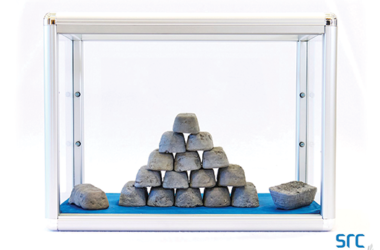
Since Zhang and his team began their work in metal smelting, they have made significant progress and have developed expertise in this niche area. In August 2022, SRC announced that it produced the first rare earth metal ingots in Canadian history at its under-construction Rare Earth Processing Facility using metal smelting technology. To date, 100 kg of NdPr (75 per cent neodymium, 25 per cent praseodymium) metal ingots have been produced. The facility is the first of its kind in North America and includes three key stages of the REE midstream supply chain: concentration, separation and metal smelting. The facility looks to be commissioned and fully operational in 2024.

What is metal smelting?

Metal smelting is a technology that falls under the pyrometallurgy umbrella of extractive metallurgies. Extractive metallurgy is the name for a group of technologies that extract the desired metals from mineral concentrates. There are two types of extractive metallurgies: hydrometallurgy and pyrometallurgy.

As the names suggest, hydrometallurgy is where solution chemical reagents like acid or cyanide are used to extract metals from mineral concentrates into a solution where they then move into downstream processes like precipitation or electrowinning that pull the “metals-in-solution” (or metal ions in solution) out into solid metallic form.

Pyrometallurgy describes processes that use heat in the presence of other chemical agents to enable metals in mineral concentrates to be both extracted from the concentrate and converted to metals.

Pyrometallurgy generally includes processes like calcining (thermal decomposition of a material), roasting (most commonly using heat and oxygen to oxidize sulphidic ore to oxides for further hydrometallurgical treatment), smelting and refining.

Smelting and refining both involve thermal reactions with molten phases. Smelting is different from melting – melting is the process of liquefying a solid substance by heating, like butter in a pan. Smelting is the process by which a metal is obtained at temperatures beyond the melting point and therefore includes both the melting of ore and the extraction of metals from ores in their purest form.

The process involves using chemical reducing agents (e.g., fluxes), as well as heat to achieve this. Refining generally refers to processes that take a smelted “product” and further purify and separate the metals in it. Both the smelting and refining of mineral concentrates have two outputs from their processes: purified metals and waste slag.

What is the metal smelting process?

There are two steps in the metal smelting process:

  • Decomposition (also called roasting in different metal smelting processes): to remove unwanted components, like carbon and sulphur, to make a pure oxide.
  • Reduction: to convert the oxide to element metal. A reducing agent is normally used to react with the oxygen.

Where does metal smelting fit within the REE supply chain?

The supply chain for REEs is quite complex and includes several stages. Within that mining-to-magnet chain of processing, metal smelting is fifth:

  • Mining
  • REE concentration
  • Hydrometallurgy
  • Separation
  • Metallization
  • Alloy making
  • Magnet powder production
  • Magnet making

How was SRC able to become experts in metal smelting?

The metal smelting process is not new and has been known for hundreds of years. However, there are currently no commercial-scale REE metal production options in North America. China has dominated this market since the 1990s, driven largely by two factors: low prices and state-backed investment in infrastructure and technology.

SRC is looking to change that with the skills, expertise and knowledge it has gained over the years from both literature and hands-on experience through its research and development work in REEs and other industries.

What are the challenges?

Zhang says the biggest challenges in the metal smelting process are two-fold: how to get the specialized equipment built and how to develop the skills to operate it.

“The process, in theory, is very simple,” he said, “but the operation requires skills and experience. As with many REE processes, including the hydrometallurgy and separation processes, the technologies themselves are well known and documented.

“However, there are a lot of techno-economic gains to be made with how they are operated and how to minimize the capital expenditure with the equipment. The process is also very labour intensive. But as SRC has done with other projects in the past, in-house ingenuity is heavily supported.”

SRC is investigating ways to automate the process to reduce operating costs and boost safety conditions.

What other ways will SRC’s process be different?

SRC’s metal smelting operation aims to have the highest safety standards, to be energy efficient and to achieve consistent product quality control and as much automation, as possible.

For more on SRC’s metal smelting services and its under-construction Rare Earth Processing Facility, go to www.src.sk.ca/ree.

by SHCA SHCA

FourSuccession Planning Tipsfor Small-Medium Business Owners

Plan ahead to ensure success

By BDO Canada

The last few years have been tough for small-medium business owners, and experts are predicting some challenging years ahead. If you’re thinking about exiting your business and handing over the reins to a successor – whether to a family member or an individual in management – it’s important to start a succession plan as soon as possible.

You’ll need to consider who will take over when you step down, how they’ll manage the company and whether this person is willing and able to do so.

BDO Canada’s Jeff Noble, director, Private Wealth, has four tips to help you transition your private company from one generation of leadership to another.

Plan ahead

It’s inevitable that you will, at some point, exit your business. There are two ways that can happen, voluntarily (e.g., retirement or other lifestyle choices) or involuntarily. An involuntary exit could involve an untimely death, disability (either the business owner or their family member), disenchantment, disagreement or divorce.“

Unfortunately, an involuntary exit happens a lot more than we would hope,” said Noble. “My biggest piece of advice to owners is to plan ahead. The longer you wait, the fewer options you will have.”

A detailed succession plan is an integral part of a well-managed company. It should be an ongoing process that not only determines who should take over your company if you retire or pass on, it also identifies and prepares future leaders within the organization. A successful plan involves an integrated approach to transition:

  • Management
  • Leadership
  • Ownership
  • And control

Having a plan in place will make the transition smoother for you, your family, your successor and the business.

Choose your successor

It’s important to start thinking about who will take over your business well in advance of when you’re ready to retire or exit. If you don’t have anyone in mind, start by mapping out the skills and experience needed for the successor to succeed.

“When choosing a successor, founders and business owners tend to default to someone who looks, sounds and acts just like them,” said Noble. “The idea being, they’ve been successful thus far, so they need someone with the same skills, knowledge and attitude to continue that success.”

In reality, business owners should choose a successor based on the needs of the business going forward. What knowledge, skills and habits are needed for the business to succeed in the next 25 years? Where is the business is in its lifecycle? Where is the industry headed? Where is the potential new owner in their lifecycle?

Once you’ve identified a prospective successor who has the qualities needed to succeed, a key next step is communicating that decision to them and making sure they are ready and willing to take over the business.

Additionally, choosing the successor will have cascading consequences, especially if they occupy a key leadership role in the company. You’ll also need to identify someone who can assume the successor’s role as they transition to take over your position.

Mentor your successor

Once you’ve determined the skills needed for your business to succeed in the future, identify any knowledge gaps between what your successor has now and what they’ll need going forward.

From there, develop a mentorship plan. The sooner you start, the better. Mentorship is something that should be done intentionally and, by definition, takes time.

“It’s different than coaching – you’ll be on the same side of the desk versus opposite sides. It involves the owner spending a lot of time actively speaking with and actively listening to the chosen successor,” said Noble.

The successor will need to understand everything about the business, including:

  • Marketing
  • Sales
  • Finance
  • Human resources
  • Systems and processes
  • The business model
  • Vision and strategy

Training and mentoring will involve job shadowing your role and other roles within the organization, regular check-ins or meetings, external educational opportunities and sharing your experiences.

Mentorship is not just a one-way street. The owner should also be willing to learn from their successor and take on board any feedback that they offer. This can help ensure the business continues to grow in the right direction.

“I also recommend that successors become involved in conversations with the business’s professional advisors, accountants, lawyers and bankers. The new owner should have an opportunity to learn how to work with these advisors because they’ll be relying on them for help,” added Noble.

Create a financial and tax plan

A well thought out financial and tax plan will help ensure a smooth succession. You’ll likely start with a business valuation. Both owner and successor will need to know what the business is worth.

Alongside the valuation process, the owner and successor will want to create comprehensive financial plans. For the new owner, this will outline how they intend to pay for the business and over what period of time. Will they get outside financing?

Business owners should choose a successor based on the needs of the business going forward. What knowledge, skills and habits are needed for the business to succeed in the next 25 years?

The current owner will need a financial plan so they know they can live out their life based on the purchase price and terms of repayment. Will they hold a vendor take-back note? Additionally, there needs to be a plan in place to prevent a liquidity crisis in the business, since funds will likely come from within the business.

On the tax front, a transaction structured to minimize your tax liability will ensure owner and successor get the most out of the deal. You may want to consider an estate freeze. This tax strategy is widely used by Canadian Controlled Private Corporations (CCPC) in contemplation of internal succession. An estate freeze can be used to restructure the ownership of your corporation by capping the value of your assets and transferring future growth and incentive to the next generation of owners.

The recently passed Bill C-208 also provides another opportunity for genuine intergenerational transfers of shares of small businesses.


For a business to be successful in the future, its founder must plan ahead and make sure that the company will continue operating after they’re gone.

“Business owners need to think about what their life will look like once they are no longer a part of the business. I often see this hold people back, they don’t know what they are going to do next, so they procrastinate planning,” said Noble. 

This article was originally published on BDO.ca and is republished with permission.

by SHCA SHCA

How to Attract More Young People to Construction

Careers in the trades need to get on the radar as young people explore options for their futures

By Jack Roberts

The global construction industry finds itself in a rather odd situation. It is caught in a storm of conflicting trends pulling at the very threads that hold a construction firm together: the ability to find and keep skilled, dependable workers.

On paper, it ought to be easier than ever for contractors and OEMs to attract young workers to their companies. Construction machines today are technological marvels with features that would have dazzled operators a decade ago.

Powerful new semi-autonomous guidance systems with 3D graphics combined with interactive, in-cab display screens now put precision control and high production within reach of even the most inexperienced operators.

And these very same systems can supercharge the capabilities of experienced operators – allowing them to post daily production numbers that would have been unthinkable on older machines.

The “office” operators work in has also evolved tremendously. Most modern machine cabs feature ergonomically laid-out interiors, with 360-degree views, comfortable seats, heat, air and even stereos.

Hydraulic control systems reward an operator with a feather-light touch, and modern coupler systems mean that operators rarely have to leave the cab to change attachments.

The work is out there, too. Construction markets worldwide today are generally robust with plenty of work available.

Markets have seen strong growth, thanks to government investments in new infrastructure as well as renewal and repair. To meet these demands, construction firms are happy to pay good wages for skilled, dependable operators.

Attracting younger workers to construction

Despite this, young workers with the ability and desire to learn are hard to come by. Even in normal times, this would be a worrisome problem.

But by an odd quirk in demographic timing, this young worker shortage is hitting the global construction industry at a time when older workers and highly skilled operators are beginning to retire in large numbers, leaving owners with a vacuum in knowledge and skills.

“Naturally, this is a bigger problem in some global markets than others,” said William Chimely, senior director, North America and global training and publications, Komatsu.

“In Asia, for example, operating a machine is seen culturally as a more revered, honoured role in a company. So, it’s difficult for a young person to get the training required to move into the cab of the machine.

“The bigger issue is that technical education for young people has fallen off all over the world. Trade schools and public schools used to provide elementary training for a career in trades. But we’ve migrated away from that with more of an emphasis on four-year degrees. So that talent pipeline that the industry used to depend on for new workers has dried up.”

Operating construction equipment can be glamorous

This sentiment is echoed by Jason Hurdis, global market professional, Caterpillar Global Construction and Infrastructure.

“We have done amazing things to make the machines easier and more attractive to young people. But we now face numerous other challenges that are complicating things,” he said. “The basic issue is simply attracting young people to this industry. That means finding a way to make it more glamorous. And really, that shouldn’t be hard to do. Because you can make a good living in skilled trades. The problem is young people aren’t aware of that reality. We need to change that.”

Cat has been proactive in working to raise awareness about operating construction machinery.

In 2019, Cat debuted its Global Operator Challenge, which allowed operators from all over the world to compete for cash, prizes and the honour of being named the top equipment operator in the world.

“We’ve got to raise awareness out there,” said Hurdis. “And Cat believes this global competition is a great way to do that.”

What are the benefits of a career in construction?

The operator shortage problem is one that will not resolve on its own – the industry needs to re-establish a talent pipeline.

But, given the dire state of affairs, it’s also time to begin looking for new ways to reach out to younger employee prospects as well.

“For companies, the key piece to this puzzle is recruiting,” said Chimely. “You have to find a person before you can even think about training them. And the sad fact is that our industry is not even on the radar screen for many young workers. We’re battling to catch their attention, and we have positive things we can point to.”

For instance, Chimley notes, construction offers a degree of versatility that is uncommon in many other occupations. Worksites change regularly.

Operators get to work outside and build things they can point to with pride later on. While the days of cold, wet workers shoveling away have largely disappeared, that image is still fixed hard and fast in the minds of many young people.

“What you have to do is get out in front of these young people and tell them your story – the industry’s story,” said Chimely. “Start looking for new places to do that. A contractor in Kansas recently set up a booth at a job fair and came away with five new operator hires. You have to go where the workers are.”

“There’s a certain type of young person who is going to be inclined to be a machine operator,” Hurdis adds. “Kids who like racing, ATVs, custom cars and motorcycles, for example. So go where they go. Set up booths at country fairs. Set up booths at car races, antique car shows or ATV races or motorcross events. Customers I’ve talked with tell me they’ve found great candidates in places like those.”

At the same time, Chimely argues that you’d do well to look beyond venues like that and seek out new prospects in unlikely places.

“Out of sheer habit, many contractors naturally look for certain types of people who have traditionally been attracted to construction machinery,” he said. “In [North America], that generally means white, rural, farm kids. But that demographic is not large enough now to fulfill our manpower needs. Construction globally needs to reach out and touch a new, diverse, future workforce. In many cases, this can mean inner-city children. Many of them are good gamers. And the ‘gamifcation’ aspect of operating modern construction machines fits in perfectly with those abilities.

“We just need to reach out to these young people and make them aware that construction offers them a viable career option using those skills. We can’t just keep fishing the same old pond forever. It’s time to diversify.”

Can education reduce the skills shortage?

Perhaps the biggest stumbling block to bringing new talent into construction is the lack of training to prepare young workers for even entry-level operating jobs.

Fixing this problem will be a long-term effort, requiring outreach to trade and tech schools on a local level from contractors, OEMs and dealers alike.

Another way to internally nurture talent is via the use of apprenticeship programs, notes Thomas Lee, product manager, Doosan Infracore North America.

“We are aware of apprenticeship programs available in North America for aspiring operators,” he said. “We encourage construction companies to partner with these apprenticeship programs and give new operators the opportunity to cut their teeth on the latest heavy construction equipment.”

Lee adds that dealers play a role in continuing education of heavy equipment operators.

“We are aware of dealers within our organization who regularly work with their customers to provide not only equipment operation training, but the dealers also train operators on how to properly service the equipment. Much of this training is done during the company’s off season or slower times of the year,” he said.

New ways of training workers are having a tremendous impact on quickly providing untutored young people with the skills needed to be an effective machine operator.

Among the most powerful of these new teaching aides are machine training simulators.

“Every equipment operator, regardless of skill level and experience, comes to the table with different strengths and weaknesses,” said Alan Limoges, product manager construction, CM Labs Simulations. “The key for employers in battling the labour shortage is to meet those people where they are.

“Construction equipment simulation is one way to both onboard entry-level operators and cross-train, benchmark, re-train or upskill existing operators.”

Limoges says that today’s simulators are data- and analytics-driven, which is essential to optimizing training time and correcting unsafe behaviours.

This means that training techniques move away from a checklist approach, and instead target specific skills that make people safer and more efficient.

“Companies and trainers now can use data collected for each student to analyze past behaviour and then apply that information to create specific learning paths that develop the most appropriate skills,” he said. “This approach also makes training more personal. With data analytics, training can tackle skill deficiencies for each person, which elevates their individual skill sets to a much higher level, rather than applying a single learning objective across an entire classroom.”

Mentorship programs in construction

Once an employee has been identified as a promising prospect and received some basic training to get them started on a machine, Reome says providing them with an older, experienced partner who can act as a mentor is one of the simplest, yet most powerful, training tools available at virtually every construction company in the world.

“Establishing a mentorship program is so important,” he said. “Because that’s how you impart passion about the industry and the work to a young employee. It’s a simple way to set a young person on a positive career path and keep them on it.”

There is a final – yet critical – aspect of finding employees that cannot be overlooked: pay.

“Wages and salaries are leading indicators for how well an industry can recruit workers,” said Chimely.

“Construction has been lagging behind other industries. We’re in a hot global job market right now. A rising tide lifts all boats. And workers – quite simply – are going to go where the money is.”
Construction has a bright future to offer new workers – what is vital is that the sector ensures that this message is heard. 

This article was originally published in International Construction magazine and appeared on CONEXPO-CON/AGG 365. It is reprinted with permission.