by SHCA SHCA

Provincial Traffic Safety Fund Delivers $1.54M in Grants to Saskatchewan Communities

A view of traffic on the Gardiner Express at rush hour

Flashing pedestrian crossing signs in Estevan, a crosswalk in Lampman and streetlights on the Red Earth Cree Nation are among the road safety enhancements that will be delivered using funding provided in the Provincial Traffic Safety Fund’s latest round of grants.

Sixty-two projects in 61 Saskatchewan communities will receive grants, totalling nearly $1.54 million. Grants in this round range from $853 to $100,000. “The Government of Saskatchewan and SGI are committed to delivering safer roads for everyone in Saskatchewan,” Minister Responsible for SGI Jeremy Harrison said. “This $1.5 million in provincial grants will enable 61 municipalities and First Nations throughout our province to deliver enhancements to traffic safety in their communities.”

The full list of approved projects and grant amounts can be found on SGI’s website.

Provincial Traffic Safety Fund grants are awarded to communities twice a year, using proceeds from photo speed enforcement. A total of $14.55 million has been awarded to 918 projects in Saskatchewan since the program was established in 2019. Eligible projects must focus on one or more of these traffic safety priorities: speeding, impaired driving, distracted driving, occupant protection, intersection safety, aggressive driving, vulnerable road users or medically-at-risk drivers.

Applications are reviewed by a committee made up of representatives from the Saskatchewan Urban Municipalities Association, the Saskatchewan Association of Rural Municipalities, the Prince Albert Grand Council, the Saskatchewan Association of Chiefs of Police, the Ministry of Justice, the Ministry of Highways and SGI.

Applications are now being accepted for the next round of funding. The deadline for applications is Sept. 30, 2025. For more information and for the full list of approved projects, visit SGI’s website: https://sgi.sk.ca/community-grants-programs.

by Shelby Piel Shelby Piel

Increased Funding for Rural Road Infrastructure a Boost for Saskatchewan’s Rural Municipalities

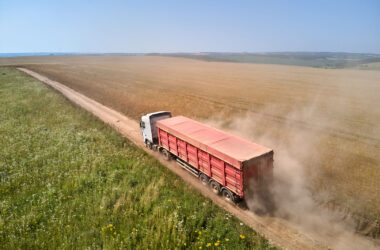
Road through wheat fields
rcphoto/123rf

As inflation continues to affect the cost of maintaining infrastructure, the need to address the condition of rural roads in Saskatchewan has become increasingly pressing.

These roads form the backbone of the province’s vast agricultural and industrial economy, enabling the movement of goods, services and people across rural areas. Deterioration of rural transportation infrastructure not only impacts local travel, but has far-reaching and devastating implications for Saskatchewan’s economy.

In response to these challenges, the Rural Integrated Roads for Growth (RIRG) Program Management Board, which is made up of members from both the Saskatchewan Association of Rural Municipalities (SARM) and the Ministry of Highways, has taken significant steps to support rural municipalities (RMs) by increasing funding for rural road maintenance during the 2024-2025 fiscal year, and have introduced several updates to enhance the RIRG program. Municipalities can apply to access RIRG funding through three distinct sub-programs: The Road Construction Program, Bridge and Large Diameter Culvert Construction Program, and the Clearing the Path (CTP) Program. Each of these programs is tailored to address specific infrastructure needs.

The Road Construction Program along with the Bridge and Large Diameter Culvert Program are ways that RMs can access funding to upgrade or replace their current infrastructure. These programs not only improve safety and efficiency for rural residents, but support local industries by facilitating the movement of agricultural and industrial products.

When a road project qualifies and is accepted into the Road Construction Program, the RM can receive up to $500,000 for eligible costs with a 50 per cent assistance rate from RIRG. RMs can choose from several road project types including, earthworks and grading, clay capping, base and subbase, and surface strengthening on any road that is a CTP corridor or has a rural road class of 3, 4,or 5. The Bridge and Large Diameter Culvert Program has undergone some significant and exciting changes. After hearing feedback from members on the significant increases to the cost of building rural bridges, the funding cap for bridge projects has doubled; RMs can now receive up to $1 million with a 50 per cent assistance rate. The next intake for these programs will take place this fall, with approvals scheduled for January 2026.

These programs not only improve safety and efficiency for rural residents, but also support local industries by facilitating the movement of agricultural and industrial products.

The CTP Program provides incremental maintenance funding to assist with the cost of maintaining roads to carry primary weights. The purpose of the program is to connect and move Saskatchewan’s commodities and industry at primary weights, creating a seamless network throughout the province.

The network aims to be dynamic and not permanent so that if economic activity is slowing down in one area and increasing in another, funding may be moved to an area with more economic activity. To be eligible, roads must meet criteria such as, minimum truck traffic counts, proximity to economic generators and a minimum proximity of the roadway to other primary weight roads. If an RM applies for an eligible CTP corridor and agrees to maintain the road to carry primary weights, they can receive funding each year to assist with maintenance costs.

After hearing from SARM members and studying the impact of inflation on maintaining these roads, RIRG has also increased the funding for CTP corridors by $300 per kilometre. RMs can now receive $1,300 per kilometre for a standard corridor and $1,500 per kilometre for a premium CTP corridor annually. Standard corridors have an average daily truck traffic greater than 10 trucks per day, while premium corridors have an average daily truck traffic greater than 35 trucks per day. An RM can apply for a new CTP corridor at any time on SARM’s website, with formal application reviews occurring annually at the start of each calendar year.

In other exciting news, the RIRG program, which is governed by an agreement between SARM and the Ministry of Highways, was recently extended for five years, until March 31, 2029. This extension signals a strong commitment from both the provincial government and SARM to long-term investment in rural infrastructure, and can provide municipalities with the confidence and stability they need to plan and execute infrastructure projects with greater certainty.

We strongly encourage all RMs to take full advantage of these renewed opportunities. The tools are in place, the funding is available and the support is ongoing. For detailed information on program eligibility, application processes and program timelines, municipalities are encouraged to review the RIRG Policy Manual available on SARM’s website (sarm.ca).

by SHCA SHCA

Rural Roads to Have More Than $34.4 Million of Improvements

RIRG | Rural Integrated Roads for Growth

The Government of Saskatchewan and the Saskatchewan Association of Rural Municipalities (SARM) announced more than $34.4 million for 32 road, bridge and culvert projects, which supports the export of goods and resources originating in rural municipalities.

Through the Rural Integrated Roads for Growth (RIRG) program, the Ministry of Highways will invest more than $12.6 million toward the projects and rural municipalities (RMs) will fund the remaining more than $21.7 million. The work will occur in the 2025 construction season.

“These projects will enhance the integration of rural roads and the provincial highway network so that farmers, ranchers, businesses and industries can ship their goods more efficiently,” Highways Minister David Marit said. “This program recognizes rural municipal roads play a valuable role in Saskatchewan’s export-based economy.”

“Perhaps now more than ever, improving our transportation infrastructure in rural areas is needed to bring stability and strength to our economy – not only as a province, but also as a nation,” SARM president Bill Huber said. “Without reliable roads, bridges and culverts, we can’t get goods to market. For this reason, SARM is very pleased to see these RMs receive funding assistance through the RIRG program.” 

The provincially funded RIRG program administered by SARM invests in constructing and upgrading RM road infrastructure. RIRG funding is up to 50 per cent per project to a maximum of $500,000 for a road and to a maximum $1 million for a large culvert or bridge. RMs fund the remaining project costs and are responsible for managing their approved projects.

by SHCA SHCA

Driving Our Roads into the Ground: SARM Calls for More Funding to Aid in Disintegrating Roads and Bridges

The Saskatchewan Association of Rural Municipalities (SARM) has called for increased funding for rural roads and bridges. These pieces of infrastructure are not only the lifeline for thousands of municipal residents who travel them daily, they also help drive our rural economy by supporting oil and gas, agriculture, mining and other natural resource sectors. Without further aid, the roads and bridges in rural Saskatchewan will continue to deteriorate with significant economic and social consequences.

SARM

Rural municipalities (RMs) in the province are responsible for 164,000 kilometres of roads, Canada’s largest road network. Roads in the province connect our rural population to urban centres, transport essential supplies, export goods and more. These busy roads require regular upkeep, maintenance and ongoing building and re-building. In addition, RMs are responsible for 1,280 bridge structures. Unfortunately, years of use have led to 60 per cent of rural bridges at or beyond their expected service lifespan and needing replacement to avoid safety hazards or disrupting the transportation of goods.

“The Rural Integrated Roads for Growth (RIRG) program provides funding for RMs to support rural road construction, bridge construction, culvert installation and maintaining eligible roads at primary weights. The RIRG program is funded by the Ministry of Highways, administered by SARM, and right now every RM has a laundry list of roads and bridges that are in serious need of repair or rebuild,” said Bill Huber, acting president of SARM.

The cost of building a bridge per square foot increased by 36 per cent between 2010 and 2020 and another 25 per cent between 2020 and 2022. Road construction costs have also increased, resulting in a sharp rise in project withdrawals, deeply impacting RMs. Funding for the RIRG program has steadily decreased over the years from $25M in 2009-2014 to $15M from 2015-2023. While SARM was pleased to see a modest increase in funding in the 2024/2025 program year (to $17.4M), funding for this essential program continues to lag behind the great infrastructure needs among the RMs.

“Government’s infrastructure spending must keep up with inflation. The civil construction industry needs and has been asking for a long-term, serious commitment to build and maintain our provincial road network. The industry continues to see increased expenses in escalating costs for fuel, materials and labour, while the base spending on infrastructure capital remains relatively unchanged. Inflationary costs reflected in bid pricing that isn’t adequately addressed through realistic infrastructure funding leads to less projects tendered, which creates further financial uncertainty for the industry, it becomes a vicious circle,” said Shantel Lipp, president of the Saskatchewan Heavy Construction Association.

by Shantel Lipp Shantel Lipp

We’re Heading Into an Election – Speak Up!

Shantel Lipp - Portrait

Interesting things are happening in Saskatchewan.  

The Saskatchewan Association of Rural Municipalities (SARM) joined with the SHCA to raise the volume on our message regarding provincial infrastructure funding. 
SARM has called on the provincial government to increase funding for rural roads and bridges. It said that without urgent attention, there will be significant economic and social consequences for Saskatchewan. 

Background 

Saskatchewan rural municipalities (RMs) are responsible for 164,000 kilometres of roads, Canada’s largest road network and 1280 bridge structures.  

Unfortunately, given the current level of provincial funding that’s dedicated to rural infrastructure, we have not been able to keep up: 

  • 60 per cent of rural bridges are at, or beyond, their expected service lifespan and need to be replaced to avoid safety hazards or a serious disruption in our export of products.
  • Our roads connect our rural population to each other and to urban centres – maintaining this connection is critical. 
  • Our province’s economic generators (mining, agriculture, oil and gas, manufacturing, ag tech, etc.) need connection to urban centres and to export markets. Healthy infrastructure is essential for exporting our goods and supporting jobs in the province.  
  • Without further aid, Saskatchewan’s economy will suffer, and we will face serious economic and social consequences. 

As we all know, this isn’t limited to rural infrastructure. Urban infrastructure is also in urgent need of investment.  

Saskatchewan’s Urban Municipalities Association (SUMA) has numerous resolutions from its convention calling on more provincial support, especially for its urgent construction projects.  

Government funding is seriously lagging the great infrastructure needs in Saskatchewan. 

Our industry has been asking for a long-term, serious commitment to building and maintaining our provincial infrastructure, and our municipalities are saying that the situation is reaching near-crisis levels. 

Government Funding Ignores Inflation 

SARM points out that funding for the rural road program decreased from $25M in 2009-2014 to $15M from 2015-2023. While there was a modest increase in funding in the 2024/2025 program year (to $17.4M), this funding does not consider one of our members biggest problems – inflation. 

As it relates to rural infrastructure: 

  • The cost of building a bridge per square foot increased by 36 per cent between 2010 and 2020 and another 25 per cent between 2020 and 2022. 
  • Road construction costs also increased. Many members report stark increases in their costs (fuel, materials, labour, etc.). This has resulted in our members withdrawing from bidding on some municipal projects because government funding doesn’t support the actual costs of the project. 

Inflationary costs that our members reflect in their bid pricing isn’t adequately addressed in the funding that government provides to rural and urban municipalities.  

This leads to fewer projects being tendered and creates great uncertainty for our members as they can’t plan, and adequately provide for, projects in the future. 

The larger implications are that Saskatchewan people, who are working hard to produce fuel, fertilizer and food, are deeply concerned about how we will move our goods to the world markets.  

They are also concerned about their critical connections to urban centres. 

An Election Request 

So, I am asking that during this provincial election, if you come face-to-face with a candidate who is running to become a member of legislative assembly, please take the time to ask them for their help in giving our province’s infrastructure the attention it needs. 

Remind candidates that it is not only possible, but imperative, to build and support all the infrastructure required to help Saskatchewan remain competitive on the world stage.  

Tell them if we don’t keep up, our province’s growth plan and future prosperity is at risk. 

We need to look for government leaders who have the vision to build modern infrastructure that connects supply chains, moves goods, supports job creation and ensures our economy will continue to grow.  

We also need government leaders who will preserve and enhance the quality of life we enjoy in Saskatchewan that often requires connectivity between rural and urban Saskatchewan. 

During this campaign, we are hearing all politicians, regardless of their political stripe, painting a picture of how their leadership will improve our quality of life.  

But that requires infrastructure investment – please take the time to remind them of this.

by Saskatchewan Association of Rural Municipalities Saskatchewan Association of Rural Municipalities

Run for Municipal Council

Six common misbeliefs that can (but shouldn’t) prevent people from running

SARM / Saskatchewan Association of Rural Municipalities

If you live in rural Saskatchewan, chances are you’ve met or chatted with a local member of council. That’s probably because you know them as the cattle rancher who lives down the road, the teacher who taught you in high school or as one of the hockey moms you see at the arena on Saturday mornings.

Have you ever thought of being that councillor yourself? We’re hoping the answer is “yes.” Before you likely follow that “yes” with a “but,” consider this: most of the hesitations people have about running for council have to do with outdated stereotypes and flat-out myths.

To help dispel those, here are the facts behind six common misbeliefs that can (but shouldn’t) prevent people from running for council.

1. “I’m not an expert on municipal government.”

You don’t have to be. In fact, what’s more important than any expertise is that you care about your community and are willing to learn. After all, a municipality is the “frontline” level of government, which means it’s as much about people and advocacy as it is about policies.

Care can’t be taught, but the ins and outs of municipal council certainly can.

2. “I don’t have any political experience.”

That’s okay. Chances are you already have a lot of skills and abilities that are transferable to the elected official’s role. For example, think about your volunteer experience, community involvement, family life and any other practical experiences that have taught you how to work as part of a team, make decisions, look at both sides of an issue, prioritize, advocate and lead.

3. “I’m more of a listener than a talker.”

Being a good listener is actually one of the most important traits that a councillor can have. Council members are entrusted with making decisions that directly affect the daily lives of residents, families, local business owners and many others in the community. That trust begins with listening and learning.

Other important personality traits are honesty, patience, empathy, trustworthiness, curiosity, objectivity, respectfulness and optimism.

4. “It seems like a big time commitment.”

Being a councillor is a four-year commitment. It’s important not to underestimate the amount of time and dedication required to be an effective member of council, especially if you’re also managing a full-time job.

The good news is that you’re probably already meeting with your community and spending a lot of time thinking about the issues and changes that affect you and your neighbours. When you’re a councillor, that time simply becomes more structured. For example, if elected, you should plan to attend:

  • Regular and special council meetings and
  • Committee meetings and
  • Conferences and conventions and
  • Seminars and workshops and
  • Special events that promote your municipality

5. “I’m more community-minded than political.”

Guess what? That sounds like a councillor. Do you love that sense of community and the neighbours-help-neighbours philosophy that’s entrenched in rural Saskatchewan? Do you want to see our farmers, ranchers and entire agriculture sector prosper?

If the answer is “yes,” we hope you can also see that Saskatchewan needs community-minded citizens like you to represent your municipality and provide insights that will lead to better services and quality of life for the communities you champion.

6. “It doesn’t seem like I’d fit in.”

We’re pretty sure that’s code for: “I don’t see myself represented when I look at local councillors.”

Well, that’s something we want to change. Representation absolutely matters. As a councillor, your lived experience and unique background are strengths, not weaknesses. So, if you don’t see councillors that are your age, or gender, or that have your disability or unique point of view, don’t let that stop you from seeking election. Saskatchewan needs citizens like you to assume leadership roles and to shine light on the blind spots and opportunities that you see so sharply.

To answer more of your questions, including how and when to file your nomination, head to saskatchewan.ca to read “Running for Municipal Council.

Make the difference only you can make. Run for municipal government! 

Municipal Government 101

  • Rural municipalities are governed by a council, consisting of a reeve and councillors who represent a numbered division within the rural municipality.
  • That council derives its authority from The Municipalities Act, The Cities Act and The Northern Municipalities Act, 2010.
  • A councillor’s main role is to make decisions and establish policies about the services that a municipality provides to its citizens, including how those services will be delivered.

SARM Will Be There to Help

Once elected to council, SARM will always be there to help councillors with their duties. SARM has resources such as training programs, webinars and mentor groups, to name a few. So, remember: your wins are our wins, and together we’ll make rural Saskatchewan stronger.

by SHCA SHCA

News from the Field

Premier makes cabinet changes

Honourable Lori Carr, Minister of Highways

At the end of August, Premier Scott Moe announced a number of changes to the provincial cabinet. “The mandate of our new cabinet is to build and protect Saskatchewan – to continue building a strong economy, strong communities and strong families, and to protect all that we have built together from threats like federal intrusion and economic challenges like inflation,” said Moe.

Moose Jaw North MLA Tim McLeod enters cabinet for the first time as Minister of Mental Health and Addictions, Seniors and Rural and Remote Health. Prince Albert Carlton MLA Joe Hargrave re-enters cabinet as Minister of SaskBuilds and Procurement.

Six ministers remain in cabinet but take on new responsibilities:

  • Lori Carr becomes Minister of Highways;
  • Jeremy Cockrill becomes Minister of Education;
  • Dustin Duncan becomes Minister of Crown Investments Corporation and Minister responsible for all the major Crowns, including SaskPower, SaskEnergy, SaskTel, SGI and SaskWater, as well as Minister responsible for the Public Service Commission;
  • Christine Tell becomes Minister of Environment;
  • Paul Merriman becomes Minister of Corrections, Policing and Public Safety and Minister responsible for the Firearms Secretariat; and
  • Everett Hindley becomes Minister of Health.
  • Nine ministers retain their current responsibilities:
  • Donna Harpauer remains Deputy Premier and Minister of Finance;
  • Jim Reiter remains Minister of Energy and Resources;
  • Gordon Wyant remains Minister of Advanced Education;
  • Jeremy Harrison remains Minister of Trade and Export Development, Minister of Immigration and Career Training, and Minister responsible for Innovation and Tourism Saskatchewan;
  • David Marit remains Minister of Agriculture and Minister responsible for Saskatchewan Crop Insurance Corporation, and also becomes Minister responsible for the Water Security Agency;
  • Don McMorris remains Minister of Government Relations, Minister responsible for First Nations, Métis and Northern Affairs and Minister responsible for the Provincial Capital Commission, and also becomes Minister of Labour Relations and Workplace Safety, and the Minister responsible for Workers’ Compensation Board;
  • Bronwyn Eyre remains Minister of Justice and Attorney General;
  • Gene Makowsky remains Minister of Social Services; and
  • Laura Ross remains Minister of Parks, Culture and Sport and Minister responsible for the Status of Women and the Lotteries and Gaming Corporation.

The overall size of cabinet remains unchanged at 18, including the premier. Two members who recently announced they will not be seeking re-election in 2024 – Don Morgan and Dana Skoropad – are leaving cabinet. Morgan becomes Provincial Secretary.

“I want to thank those two members and particularly recognize Don Morgan, who along with Donna Harpauer has been in every cabinet since our government was first elected in 2007, making them the two longest-serving current ministers anywhere in Canada,” said Moe.

Yellow Excavators are digging the soil in the construction site on the orange sky background

Major improvements on Highway 15 near Kenaston underway

A $22.7 million highway construction project is underway near Kenaston. The two-year major highway improvement project will include construction of a subgrade, widening and resurfacing on Highway 15. “The Ministry of Highways is dedicated to enhancing safety and improving key transportation corridors through continued investments,” Minister Cockrill said. “Highway 15, a high clearance corridor, offers shippers and commercial carriers an ideal opportunity to transport over-dimension loads.”

The ministry will improve more than 1,000 km of provincial highways, putting the province on track to meet the Growth Plan goal to build and upgrade 10,000 km of highways over 10 years.

The Highway 15 corridor allows goods to be trucked without the need to raise or temporarily cut utility lines and other structures. The Highway 15 construction project is 22 km, which runs from 15 km east of the junction with Highway 11 to about 20 km west of the junction with Highway 2. The project will include culvert replacements and road widening work this year, which is expected to be complete this fall. Paving work will begin during the 2024 construction season. “This is a major project that will take time to complete,” Minister Cockrill said. “We appreciate the patience of drivers who slow down for safety as we work to enhance our transportation system.”

Langenburg Redi-Mix of Regina is the general contractor.

Link Developments Ltd. selected to construct Regina General Hospital parkade project

Link Developments Ltd. has been selected as the team that will construct and maintain the new Regina General Hospital (RGH) parkade with construction set to begin this fall. “This milestone is significant in addressing the challenges encountered by residents, staff and other users of the RGH parkade facility,” SaskBuilds and Procurement Minister Joe Hargrave stated. “Our commitment remains unwavering as we strive to deliver accessible and convenient infrastructure for the benefit of all Saskatchewan residents.”

“Our government is very pleased to have a construction team in place for the new parkade at RGH,” Health Minister Everett Hindley said. “We have heard the concerns of staff and visitors to the hospital. This parkade will provide a safe, convenient option for parking for years to come.”

The new parkade at RGH will be built in the northwest section of the existing visitor parking lot. Link Developments’ proposed design includes a parking facility with a total of 1,005 stalls, consisting of 873 stalls in the parkade and 132 surface stalls, for a net increase of 686 parking stalls. “Ensuring a better quality of life for all Saskatchewan people remains a priority for this government and the key objectives for this project drive us closer toward this goal,” Regina Pasqua MLA Muhammad Fiaz said. “These include improving safety, accessibility and convenience for staff, patients, families and visitors at RGH.”

“The Saskatchewan Health Authority is pleased that the construction of the parkade at the RGH is moving forward,” interim vice-president, quality, safety and chief information officer of Saskatchewan Health Authority Michelle Mula said. “With safety at the forefront of our decision-making, the parkade aims to provide additional safe and accessible parking at RGH for staff, patients and visitors.”

Construction is expected to be completed by the end of 2024.

$50 million passing lanes project complete on Highway 16

Major safety improvements on Highway 16 have been completed. A ribbon cutting ceremony was held to commemorate completion of the final set of passing lanes which have opened near Saltcoats.

“The Yellowhead Highway is a major transportation corridor that is used to move people and goods across the province,” said Jeremy Cockrill, former Saskatchewan Minister of Highways and Infrastructure and current Minister of Education. “With the expanding canola crushing facilities in the area, there are a lot of large trucks travelling through the area and we’re taking steps to move that traffic safely and efficiently. These passing lanes allow drivers to pass slower moving vehicles safely.”

This highway safety project was a key investment in Saskatchewan’s $2 billion stimulus program during the global pandemic to help drive economic recovery. In all, 26 passing lanes and multiple intersection upgrades were constructed.

The multi-year passing lanes project extends from Clavet, east of Saskatoon, to the Saskatchewan/Manitoba border, east of Yorkton. This highway safety project was a key investment in Saskatchewan’s $2 billion stimulus program during the pandemic to help drive economic recovery. In all, 26 passing lanes and multiple intersection upgrades were constructed.

“As representatives of Saskatchewan truck transport, we are pleased to see investments in the highway network that assist the movement of trucks and most importantly ones designed to improve the safety for our professional drivers,” said Susan Ewart, president of the Saskatchewan Trucking Association. “The passing lanes and intersection enhancements will be welcome by our members.” Passing lanes are typically a minimum of two kilometres and allow drivers to pass slower moving vehicles safely.

Beautiful aerial view of the highway in Italy with cars passing by.

WSA announces $500K infrastructure crossing replacement program

The Water Security Agency (WSA) is launching a new $500,000 cost-sharing pilot program that will assist rural municipalities and irrigation districts with the cost of replacing aging infrastructure. RMs and irrigation districts replacing infrastructure like bridges or culverts that cross WSA channels are eligible for 50/50 cost sharing.

“This is another great example of WSA creating partnership programs to support rural infrastructure in Saskatchewan,” the former Minister Responsible for the WSA Jeremy Cockrill, whose duties were replaced by David Marit in August, said. “As replacement costs for infrastructure continue to rise, WSA is partnering with RMs and irrigators to alleviate the financial impact of replacement, all while safeguarding provincial infrastructure and protecting our communities.”

To be eligible, bridges or culvert-style crossings must cross WSA canals or other conveyance while maintaining current flow rates. “Thanks to a grant from the WSA Infrastructure Crossing Replacement Program, an RM can not only complete a bridge or culvert project, but the money saved can be used for other critical infrastructure,” said Ray Orb, president of the Saskatchewan Association of Rural Municipalities. There is no deadline to apply to the program, and grants will be issued on a first-come, first-served basis. Costs incurred through March 31, 2024, will be considered.

Construction process making of mixer truck freshly

$26 million paving project underway in southeast Saskatchewan

The Government of Saskatchewan is ramping up repaving work this year with 230 km of improvements at key corridors around the province, including a segment of Highway 33. It is part of a plan to improve another 1,000 km of highway this season.

“Our government is in year four of the Growth Plan and we made some commitments to Saskatchewan people, including a pledge to improve 10,000 km in a decade,” former Minister of Highways and Infrastructure Jeremy Cockrill said. “Our construction crews are working all over the province making improvements to our transportation network which will improve safety and enhance key transportation corridors.”

“Our construction crews are working all over the province making improvements to our transportation network which will improve safety and enhance key transportation corridors.”

– Jeremy Cockrill 

The 38-km repaving project between Fillmore and Stoughton will also include four intersection improvements on Highway 33. Construction began in July and is expected to complete in October. “Maintaining and improving rural highway infrastructure is important for the people who work, live and visit our communities,” Fillmore Reeve Russell Leguee said. “The upgrades to Highway 33 will positively contribute to the safe and reliable movement of agricultural commodities to markets domestically and globally. Ensuring connectivity between communities and providing safe and reliable roads ensures a better quality of life for people living in rural areas.”

The general contractor is Langenburg Redi-Mix of Regina.

A weekly highway construction update is published on Saskatchewan.ca to provide drivers with the latest details on projects underway to help plan safe and efficient travel.