by Erin Matthews Erin Matthews

Keeping Safety at the Forefront of Innovation

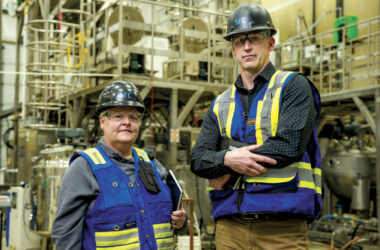
Two workers in safety equipment

From environmental remediation in the Athabasca Basin to renewable energy storage systems in southern Saskatchewan, the Saskatchewan Research Council (SRC) is committed to tackling every project, large or small, with the health and safety of its employees at the forefront.

Beginning in 1959, SRC’s safety program has evolved over the last several decades and continues to be shaped by the innovative and leading-edge work SRC undertakes.

Safety is everyone’s responsibility

“Safety is definitely a shared responsibility, with everyone having a role to play,” said Kenelm Grismer, director of health, safety and risk at SRC. “As an employer, SRC has the responsibility to establish and maintain an effective safety management system to enable people to work safely.”

The management system is driven by safety leadership and commitment at all levels of the organization, and includes upholding SRC’s organizational philosophy that safety is an overriding priority. With SRC providing the foundation for this safety culture, employees are empowered in their work environment to perform their tasks safely, ensuring they are confident in their understanding of the hazards and are equipped to do the job safely before proceeding. To ensure safety across SRC, it’s essential that employees are aware of and practice their rights, including the right to refuse any unsafe work.

“We want employees to be curious about safety, to ask questions and to challenge the way that we do our work to ensure it’s being done in the safest way practical,” said Grismer.

Managers and supervisors have a responsibility to ensure employees receive the appropriate training and tools for their roles, and that they are following established rules and procedures. They lead by example to reinforce SRC’s commitment to safety. SRC’s occupational health and safety committees provide a forum for the employer and employees to work together to continually improve safety.

“Collectively, these various roles create layers of defence to keep us all safe,” said Grismer. “Each of these roles is vital to developing and maintaining a strong safety culture across SRC.”

Varied service lines create unique safety requirements

From lab benches to field work to desk duties, every team at SRC encounters different risks and hazards, but Grismer says that doesn’t change the council’s philosophy. “Across SRC, safety is an overriding priority. All groups operate under the same overarching safety management framework, but how the tools are applied may change between groups,” said Grismer.

SRC has several laboratories that process samples, providing data and insight to clients around the world. In these spaces, employees often engage in routine work, drawing more heavily on well-established standard operating procedures and safe work practices.

As SRC evolves, new projects come together and new business units are established. Often, these growing and specialized teams need to develop new safety protocols for their work.

Other employees, such as those in the field conducting air quality testing, may encounter varying levels of uncertainty in their day-to-day tasks. These employees must conduct regular field-level risk assessments, and be comfortable identifying and mitigating hazards in varying conditions. Grismer says this is where safety training and experience are crucial.

As SRC evolves, new projects emerge, and new business units are formed. Often, these growing and specialized teams need to develop new safety protocols for their work. For instance, the developmental nature of the work that SRC’s research and development team undertakes in its rare earth element division comes with a certain amount of risk and uncertainty when doing something for the first time, which is why planning, training and having the correct tools for the job are critical.

“They’ve worked very hard to assess the hazards, develop standard operating procedures and safety protocols to mitigate the risk, and spend a significant amount of time and effort in training the team to conduct the work safely,” said Jackie Foord, SRC’s occupational health and safety lead. “They are continually reassessing the risks and refining the way they do the work to improve safety. The planning and development they’re doing now will benefit the operation in the long term.”

SRC’s safety management framework, driven by the organizational commitment to safety, positions SRC well to meet the various safety challenges encountered while working across several diverse service lines.

Safety evolves alongside SRC

In the last five years, SRC has expanded into growing sectors, including critical minerals. These new projects have not only required specialized knowledge and expertise, but also new equipment and facilities, such as SRC’s under-construction Rare Earth Processing Facility and its Minerals Liberation Sorting Centre.

“These types of projects have definitely been a catalyst to advance our safety program on a number of fronts,” said Grismer.

New skill sets and resources have been brought on to carry out these projects, enabling SRC to view work environments from a variety of perspectives. Teams work together to find solutions to challenges. “Working with tradespeople who have come from larger organizations, such as mining operations, brings a wealth of knowledge to the organization regarding safety,” said Foord.

These projects have unique safety needs. Foord says the extensive efforts invested in activities such as hazard assessment, planning and training have been critical to the success of these projects and ensuring everyone on-site goes home safe at the end of the day.

New safety innovations keep employees at the heart of safety

SRC’s safety team continues to innovate to meet the council’s needs for new and existing projects and facilities in 2025 and beyond. As SRC’s industrial process operations expand, so do its safety requirements. Tools like automation, robotics and AI will help improve safety by mitigating hazards, and provide opportunities for enhancing and streamlining data analysis and reporting.

“Innovation has been critical to working safely across SRC. As an organization, we are fortunate to have access to a wide range of expertise and skill sets, from engineers and scientists to instrument techs and electricians,” said Grismer.

Learning from employees’ experiences on-site, in the field and at the lab helps SRC improve its protocols and approaches to ensure they are robust enough to tackle any safety challenges. “We are continuously applying these resources to advance safety, both for our clients as well as our own operations. There are countless examples of situations where a team identified a hazard and developed an innovative approach that enabled them to do the job [safer],” said Grismer.

SRC’s goal is ultimately to eliminate workplace injuries. To achieve that goal, the focus is on continuing to ensure that all employees at SRC feel they are accountable for safety and are empowered to ensure work is done safely.


For more information on SRC’s services, visit src.sk.ca.

by Erin Matthews Erin Matthews

Air Quality Measurement and Monitoring Requires Innovation for Long-Term Results

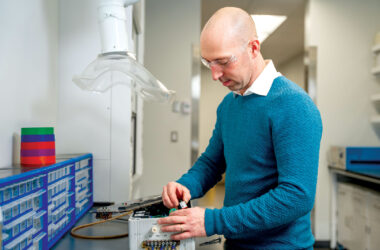
Man in safety goggles working on electrical device
Photo: Saskatchewan Research Council

From potash to oil and gas to manufacturing, industrial air quality measurement and monitoring has historically focused on reporting for regulatory purposes with an end goal of protecting people and the environment.

With industry and government focusing more on improving the environmental performance of industrial facilities, the ability to measure, monitor and model air quality is important to reporting and delivering on these goals. In the last decade or so, many operations have stepped up to the challenge and are employing new technologies and optimizing their processes, signalling that specialized air quality expertise, beyond just measurement, is needed to work on these more complex projects. Understanding the data and how to use it for a specific operation requires experience and technical know-how.

For more than 45 years, the Saskatchewan Research Council (SRC) has helped important economic sectors operating on the Canadian Prairies keep a close eye on their air emissions to ensure they meet environmental standards and regulatory requirements, as well as to implement process improvements for emissions reduction strategies.

With more than 17 years of experience in air quality at SRC, team lead Kent Orosz is at the helm of a group of specialized experts who help clients achieve long-term environmental and economic benefits through measuring, monitoring and modelling. “Our team is quite diverse in terms of skills and expertise,” Orosz said. “We offer a variety of services that can be integrated to meet a client’s needs.”

The air quality team offers a wide range of services, from industrial source testing to ambient air monitoring and industrial hygiene for a variety of industries, such as mining, manufacturing, biofuels, construction and electricity generation.

“While stack sampling makes up the majority of our work,” Orosz said, “we also work with clients on other aspects of measurement and monitoring, such as environmental protection plans under the Industrial Source (Air Quality) chapter of the Saskatchewan Environmental Code.”

Expertise in safe stack sampling

With highly trained and highly experienced team members, SRC is a trusted provider of stack sampling on the Prairies. While technology has changed, manual testing methods remain the most reliable approach to stack sampling. “Stack sampling is a unique job because it’s a mix of labour, very technical work and some science as well,” Orosz said.

A typical field day starts with an early morning trip to an industrial site. The team carries in a lot of heavy equipment and gets to work measuring the gases and particulates released from the facility. The team might climb ladders to reach high platforms or rooftops, and then pull their equipment up with a rope or carry it up many flights of stairs, often through a hot, noisy, dusty or dark facility. Once on the roof or platform, the team carries out their work, rain or shine, so long as the work can be conducted safely.

With highly trained and highly experienced team members, SRC is a trusted provider of stack sampling on the Prairies.

“Safety is an overriding priority at SRC,” Orosz said. “Because our work exposes us to numerous hazards, we are continually assessing and reassessing risk, implementing controls and monitoring whether our controls are effective to ensure we can finish the job safely. We are COR-certified, which is the industry standard in safety certification.”

Orosz has seen his fair share of challenges. Between equipment breakdowns, facility operational issues or inclement weather, many factors can delay the team’s work. Orosz says the team excels at developing quick, but effective, solutions that are safe and keep the job moving.

Insight into process refining and pollution control equipment

Generally, large facilities are required to test what is emitted from their stacks annually. SRC’s air quality team conducts this regulatory compliance testing at field sites. To help clients reduce their emissions, the team also works with their clients to refine their processes or test new types of pollution control equipment.

“Helping clients implement process improvements that reduce their air emissions is where our expertise really shines,” Orosz said. “Our expertise is unmatched in the province. A lot of companies can come in and do compliance testing, but we are able to take the data and use our air quality expertise and experience to help our clients improve their processes and navigate next steps.”

The potash industry is one place where this expertise has proven valuable. SRC works with nearly every potash mine in the province, conducting stack sampling, compliance testing, and creating or updating environmental protection plans (EPPs) under the Saskatchewan Environmental Code’s Industrial Source (Air Quality) chapter.

Large industrial container silos
Photo: Saskatchewan Research Council

“Potash mining requires complex processes related to air emissions,” Orosz said. “We have the skills, expertise and knowledge to give industry the information and resources needed to help them improve the environmental performance of their operations.”

Beyond testing and providing air quality reports, the team has measured dust from mine ventilation exhaust, sampled particulate and gases in stacks from dryers and other process equipment, and measured airflow, temperatures, and pollutant rates entering and exiting pollution control equipment.

“We’ve worked on a lot of different issues related to elevated emissions,” Orosz said. “Based on the data we measure, we can help a facility develop and implement a test plan based on their operational conditions, giving them the information they need to make informed decisions.”

Integrated services for managing air emissions

SRC provides clients with integrated services and advanced technologies that all work towards a goal of helping them manage their air emissions. The company can deploy customized mobile stations for ambient air monitoring, offering real-time data to clients. These stations can monitor gases like sulfur dioxide, hydrogen sulfide, carbon monoxide and weather data, such as wind speed and direction, temperature and more.

With services like trace analysis testing, SRC can measure the amount of volatile organic compounds, total hydrocarbons and metals in emissions. When it comes to indoor air quality, Orosz and his team can identify and measure gases, fumes and biological hazards, such as mould or bacteria, that can impact the health and safety of employees. The team has also taken the guesswork out of other monitoring services, such as measuring the visual opacity of emissions plumes.

“There are regulations and limits on how much light is blocked by the plume, so measuring that is very important,” Orosz said. “Traditionally, someone would stand there watching the plume and record the percentages of light blocked every 15 seconds for 15 minutes straight.” SRC has adopted a more accurate and more automated method to measure the opacity by using digital cameras that automate the analysis, providing precise data for clients.

Orosz has also witnessed big shifts in the government’s approach to regulating industrial activities. Saskatchewan has been a leader in a measurable, outcomes-based approach that benefits both industry and the environment. Part of that approach has been the requirement for industries to develop EPPs under the Industrial Source (Air Quality) chapter of the Saskatchewan Environmental Code. Having worked with Saskatchewan industries for decades, SRC is well-positioned to help industries develop an EPP that works for them.

“We can take all of our stack sampling knowledge and all of our air dispersion modelling capability and roll it into an EPP for our clients,” Orosz said. “Our work is not just about taking a sample, it’s understanding what our clients’ needs are and what information they require to make operational decisions.”

Helping to keep Prairie skies clear

With decades of experience, SRC’s air quality experts are working with industry to protect the environment, improve the quality of Saskatchewan’s air, and provide companies operating on the Prairies with the support and resources they need. SRC’s air quality team works closely with its Environmental Analytical Laboratories on field sample analysis and its Centre for the Demonstration of Emissions Reductions platform to support clients in transitioning to a low-carbon future.

The integrated services offered by SRC ensure that clients are receiving accurate and timely data, and are informed about their operations’ performance. SRC works with clients to provide them with a plan to improve their air emissions processes and help them meet their environmental performance goals.

by SHCA SHCA

Saskatchewan Research Council Indigenous Action Plan builds on decades-long reputation of collaboration

An Indigenous Action Plan being set in motion by the Saskatchewan Research Council (SRC) aims to engage and advance the participation of Indigenous Peoples within the organization and communities across Saskatchewan. SRC is proud to launch a new Indigenous Action Plan that centers on Indigenous Peoples, communities and businesses to help achieve shared goals. Continuing to build trust and strong relationships with Indigenous communities is a hallmark of this plan.
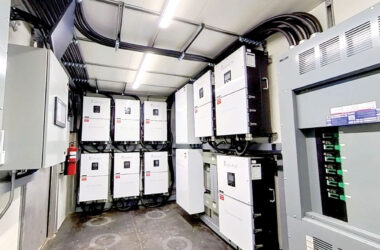
“The Saskatchewan Research Council has a long history of collaboration with First Nations and Métis communities, spanning more than 40 years in areas such as ecological studies, student enrichment and job training opportunities, and longer-term initiatives including remediation of former mine and mill sites in northern Saskatchewan,” Minister Responsible for SRC Warren Kaeding said. “The new Indigenous Action Plan further builds upon these relationships to ensure continued Indigenous participation in Saskatchewan’s key economic sectors and growing workforce.”

SRC’s Indigenous Action Plan has been built to align with the Truth and Reconciliation Commission of Canada’s (TRC) Call to Action 92 and will be lifted by four integral pillars: Employment, Leadership, Indigenous Community Relationships and Business Development.

“Continuing to build trust and strong relationships with Indigenous communities is a hallmark of this plan,” president and CEO of SRC Mike Crabtree said. “Advancing reconciliation with Indigenous Peoples is not only the right thing to do, it’s simply good business. We encourage all our staff, collaborators and clients to embrace reconciliation each and every day.”

Of particular importance within the plan will be two new programs supported by the Employment pillar: an Indigenous Workforce Program and an Indigenous Summer Student Program, Kiskiyihta (Kiskee ih-taah), which is a Cree word meaning to learn or to know. Together, these programs will help SRC increase recruitment and hiring of Indigenous Peoples by collaborating with Indigenous educational institutions and training entities to develop strategies for the retention and advancement of Indigenous employees. The collaborating organizations will also support SRC in finding potential candidates for SRC job openings and for the Indigenous Summer Student Program.

Other important initiatives within the plan include the formation of an Indigenous Advisory Committee, increasing Indigenous procurement via SRC’s Indigenous Procurement Policy, growing the number of Indigenous learning opportunities for SRC employees, and strengthening meaningful engagement and collaboration with Indigenous communities and Tribal Councils. 

by Saskatchewan Research Council Saskatchewan Research Council

Deploying Reliable Power

Hybrid energy containers
Photo: Saskatchewan Research Council

Whether it’s powering remote industrial sites or off-grid communities, the Saskatchewan Research Council’s (SRC) Integrated Energy Systems team provides customized resilient smart-grid solutions for those looking to lower their carbon footprint and increase reliability.  

Since 2014, SRC’s Hybrid Energy Containers (HEC) have delivered custom decentralized energy solutions, delivering a combination of conventional and renewable power generation along with energy storage and remote monitoring and control.

“Depending on the application, the solution typically consists of a diesel generator, energy storage and renewable sources, including solar and wind power, integrated in a proven and reliable microgrid,” Integrated Energy Systems team lead Ryan Jansen said. “The system can be customized to withstand harsh climates and weather events without outages while maintaining reliable remote monitoring and control capabilities.”

Developing an energy efficient RTC for military missions 

In 2023, SRC’s Integrated Energy Systems team joined forces with a group of tech companies to tackle the Innovation for Defence Excellence and Security Program – Pop-up City contest, held by Canada’s Department of National Defence. The goal was to demonstrate an improved Relocatable Temporary Camp (RTC) for the Canadian Armed Forces (CAF), with improved energy, water and waste management systems. 

For this demonstration, Innocorps Research Corporation, a Saskatoon-based water-purification company with the mandate of delivering clean water to everybody, formed the Circular City Consortium, teaming up with Eco-Growth Environmental Inc., Harmony Desalination Corp., Southern Alberta Institute of Technology and SRC to take on this challenge. SRC was responsible for powering the camp and it fulfilled this obligation through a customized HEC for this project. 

The Circular City Consortium won the competition following a demonstration of the RTC at the Canadian Forces Base in Suffield, Alta., in August 2023. According to Innocorps Research Corp., the central component to the victory was the world-first demonstration of a mobile direct potable water reuse system, which safely recycled wastewater back to drinkable water.  

“The Pop-up City contest was the most complicated project that we have ever worked on. We greatly appreciate the hard work and dedication from SRC and its ability to deliver in short order to complete our microgrid subsystem with the seamless integration of the HEC,” said Innocorps Research Corp. CEO Aarya Shahsavar. “With that, we were able to successfully demonstrate how rapidly deployable solar panels and battery storage can be hybridized with diesel generation and used in military and remote applications to reduce fuel.” 

Wall-to-wall technology and hybrid solutions provide reliable power

With nearly a decade of experience in customizing alternative power and energy containers, SRC had the knowledge and expertise to develop a container for the consortium that fits the project’s specific needs. “The basic building blocks are similar, but the amount of storage that you need for a project will depend on what the loads are, what your generation sources are and what the goal of the project is,” Jansen said.  

Because this HEC was customized for a military application, Jansen says his team focused on ease of transportation and rapid deployment to fit the needs of the CAF.

“We had the container insulated to endure harsh climates, and we installed tilt-up solar panels arrays on both the top and side of the container. The idea was to make it rapidly deployable so you can move this on site, pop up your solar panels and you’ve got instant power at the site,” Jansen said. “Everything is pop up, it’s modular and ready to go.”

The inside of the HEC is wall-to-wall technology that’s broken down into three components: an integrated auxiliary power input, inverters and lithium-ion phosphate batteries with 135 kilowatts of power and pop-up solar arrays, which provide the backbone of the microgrid. “It’s enough to power an average household for about 10 hours,” Jansen said.  

The Integrated Energy Systems team opted for a smaller battery storage capacity for this military demonstration, with the ability to boost the power and storage supply significantly depending on the application. “Had they needed something to power an RTC for two weeks, we would’ve delivered a HEC to do exactly that. We’d bring in another container and install additional batteries so it could sustain the camp much longer,” Jansen said. 

Building a self-contained system that adapts to outside conditions  

Jansen says his team integrated an advanced heating and cooling system so the HEC could efficiently supply power to a microgrid in the harshest environments. The HEC adapts accordingly in locations blanketed in extreme heat or stifled by a polar vortex. While the Pop-Up City contest didn’t specifically require the RTC to be able to withstand extreme heat or cold climates, Jansen says the team went above and beyond, delivering a microgrid with the ability to operate under both extremes.  

The inside of the container adapts to the conditions outside, with air source heat pumps that can provide both heating and cooling. Custom forced-air fans can draw hot or cool air in to maintain the inside temperature without relying on more power-hungry options such as conventional air conditioning and electric heating.  

“It’s controlled electronically by our programmable logic controller, which is the brain of the HEC’s system. It chooses which method of heating or cooling is most beneficial at the time and automatically turns on and heats or cools the container,” Jansen said. Allowances have been made within the temperature control system to utilize excess renewable energy to preemptively heat or cool the container to further increase the system’s efficiency. “If the batteries are full and there is excessive renewable power in cold weather, our system automatically turns on multiple heat sources to heat the container up to 30 degrees Celsius, even if it’s minus 40 outside,” Jansen said.  

“SRC understands what it means to operate in austere environments, with past experience deploying HECs for northern Saskatchewan. We were able to work together to advance the HEC platform with new capabilities through this project that we hope can benefit a wider audience,” Shahsavar said.  

Knowing the customized HEC helped elevate the Circular City Consortium’s pitch for a new and improved RTC, Jansen says he’s thankful Innocorps Research Corp. recognized SRC’s expertise and included them in the project.  

“They came to us because they noticed, just like themselves, that we’ve got something novel. We have capabilities and capacities that complemented the project team, so I think they chose their team well,” Jansen said. “Ultimately, we all delivered on what we had promised to do, and what we had promised to do is make something that was novel, effective and reliable.” 

You can learn more about SRC’s Integrated Energy Systems teams and its Hybrid Energy Containers by visiting src.sk.ca/services/hybrid-energy-container.

by SHCA SHCA

SRC Indigenous Action Plan Builds on Decades-Long Reputation of Collaboration

An Indigenous Action Plan being set in motion by the Saskatchewan Research Council (SRC) aims to engage and advance the participation of Indigenous Peoples within the organization and communities across Saskatchewan. 

SRC is proud to launch a new Indigenous Action Plan that centers on Indigenous Peoples, communities and businesses to help achieve shared goals. Continuing to build trust and strong relationships with Indigenous communities is a hallmark of this plan.

SRC - Saskatchewan Research Council logo

“SRC has a long history of collaboration with First Nations and Métis communities, spanning more than 40 years in areas such as ecological studies, student enrichment and job training opportunities, and longer-term initiatives including remediation of former mine and mill sites in northern Saskatchewan,” Minister Responsible for SRC Warren Kaeding said. “The new Indigenous Action Plan further builds upon these relationships to ensure continued Indigenous participation in Saskatchewan’s key economic sectors and growing workforce.” 

SRC’s Indigenous Action Plan has been built to align with the Truth and Reconciliation Commission of Canada’s (TRC) Call to Action 92 and will be lifted by four integral pillars: Employment, Leadership, Indigenous Community Relationships and Business Development. 

“Continuing to build trust and strong relationships with Indigenous communities is a hallmark of this plan,” president and CEO of SRC Mike Crabtree said. “Advancing reconciliation with Indigenous Peoples is not only the right thing to do, it’s simply good business. We encourage all our staff, collaborators and clients to embrace reconciliation each and every day.” 

Of particular importance within the plan will be two new programs supported by the Employment pillar: an Indigenous Workforce Program and an Indigenous Summer Student Program, Kiskiyihta (Kiskee ih-taah), which is a Cree word meaning to learn or to know.

Together, these programs will help SRC increase recruitment and hiring of Indigenous Peoples by collaborating with Indigenous educational institutions and training entities to develop strategies for the retention and advancement of Indigenous employees. The collaborating organizations will also support SRC in finding potential candidates for SRC job openings and for the Indigenous Summer Student Program.  

Other important initiatives within the plan include the formation of an Indigenous Advisory Committee, increasing Indigenous procurement via SRC’s Indigenous Procurement Policy, growing the number of Indigenous learning opportunities for SRC employees, and strengthening meaningful engagement and collaboration with Indigenous communities and Tribal Councils.  

SRC would like to recognize and thank Saskatchewan-based Indigenous artist Arnold Isbister for his valuable contributions to the plan. Isbister provided much of the document’s original artwork, helping bring the Plan’s holistic approach to life with his colourful interpretations of its four Pillars and its symbolic cover pages.

by SHCA SHCA

SRC Delivers $887 Million in Value Impacts to the Provincial Economy in 2023-2024

Stock and bond market graph and world map with trading desk bank office interior on background. Multi exposure. Concept of international finance

The Saskatchewan Research Council‘s (SRC) latest economic impact assessment shows it has contributed more than $15.5 billion in combined economic and employment impacts in Saskatchewan since it began assessing such in 2003 – including a combined impact of $887 million in this latest fiscal year.

SRC’s 2023-2024 economic impact assessment shows SRC’s impact on the provincial economy in the fiscal year was $785 million. SRC also assisted in creating or maintaining more than 1,682 jobs in Saskatchewan in 2023-2024, a contribution valued at an additional $102 million. These impact numbers were also accompanied by annual revenue of $83 million generated by SRC in 2023-2024. In 2023-2024, SRC had a mandate effectiveness of 38, which means that for every dollar the province invested in SRC, SRC’s work contributed at least a 38-times return to the growth of the Saskatchewan economy. 
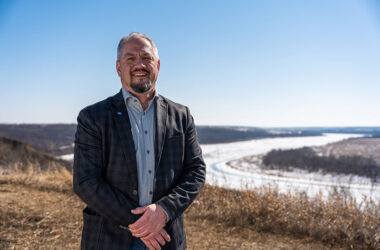
“The Saskatchewan Research Council is dedicated to growing and strengthening Saskatchewan’s economy through research, development and demonstration through the transfer of innovative technical solutions, applications and services,” Minister Responsible for SRC Warren Kaeding said. “SRC’s work is making an incredible impact on the province’s economic growth and is creating thousands of jobs for people across Saskatchewan.” 

“At SRC, we are dedicated to strengthening Saskatchewan’s economy with quality private sector jobs and a secure environment,” SRC president and CEO Mike Crabtree said. “This is why our economic impact assessment is so important, as it truly demonstrates the value we can generate from the province’s investment in us.”

With 77 years of research, development and demonstration experience, SRC is Canada’s second largest research and technology organization with 1,400 clients in 22 countries around the world.

by Saskatchewan Research Council Saskatchewan Research Council

Meet Our Experts

Mark Calette

As a member of the Métis Nation-Saskatchewan, Mark Calette knows the importance of building strong relationships. “For Indigenous people, relationships mean everything to us,” said Calette. “That’s the fundamental backbone of how we want to work with anybody. We want to build those relationships first and then trust can start and we can move forward.”

Over the years, Calette has been a leader in community engagement and has helped the Saskatchewan Research Council (SRC) build trust between Saskatchewan communities and industry partners. 

Calette started his career at SRC working with Indigenous communities in northern Saskatchewan as part of a multi-year project called Project CLEANS (Cleanup of Abandoned Northern Sites). This work involves remediating 37 abandoned uranium mine and mill sites. Calette’s new role as director of Indigenous relations expands his work in community engagement to other areas across SRC. He is excited to engage in collaborative discussions and help make new connections, build trust and maintain relationships with Indigenous communities across the province.

Communication is key to fostering trust 

Calette believes that listening to and learning from communities is the starting point for any industry project. “Industry often makes the mistake of speaking with communities after they have made important decisions,” said Calette.

The first steps toward a successful approach are establishing communication, building trust and taking time to foster relationships that are collaborative. Calette says that finding out the community’s needs is an important step in the process and can make a world of difference for everyone involved in the project. This important feedback can inform any project-related decisions and the process through which they’re made. For example, the Project CLEANS team meets regularly with different communities in the Athabasca Basin, whether in person or checking in by phone or email. 

“Spending as much time as possible talking with community leaders and members, and in a variety of different ways, is a great way to facilitate strong relationships,” said Calette.

Looking towards the future of community engagement

After his work with Project CLEANS, Calette left SRC to join Métis Nation-Saskatchewan as senior director of administration. Now back at SRC, Calette is entering his ninth, non-consecutive year with the organization and is excited for the future. “It’s a great place to be and I think it’s a special time,” said Calette, “I think how we’re going to engage with the Indigenous communities is going to be really exciting and important.”

Calette brings his passion and expertise to his new role and hopes to expand on the work that SRC has done over the years. His goal is to continue to help Indigenous communities connect with SRC on new and existing projects. Collaboration between SRC and Indigenous communities is an ongoing process. “When I first joined SRC, the Indigenous engagement piece was moving along but it was still pretty new,” said Calette. “So, we were able to build this very robust plan together.”

“For SRC, it was important to let communities know that we were going to be there for the long haul, and we were going to listen, and we were going to learn.”

– Mark Calette, Saskatchewan Research Council

While strong foundations have been laid, Calette believes there is room to improve. “We certainly tried to follow the good work we saw around Canada, and I think, in terms of Saskatchewan, what we did was best practice,” said Calette. “I believe that’s a good starting point, but there’s an opportunity to really expand and grow and improve on the work we did.”

SRC’s work with communities in the Athabasca Basin on Project CLEANS set a precedent for future engagement between business, industry and Indigenous communities in the province. “For SRC, it was important to let communities know that we were going to be there for the long haul, and we were going to listen, and we were going to learn,” said Calette. “We just took that approach from the start, and I think that served us well and continues to serve us well.”

Communities were able to give their input on different areas of work at all stages of the process. For example, SRC helped to facilitate Elder–youth workshops that assisted the revegetation and reclamation portion of the project.

Moving forward together

Calette is focusing his energy on cultivating Indigenous engagement throughout SRC and hopes to expand relationships between the council, industry and communities. 

“Any industry, whether it’s mining, oil and gas, forestry, anything to do with the environment – I think you need to work with Indigenous communities and really learn from them,” said Calette. “They have been stewards of the land for centuries and have a lot of knowledge to share. It’s important to learn from impacts experienced from previous development and to avoid the pitfalls of the past.”

Working together on key strategies can help grow relationships. Calette believes that clear communication is crucial for reaching future goals and he is focused on a collaborative approach that will benefit everyone involved.

A stronger Saskatchewan

Saskatchewan is important to Calette. His family came to the province from Red River, Man., in the 1860s. His community, the Round Prairie Métis, settled just south of Saskatoon near Whitecap Dakota First Nation. After the events at Batoche in 1885, the community began migrating to the city, leaving the area behind by the early 20th century. Today, the Round Prairie Cemetery marks the area of an important historic Métis settlement. Calette has spent some time living and working in Prince Albert and Buffalo Narrows but calls Saskatoon his home.

Creating a diverse and sustainable economy through research initiatives and technological innovation is an important part of SRC’s mandate. Calette believes that focusing on helping people succeed will make Saskatchewan even stronger. “I think when we’re working with a significant demographic of the province, and if we find ways to help each other, we are really achieving our mandate and helping Saskatchewan grow,” said Calette.

There is a great opportunity for SRC and Indigenous communities to work together, and get more people engaged with industry, by helping individuals gain more experience in skilled trades and take on leadership roles. Calette sees a lot of talent in these communities and a bright future for the province. He hopes that over the next few years, SRC can help many communities reach their full potential.

“I think we are seen as a leader in working with Indigenous communities in the Athabasca Basin. I would like to continue that right across the province,” said Calette, “and I’m really excited about that opportunity.”    

by SHCA SHCA

How the Saskatchewan Research Council is Using Metal Smelting for Rare Earths

An overview

By Jess Staffen, Saskatchewan Research Council

Metal smelting is one of the key parts of the rare earth element (REE) supply chain that is currently being developed by the Saskatchewan Research Council (SRC). While the process of metal smelting is not a new concept or practice, its use for REEs – especially in North America – is fairly recent.

Dr. Jack Zhang, associate vice-president of strategic initiatives at SRC, describes his journey into the practice of metal smelting.“Metal smelting is one important part of extractive metallurgy. I have been working in extractive metallurgy for more than 15 years,” he said. “However, most of my work has focused on mineral processing and hydrometallurgy. It was not until 2018 that I started to work on metal smelting technology, including both equipment development and process development.”

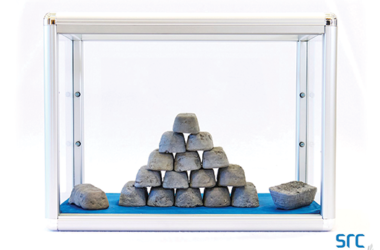
Since Zhang and his team began their work in metal smelting, they have made significant progress and have developed expertise in this niche area. In August 2022, SRC announced that it produced the first rare earth metal ingots in Canadian history at its under-construction Rare Earth Processing Facility using metal smelting technology. To date, 100 kg of NdPr (75 per cent neodymium, 25 per cent praseodymium) metal ingots have been produced. The facility is the first of its kind in North America and includes three key stages of the REE midstream supply chain: concentration, separation and metal smelting. The facility looks to be commissioned and fully operational in 2024.

What is metal smelting?

Metal smelting is a technology that falls under the pyrometallurgy umbrella of extractive metallurgies. Extractive metallurgy is the name for a group of technologies that extract the desired metals from mineral concentrates. There are two types of extractive metallurgies: hydrometallurgy and pyrometallurgy.

As the names suggest, hydrometallurgy is where solution chemical reagents like acid or cyanide are used to extract metals from mineral concentrates into a solution where they then move into downstream processes like precipitation or electrowinning that pull the “metals-in-solution” (or metal ions in solution) out into solid metallic form.

Pyrometallurgy describes processes that use heat in the presence of other chemical agents to enable metals in mineral concentrates to be both extracted from the concentrate and converted to metals.

Pyrometallurgy generally includes processes like calcining (thermal decomposition of a material), roasting (most commonly using heat and oxygen to oxidize sulphidic ore to oxides for further hydrometallurgical treatment), smelting and refining.

Smelting and refining both involve thermal reactions with molten phases. Smelting is different from melting – melting is the process of liquefying a solid substance by heating, like butter in a pan. Smelting is the process by which a metal is obtained at temperatures beyond the melting point and therefore includes both the melting of ore and the extraction of metals from ores in their purest form.

The process involves using chemical reducing agents (e.g., fluxes), as well as heat to achieve this. Refining generally refers to processes that take a smelted “product” and further purify and separate the metals in it. Both the smelting and refining of mineral concentrates have two outputs from their processes: purified metals and waste slag.

What is the metal smelting process?

There are two steps in the metal smelting process:

  • Decomposition (also called roasting in different metal smelting processes): to remove unwanted components, like carbon and sulphur, to make a pure oxide.
  • Reduction: to convert the oxide to element metal. A reducing agent is normally used to react with the oxygen.

Where does metal smelting fit within the REE supply chain?

The supply chain for REEs is quite complex and includes several stages. Within that mining-to-magnet chain of processing, metal smelting is fifth:

  • Mining
  • REE concentration
  • Hydrometallurgy
  • Separation
  • Metallization
  • Alloy making
  • Magnet powder production
  • Magnet making

How was SRC able to become experts in metal smelting?

The metal smelting process is not new and has been known for hundreds of years. However, there are currently no commercial-scale REE metal production options in North America. China has dominated this market since the 1990s, driven largely by two factors: low prices and state-backed investment in infrastructure and technology.

SRC is looking to change that with the skills, expertise and knowledge it has gained over the years from both literature and hands-on experience through its research and development work in REEs and other industries.

What are the challenges?

Zhang says the biggest challenges in the metal smelting process are two-fold: how to get the specialized equipment built and how to develop the skills to operate it.

“The process, in theory, is very simple,” he said, “but the operation requires skills and experience. As with many REE processes, including the hydrometallurgy and separation processes, the technologies themselves are well known and documented.

“However, there are a lot of techno-economic gains to be made with how they are operated and how to minimize the capital expenditure with the equipment. The process is also very labour intensive. But as SRC has done with other projects in the past, in-house ingenuity is heavily supported.”

SRC is investigating ways to automate the process to reduce operating costs and boost safety conditions.

What other ways will SRC’s process be different?

SRC’s metal smelting operation aims to have the highest safety standards, to be energy efficient and to achieve consistent product quality control and as much automation, as possible.

For more on SRC’s metal smelting services and its under-construction Rare Earth Processing Facility, go to www.src.sk.ca/ree.

by SHCA SHCA

Powering Up

Recycling critical metals from lithium batteries

By the Saskatchewan Research Council

cheskyw/123RF

As electric vehicle (EV) technologies advance and the energy transition continues, the demand for critical metals keeps rising. However, the primary resources for battery metals are not able to meet the growing demand.

“The supply and demand for major metals, such as lithium, nickel, cobalt and copper, shows that demand will outpace supply in the next few years,” said Dr. Jack Zhang, associate vice-president of strategic technologies in Saskatchewan Research Council (SRC)’s mining and minerals division.  “We may be facing a shortage of critical metals for batteries.”

Critical metals are essential to telecommunications, computing and clean energy. They are a valuable export commodity and vital to Canada’s technology sector and our supply chain.

Critical metals at work

Lithium-ion batteries (LIBs), first invented in 1985 and commercialized in 1991, power EVs, renewable energy storage, consumer electronics, power tools and more. Metals such as lithium, cobalt, nickel and copper are required to build LIBs and are found around the world.

“However, the current supply chain is vulnerable because the majority of refining takes place in one spot,” said Dr. Zhang.  Right now, that one spot is China.  “It’s important for us to develop a more balanced supply of refined metals in North America.”

At the end of their working life, LIBs end up as waste.

Batteries clog landfills, with significant disposal issues due to their toxic components leaching out over time. Concurrently, the demand for critical metal supply is increasing, posing its own environmental concerns for mining jurisdictions around the world. The technologies that require these new batteries, (and the metals that power them) are developing faster than industry and governments are finding solutions for the waste. 

What if there was another way to source critical metals and address the environmental concerns around spent LIBs?

Enter urban mining

The term urban mining may sound like a buzzword, but the idea behind it is simple; what if we recycle the usable elements of spent LIBs, thereby reducing their environmental impact and addressing the growing need for more critical metals? 

The idea of recycling batteries is not a new one. It’s been happening for years, but it’s been focused on the “front end,” meaning diverting batteries from the landfill and disassembling the battery into individual components.

Urban mining takes battery recycling one step further, metals are extracted from these parts, thereby making them available for battery and other product manufacture. This mining activity can help meet the growing need of new batteries and technologies. Plus, it generates value from what was previously considered “waste,” and removes environmental contaminants from landfills.

Urban mining also reduces the need for new mining operations that have a large environmental footprint. Recycling and refining previously used metals are far better than creating a new mine, from both economic and environmental perspectives.

Let’s recycle

Drawing on their specialized expertise in lithium recovery processing and technologies, Zhang and his team at SRC are developing a direct recycling process of LIB metals that will help industry meet the growing demand for critical metals and divert batteries from landfills. 

EV batteries and batteries from electronics, such as cellphones and computers, are valuable for their components (e.g., aluminum, copper, nickel and lithium), and recovery processes are designed to maximize the critical metals from end-of-life (EoL) batteries.

How it works

EoL batteries will be dismantled in SRC’s lab through an automated process that produces minimal waste residues while carefully preserving the critical metals. These components – such as nickel, cobalt, lithium, aluminum and copper – are extracted at high purity and recovered for immediate reuse. 

“Battery recycling is complex because of all the types of batteries and their varied composition and chemistry,” said Zhang. “But it’s not impossible. With the appropriate sorting and recycling processes in place, battery recycling can become a viable source for critical metals and minerals that addresses both the market demand and environmental concerns.”

SRC can facilitate the development of the refining process for organizations interested in battery recycling.

SRC lithium battery recycling services

SRC’s direct recycling of LIB technology aims to provide an alternate source for critical metals and support the value chain of the EoL battery recycling industry. Zhang outlines the following benefits as core factors to SRC’s approach:

  • Reduces environmental footprint
  • Increases significant secondary resources of LIB metals
  • Develops new recycling technologies
  • Creates a secure supply of critical metals for high tech and supports industry’s energy transition

Zhang also points to SRC’s state-of-the-art labs and facilities and his team of experienced professionals as essential in developing and commercializing the proposed technology for industry. With these advancements, powering up will be more sustainable in the future.