by Martin Charlton Communications Martin Charlton Communications

Nation-Building Begins Here

Canada flag painted on brick wall
Photo: millenius/123rf

Saskatchewan’s economy is heavily reliant on transportation, with highways serving as critical arteries for trade and commerce. As a resource-based economy, it is critical that the province has the proper infrastructure in place to get products to market.

Canada recently underwent a federal election, where the main topic electoral candidates discussed was the tariffs instigated by the Trump administration. While the United States tariff issue does impact Saskatchewan, national media platforms gave little to no attention to the 100 per cent canola tariff instituted by China, which has a direct bearing on the Saskatchewan economy.

In 2024, Saskatchewan exported approximately $4.9 billion worth of canola products to China, including canola seed, oil and meal. Provincial trade goes hand in glove with Saskatchewan’s road and infrastructure system. Strong trade results from having a strong infrastructure system and vice versa. How does a resource-based economy recover from the impact of tariffs and what role does the heavy construction industry play to help fix it?

“The way I see it is that we have several paths to follow to help bring stability back into how we continue to not only trade our goods, but to expand to other markets and make sure that our infrastructure meets the demand,” said Shantel Lipp, SHCA president. “Looking for alternative markets around the globe is being actively pursued by the provincial government to help offset the impact from the China tariffs. However, a large part of those deals is reliant on reassuring potential customers that Saskatchewan has reliable infrastructure to move our goods to them.”

Saskatchewan, regardless of any economic headwinds caused by the tariffs, continues to grow its output and the demand for products continues unabated. Agriculture products, potash, uranium and oil and gas are still needed globally, and Saskatchewan has all that. The province must ensure its roads and infrastructure meet trading partners’ needs.

“The heavy construction industry has always met its challenges head-on. The ability for our industry to be flexible is what keeps the bulk of our members going,” said Lipp. “Rather than being a barrier to growth, the heavy construction industry looks at the tariff challenge as an opportunity. Planning ahead is key to our industry succeeding and that can only happen through stable long-term funding arrangements with key partners within government.”

The future of Saskatchewan highways and infrastructure will increase, not decrease, in demand. Aside from key exports of agriculture products, potash and uranium, Saskatchewan has begun to increase the export of critical minerals driven by global need that will require enhanced highway capacity to transport these resources from remote mining sites to processing facilities or export hubs. The province’s aging infrastructure, coupled with increasing traffic volumes, necessitates significant investment in Saskatchewan’s road system.

“There has been a lot of talk amongst our elected officials that in order to counter the impact of tariffs we need to also look within our own borders to the remove barriers to growth,” said Lipp. “Our industry has been very vocal on removing interprovincial trade barriers that hinder our ability to grow as an industry and as a province.”

Aside from the tariff discussions, there are encouraging signs that the newly elected federal government will start to course-correct its past mistakes. At a meeting in March with the premiers, Prime Minister Carney asked each of them to identify “nation-building projects.” This could be an indication that the country and Saskatchewan may be getting an economic boost through funding projects that include elements of highways and infrastructure.

“Saskatchewan now has representation at the federal table with the appointment of Desnethé-Missinippi-Churchill River Member of Parliament Buckley Belanger as Secretary of State (Rural Development),” said Lipp. “Our industry is eager to engage with Belanger on the importance of building up our provincial infrastructure to meet the demand of our resource development projects.”

Belanger’s riding covers a vast swath of northern Saskatchewan, which is home to some of the most productive mining activity in North America. It is also home to the McArthur River uranium mine, which is the world’s largest high-grade uranium deposit. In 2023, Saskatchewan’s uranium sector achieved $1.6 billion in sales revenue, the world’s second-largest uranium producer for that year, providing work for 3,420 direct employees and contractors.

“Both provincial and federal governments need to find common ground that will ensure that the level of infrastructure funding keeps pace with our level of growth,” said Lipp. “So many opportunities have been lost to a decade of stagnation on nation-building projects, and we are hopeful that change is the order of the day.”

by Rodrigue Gilbert Rodrigue Gilbert

Standing Strong Against Tariffs

Crack between America and Canada flags. political relationship concept
nkdrop/123rf

In construction, where everything depends on long-term planning and tight cost forecasts, even a small disruption in the supply chain can throw things off in a big way. Lately, the rise in protectionist talk and new trade barriers, such as the 25 per cent tariff the U.S. placed on Canadian steel and aluminum, are causing significant turbulence across the industry.

The U.S. remains Canada’s largest trading partner, and our construction industry is deeply integrated with cross-border supply chains. Tariffs disrupt those chains, driving up costs, creating uncertainty, and delaying essential public and private sector projects.

For Saskatchewan’s heavy construction contractors, many of whom rely on imported steel and key materials for large-scale public and private projects, the potential impacts are stark:

  • Skyrocketing material costs that could make projects financially unviable.
  • Delays in project delivery due to supply chain disruptions.
  • Increased uncertainty that discourages investment and long-term planning.

These impacts extend far beyond the construction yard. When projects are delayed or cancelled, Saskatchewan’s communities are left waiting for the services, jobs and growth those investments were meant to deliver.

CCA has been actively working with federal and provincial leaders to ensure the construction industry’s voice is heard in trade and economic policy discussions.

What CCA is doing to fight for the industry

The Canadian Construction Association (CCA), representing over 18,000 member firms, is proud of our mission to inspire a progressive, innovative and sustainable construction industry. With partners like SHCA, we’re committed to shaping a stronger, more resilient Canada through the power of construction.

CCA has been actively working with federal and provincial leaders to ensure the construction industry’s voice is heard in trade and economic policy discussions. As part of our strategy, we have:

  • Participated in government consultations to highlight the specific risks tariffs pose to Canadian construction.
  • Engaged with policymakers to promote tariff exemptions or mitigation measures for essential materials.
    Published economic analyses showing how tariffs lead to higher costs and stalled progress on infrastructure.
  • Construction for Canadians: A call to action

We’re not just reacting, we’re pushing for proactive policies that protect our industry and the broader Canadian economy.

The 2025 federal election presented a pivotal opportunity for us to rally support for the construction sector. Through our Construction for Canadians campaign, CCA worked to ensure that construction remained a key issue in the national conversation, championing policies that promote growth, sustainability and resilience in our industry.

While the election may be behind us, the work continues. Our campaign wasn’t just about influencing platforms, it was about building long-term awareness and support for construction as a pillar of Canada’s economic future. Now, as the newly elected government begins its mandate, CCA remains focused on turning these conversations into real, lasting progress.

Turning advocacy into action

Now more than ever, Canada needs investment in resilient infrastructure that will support growth and meet the demands of a changing world. We must grow the construction workforce, modernize procurement processes and cut the red tape that hampers project delivery.

Canada has slipped from 10th to 26th in global trade infrastructure rankings. This is troubling for a country whose economy depends on the import and export of goods. Our ports, railways and highways, the arteries of our supply chains, are stretched thin and ill-equipped to handle growing demand and the mounting need to diversity our markets. Saskatchewan’s key export sectors are particularly vulnerable to bottlenecks at ports, rail terminals and highways.

CCA has been working in partnership with other stakeholders to secure a Canada Trade Infrastructure Plan that prioritizes strategic, long-term investments. A cornerstone of this plan is the creation of the Canadian Infrastructure Council, a significant milestone in pushing forward the National Infrastructure Assessment, which is a priority for CCA. This council will play a key role in prioritizing strategic infrastructure projects critical to Canada’s future.

With strong partnerships, a united voice and a clear vision, we can build a more resilient supply chain, a stronger workforce and the modern infrastructure Canadians need. CCA is committed to advocating for the tools, policies and investments that will allow our industry to thrive, not just for today, but for generations to come.

by SHCA SHCA

WCR&HCA Calls On Prime Minister to Announce Vision, Plan in Western Canada

The Western Canada Roadbuilders & Heavy Construction Association (WCR&HCA) Board of Directors is calling on Prime Minister Mark Carney to share his vision for Canada, implement a four-pronged approach to address the economic impact of the trade war with the U.S. and help Canada emerge more resilient and stronger.

WCRHCA | Western Canada Roadbuilders and Heavy Construction Association

In a letter to Carney May 7, the WCR&HCA urged the Prime Minister, in his first 100 days in office, to deliver his vision, proposed direction and destination for Canada in a major policy address from a location in Western Canada. If accepted by the Prime Minister, that would be historic in nature, WCR&HCA president & CEO Chris Lorenc says.
Moreover, it would help assuage concerns that Western Canada alienation worries will be moot in a federal government that listens attentively, acts purposefully and is government for all the people of Canada, Lorenc says. The letter outlined a four-pronged national approach to respond to Trump’s tariffs. It noted the approach aligns with the Prime Minister’s comments in a recent press conference, in which he outlined the imperatives of focusing on national purpose, benefit and unity in a collaborative ‘Team Canada’ approach.

The Premiers of the four western provinces were also copied on the letter, which can be read here.

by Martin Charlton Communications Martin Charlton Communications

Beyond the Border

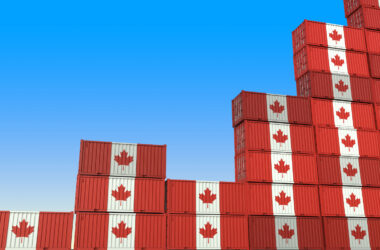
Industrial containers with flags of Canada making a rising graph.
moovstock/123RF

The future of trade for Canada remains up in the air as the country’s biggest trading partner has imposed tariffs on what we export to the United States.

Many in the heavy construction industry may view this as a doomsday scenario for the Canadian economy. However, there are others within the industry who see this as an opportunity for Canada to wake up and do business differently.

Two-thirds of Canada’s national income comes from trade. With a vast land mass, Canada has had to rely on stable infrastructure to get its goods to market. This is a challenge, especially when it comes to getting goods out of remote areas within the country. Taking goods from the Canadian north to markets in the south and beyond requires a high level of co-ordination, relying on reliable infrastructure systems.

In 2010, Canada’s trade infrastructure was listed in the top 10 of all jurisdictions in the world. By the time 2019 came around, the country had dropped to 32nd place. Canada’s ability to be competitive drastically dropped during this period and requires a co-ordinated effort by sectors and government to get it back to where it was not that long ago.

Black maple leaf on yellow road sign

Canada has not adequately co-ordinated between federal, provincial and municipal governments and the private sector to build a system of trade infrastructure that enables the economy to reach its full potential.

John Law, senior executive in residence with the Canada West Foundation and former Deputy Minister of Highways for Saskatchewan, was recently interviewed in the media on how it is necessary to build up our infrastructure to remain competitive in the world. Law stated in that interview, “If you can’t move it, you can’t sell it.”

Law also stated that there are three kinds of infrastructure projects. First is the “want” infrastructure, which includes hockey rinks, community centres and similar facilities. The second was the “need” infrastructure, which includes facilities such as hospitals and schools. The third and most important form of infrastructure build is trade and transportation. Trade and transportation infrastructure projects are the ones which help to pay for the “wants” and the “needs” by enabling the economy.

Law points out that Canada has not adequately co-ordinated between federal, provincial and municipal governments and the private sector to build a system of trade infrastructure that enables the economy to reach its full potential. Both the United Kingdom and Australia have created ways to help co-ordinate their long-term infrastructure planning to create a successful environment of trade.

We have to break the cycle of planning around elections to address our infrastructure needs. By planning long-term, we can identify the crucial projects that will help us as a province and a country meet the demands of our trading partners.

– Shantel Lipp, SHCA

Infrastructure Australia was established in 2008 to be the Australian Government’s independent adviser on nationally-significant infrastructure investment planning and project prioritization. Infrastructure Australia conducts independent analysis of all infrastructure needs which are then put on an infrastructure priority list. The United Kingdom has the Infrastructure and Projects Authority (IPA), which is classified as the government’s centre of expertise for infrastructure and major projects. The IPA works across government to support the successful delivery of all types of major infrastructure projects.

Both entities offer the government expert advice on the needs of infrastructure investment with the recommendations based on long-term needs that fall beyond the natural election cycles of the government of the day.

“This is something that is definitely needed here in Saskatchewan and here in Canada,” said Shantel Lipp, president of the Saskatchewan Heavy Construction Association. “We have to break the cycle of planning around elections to address our infrastructure needs. By planning long-term, we can identify the crucial projects that will help us as a province and a country meet the demands of our trading partners.”

If Canada is to explore new trading partners beyond the United States, then it must have the infrastructure backbone supported by long-term planning to meet the demands required by that diversity in trade.

by SHCA SHCA

Canada’s Construction Industry Responds to Trump’s Damaging Tariffs

American and Canadian Flags Against Bright Skies
dbvirago/123RF

The Canadian Construction Association (CCA) is disappointed to see that President Donald Trump has made the short-sighted decision to plunge Canada and the United States into an unnecessary, irresponsible trade war that will see notable consequences on both sides of the border.

“The Canadian and American construction industries rely heavily on free-flowing supplies of essential construction materials. These needless tariffs will decrease productivity, harm economic growth and put critical projects and countless construction jobs at risk – on both sides of the border,” said Rodrigue Gilbert, CCA president. “Once again, the new U.S. administration clearly demonstrates that they have a limited understanding of how damaging these measures will be on the integrated economy between our two countries.”

In response to Trump’s tariffs on Canadian products, the Government of Canada has announced tariffs on an initial $30 billion worth of American goods and promised $125 billion more in 21 days. CCA commends the federal government for its continued prioritization of industry consultation and looks forward to continuing to be an active participant in those discussions.

These tariffs present a significant risk for the construction industry. This likely means increased costs for homebuilding and trade-enabling infrastructure, impacts to supply chains and trading relationships, and a weakening of economic development and productivity. While the federal government is right to respond in kind, CCA reiterates its call for all governments to consider economic measures to support Canadian businesses and stimulate the economy, in consultation with industry. 

“Once again, this is a time where we need all Canadians to stand up for Canada. This is not the time to sit on our hands – we all have to work together to increase productivity and support Canadian businesses, so that we can all build a stronger Canada and surmount this trade conflict,” said Gilbert.  

CCA will continue to monitor the impact of these economic measures on the construction industry and will continue working with all levels of government to build a strong foundation for Canada’s future. 

by SHCA SHCA

Canada’s Construction Industry Stands Strong Against U.S. Tariffs

U.S. President Donald Trump has said he will impose a 25 per cent tariff on Canadian goods exported to the U.S. (including aluminum and steel), along with a 10 per cent tariff on energy products, next month.   In kind, the Government of Canada has responded with targeted tariffs, with some products having a direct impact on construction.  

“Canada’s construction industry is disappointed to see the imposition of tariffs,” said Rodrigue Gilbert, president of the Canadian Construction Association (CCA). “We appreciate that the federal government has issued a strong response to President Trump’s senseless tariffs and will hold consultations with industry on further measures.”   

The impacts of this trade conflict will be felt throughout the Canadian economy. These measures are likely to impact not only the ability of construction operators to meet their project requirements, but also the supply chains that the Canadian industries rely on all together. This limits the industry’s ability to combat the housing crisis, slows down its ability to build critical infrastructure, and so much more.   

“This is a time where we need all Canadians to stand up for Canada. This is not the time to sit on our hands – we all have to work together to increase productivity and support Canadian businesses, so that we can all build a stronger Canada and surmount this trade conflict,” said Gilbert. 

As all levels of government consider non-tariff measures to support Canadian businesses and stimulate our economy, the CCA urges all governments to consult with industry so that any and all measures can be targeted, effective and reflect the real needs of the industry.   

CCA will continue to monitor the impact of these economic measures on the construction industry and will work with all levels of government to build a strong foundation for Canada’s future.

by Shantel Lipp Shantel Lipp

U.S. Tariffs: What It Means for Saskatchewan

Shantel Lipp

As we enter 2025, we need to look at the state of infrastructure in our province and our country. In Saskatchewan, we have a record number of residents using our roads. With over 1.2 million people in the province, Saskatchewan roads, highways and bridges are seeing more tires hit the surface than ever before. 

As we know, Saskatchewan is an export province that relies on its infrastructure to get its goods to market. As our exports grow year over year, the demand of having functional infrastructure to move those products to customers across the globe is imperative to our quality of life.  A thriving economy is how we get to build our hospitals and schools. But to do this we must have the resources to fund infrastructure before a single shovel is put into the ground. How we fund and maintain our infrastructure has a direct relationship to how successful our economy will be. 

This year will be a challenging time for many sectors in Canada and the province as the country faces potential punitive action from our largest trading partner, the United States, in the form of tariffs. Governments will have to come to terms on how to best mitigate the impact tariffs will have on our provincial and national economies. 

Building our schools, hospitals and infrastructure will become costlier if the tariffs come to pass. It is time for governments at all levels to think smart when it comes to the priorities of where taxpayers’ money is spent. One of the government’s basic principles is to maintain functioning infrastructure to support its citizens and its economy. When government takes its eye off the ball to focus on pet projects of their liking, the results tend to be catastrophic, as witnessed by the recent Los Angeles fires. 

As we work our way through 2025, our message to governments of all levels is to focus on the core services that maintain a healthy economy, and that starts with proper funding of infrastructure in our cities, province and country.