by Martin Charlton Communications Martin Charlton Communications

AI and Heavy Construction

Two individuals wearing helmets and VR headsets engage in training at a construction site
phonlamaiphoto/123rf

Artificial intelligence (AI) isn’t a buzzword anymore. It’s here to stay and construction professionals should embrace it as an important tool to improve their work and project management. This is according to Daniel Anvari, Ph.D., a presenter at the Saskatchewan Heavy Construction Association (SHCA)’s recent Infrastructure Summit and Trade Show held in Regina.

An expert in system dynamic modelling, predictive data analytics, business intelligence and machine learning, Anvari is primarily focused on AI startups and driving innovation in AI applications.

He has contributed to Toronto’s York University, the University of Saskatchewan, Saskatchewan Polytechnic, Kwantlen Polytechnic University and the British Columbia Institute of Technology. Speaking at the summit, Anvari stressed how AI is making construction more efficient and “smarter.”

“Don’t be afraid that AI will eliminate your job – it won’t. It will make your job easier and you will be more efficient,” said Anvari. He said three of the biggest areas to use AI in construction are:

  • Climate-resilient infrastructure
  • Advanced sensor networks for proactive maintenance
  • AI algorithms for sustainable urban planning

Anvari offers examples of how industry can use AI.

Industrial 4.0 Digital Visualization: Heavy Industry Welder Working, Welding Inside Pipe
gorodenkoff/123rf

AI-driven traffic optimization:

Tools like DeepMind Traffic Flow use real-time data to optimize traffic lights and reduce congestion.

AI sensors in infrastructure management:

  • Predictive maintenance sensors: Internet of Things (IoT) sensors, devices that collect real-time data and are a key component of the IoT, are used on bridges, roads and utilities to predict failures and schedule timely maintenance.
  • Smart water and energy meters: AI-powered sensors that enable efficient resource management, leak detection and power load management.

Public safety and emergency response:

AI-enabled surveillance systems and sensors: For detecting accidents, fires and other emergencies, thereby allowing faster response times. AI sensors for safety and efficiency:

  • Wearable AI sensors: For monitoring worker safety, such as detecting fatigue and ensuring compliance with safety protocols.
  • On-site monitoring sensors: IoT sensors for monitoring equipment performance, construction progress and environmental conditions, such as dust, noise and vibrations.

AI tools for automation:

  • Autonomous construction equipment: AI-powered cranes, excavators and bulldozers that enhance precision, reduce human error and speed up processes.
  • Construction robotics: AI-driven robots for tasks like bricklaying, concrete pouring and welding.
  • AI planning software: Tools like PlanGrid and Procore use AI to manage project schedules, budgets and material supply chains.

“You will find AI particularly useful to manage schedules, budgets and supply chains,” said Anvari. “The technology is there now and it will help you.”

He used the example of government inspections as an area where AI will make projects more efficient. Calling government officials for inspections during construction can often cause delays, creating problems in meeting tight timelines. Using AI, someone can walk around a project with augmented glasses (that have the approved designs and plans pre-loaded), look at the project’s construction and progress, and AI will compare what you are looking at to the pre-loaded designs, letting officials know whether the work is compliant.

“Don’t be afraid that AI will eliminate your job – it won’t. It will make your job easier and you will be more efficient.”

Daniel Anvari, Ph.D.

Regarding future applications for AI, especially in construction, Anvari said applications are coming faster than ever. “When email was introduced, it took 10 years for wide adoption. When ChatGPT was released, 1 billion people were using it after three months. “Applications coming now, especially with the introduction of super computing, will come faster and faster,” he said.

Anvari’s recommendation is to start now. “You have data in your company. Make sure you are recording all your data. Then you will feed this data into your AI, and it will continue to gather more and more data as you use it,” he said. “The more data it gathers, it will get better and better in helping you with your work, and helping you make good decisions.”

Anvari compared AI to the maturation process a human goes through. “It takes a person 20 years to mature. AI matures quickly. The more data you incorporate into your AI technology, the better it gets, and it makes better decisions. So, record your data and get ready so you can make the best use of this tool in the future,” said Anvari. Rather than being afraid of AI, Anvari recommends embracing it. “You need to get trained and get on top of the technology. If you have the tools, there are many opportunities,” he said.

Shantel Lipp, president of SHCA, says her organization is working with Anvari and other experts in the AI field to offer AI training to heavy construction professionals.

“We are working to have short, accessible courses available, hopefully sooner than later, in 2025,” said Lipp. “We envision webinar courses that you take at your convenience and that will be broken up into small, easy-to-handle segments. We will also make sure the content is relevant to our members and what they face in the Saskatchewan economy.

“Stay tuned – we will have an announcement as soon as things are ready.”

by Saskatchewan Research Council Saskatchewan Research Council

Deploying Reliable Power

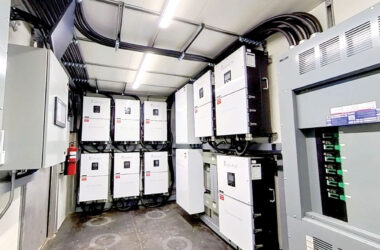
Hybrid energy containers
Photo: Saskatchewan Research Council

Whether it’s powering remote industrial sites or off-grid communities, the Saskatchewan Research Council’s (SRC) Integrated Energy Systems team provides customized resilient smart-grid solutions for those looking to lower their carbon footprint and increase reliability.  

Since 2014, SRC’s Hybrid Energy Containers (HEC) have delivered custom decentralized energy solutions, delivering a combination of conventional and renewable power generation along with energy storage and remote monitoring and control.

“Depending on the application, the solution typically consists of a diesel generator, energy storage and renewable sources, including solar and wind power, integrated in a proven and reliable microgrid,” Integrated Energy Systems team lead Ryan Jansen said. “The system can be customized to withstand harsh climates and weather events without outages while maintaining reliable remote monitoring and control capabilities.”

Developing an energy efficient RTC for military missions 

In 2023, SRC’s Integrated Energy Systems team joined forces with a group of tech companies to tackle the Innovation for Defence Excellence and Security Program – Pop-up City contest, held by Canada’s Department of National Defence. The goal was to demonstrate an improved Relocatable Temporary Camp (RTC) for the Canadian Armed Forces (CAF), with improved energy, water and waste management systems. 

For this demonstration, Innocorps Research Corporation, a Saskatoon-based water-purification company with the mandate of delivering clean water to everybody, formed the Circular City Consortium, teaming up with Eco-Growth Environmental Inc., Harmony Desalination Corp., Southern Alberta Institute of Technology and SRC to take on this challenge. SRC was responsible for powering the camp and it fulfilled this obligation through a customized HEC for this project. 

The Circular City Consortium won the competition following a demonstration of the RTC at the Canadian Forces Base in Suffield, Alta., in August 2023. According to Innocorps Research Corp., the central component to the victory was the world-first demonstration of a mobile direct potable water reuse system, which safely recycled wastewater back to drinkable water.  

“The Pop-up City contest was the most complicated project that we have ever worked on. We greatly appreciate the hard work and dedication from SRC and its ability to deliver in short order to complete our microgrid subsystem with the seamless integration of the HEC,” said Innocorps Research Corp. CEO Aarya Shahsavar. “With that, we were able to successfully demonstrate how rapidly deployable solar panels and battery storage can be hybridized with diesel generation and used in military and remote applications to reduce fuel.” 

Wall-to-wall technology and hybrid solutions provide reliable power

With nearly a decade of experience in customizing alternative power and energy containers, SRC had the knowledge and expertise to develop a container for the consortium that fits the project’s specific needs. “The basic building blocks are similar, but the amount of storage that you need for a project will depend on what the loads are, what your generation sources are and what the goal of the project is,” Jansen said.  

Because this HEC was customized for a military application, Jansen says his team focused on ease of transportation and rapid deployment to fit the needs of the CAF.

“We had the container insulated to endure harsh climates, and we installed tilt-up solar panels arrays on both the top and side of the container. The idea was to make it rapidly deployable so you can move this on site, pop up your solar panels and you’ve got instant power at the site,” Jansen said. “Everything is pop up, it’s modular and ready to go.”

The inside of the HEC is wall-to-wall technology that’s broken down into three components: an integrated auxiliary power input, inverters and lithium-ion phosphate batteries with 135 kilowatts of power and pop-up solar arrays, which provide the backbone of the microgrid. “It’s enough to power an average household for about 10 hours,” Jansen said.  

The Integrated Energy Systems team opted for a smaller battery storage capacity for this military demonstration, with the ability to boost the power and storage supply significantly depending on the application. “Had they needed something to power an RTC for two weeks, we would’ve delivered a HEC to do exactly that. We’d bring in another container and install additional batteries so it could sustain the camp much longer,” Jansen said. 

Building a self-contained system that adapts to outside conditions  

Jansen says his team integrated an advanced heating and cooling system so the HEC could efficiently supply power to a microgrid in the harshest environments. The HEC adapts accordingly in locations blanketed in extreme heat or stifled by a polar vortex. While the Pop-Up City contest didn’t specifically require the RTC to be able to withstand extreme heat or cold climates, Jansen says the team went above and beyond, delivering a microgrid with the ability to operate under both extremes.  

The inside of the container adapts to the conditions outside, with air source heat pumps that can provide both heating and cooling. Custom forced-air fans can draw hot or cool air in to maintain the inside temperature without relying on more power-hungry options such as conventional air conditioning and electric heating.  

“It’s controlled electronically by our programmable logic controller, which is the brain of the HEC’s system. It chooses which method of heating or cooling is most beneficial at the time and automatically turns on and heats or cools the container,” Jansen said. Allowances have been made within the temperature control system to utilize excess renewable energy to preemptively heat or cool the container to further increase the system’s efficiency. “If the batteries are full and there is excessive renewable power in cold weather, our system automatically turns on multiple heat sources to heat the container up to 30 degrees Celsius, even if it’s minus 40 outside,” Jansen said.  

“SRC understands what it means to operate in austere environments, with past experience deploying HECs for northern Saskatchewan. We were able to work together to advance the HEC platform with new capabilities through this project that we hope can benefit a wider audience,” Shahsavar said.  

Knowing the customized HEC helped elevate the Circular City Consortium’s pitch for a new and improved RTC, Jansen says he’s thankful Innocorps Research Corp. recognized SRC’s expertise and included them in the project.  

“They came to us because they noticed, just like themselves, that we’ve got something novel. We have capabilities and capacities that complemented the project team, so I think they chose their team well,” Jansen said. “Ultimately, we all delivered on what we had promised to do, and what we had promised to do is make something that was novel, effective and reliable.” 

You can learn more about SRC’s Integrated Energy Systems teams and its Hybrid Energy Containers by visiting src.sk.ca/services/hybrid-energy-container.

by Pat Rediger Pat Rediger

Paving the Way

In a rapidly evolving construction landscape, where optimism about the industry’s future co-exists with challenges that demand innovative solutions, the release of the How We Build Now: Technology and Industry Trends Shaping Canadian Construction in 2023 report by Procore Technologies, Inc. has significant implications for Saskatchewan’s construction sector.

As the province grapples with its unique set of circumstances, ranging from labour shortages to technology adoption, this comprehensive report sheds light on the road ahead, emphasizing the need for diversity and inclusion programs and the integration of cutting-edge technologies to navigate the industry’s transformation. “Although Saskatchewan may be less of a hotbed compared to the total construction that is going on across the country, we see that the province is essentially experiencing the same issues as elsewhere,” said Brandon Lee, senior manager of customer success at Procore.

Image courtesy of Procore Technologies Inc.

The report, a result of extensive surveys and analyses, underscores the industry’s overall positive sentiment. Out of the over 500 respondents, consisting of owner/developers, general contractors and subcontractors, nine out of 10 expressed confidence in the industry’s conditions for the coming year.

This optimism can be attributed to several factors, including the initiation of large-scale projects such as the Ontario Line subway and clean energy ventures in British Columbia. The growing immigrant population is also driving demand for housing and infrastructure. These factors, coupled with an existing labour shortage, are adding to the industry’s backlog of projects. Lee says that despite industry optimism, the data indicates there is a clear call for embracing technology to address crucial challenges. The survey shows 27 per cent of the total time spent on a project is used for rework or rectifying issues.

Image courtesy of Procore Technologies Inc.

Other findings revealed that almost half of all projects go over budget and over schedule, and over 30 per cent of respondents identified needing new technology to improve operational efficiency and cost controls amid economic volatility. In fact, paper remains a common medium for Canadian construction decision-makers. About a quarter of respondents still use paper-based records or non-digital processes as part of their workflows.

The construction sector has historically faced hurdles in integrating technology tailored to its needs, but the advent of technologies like smartphones and the internet has paved the way for software developers to create solutions that streamline on-field operations.

Data access

The report highlighted that 41 per cent of respondents believe real-time and historical data accessibility would enable them to make better decisions. They also believe they could save up to 12 per cent of their total spending on projects if they captured, integrated and standardized data more efficiently. Notably, a significant 17 per cent of project costs are spent on data and information searches, showing a pressing need for more efficient data management systems.

Image courtesy of Procore Technologies Inc.

Lee says that the transition to new technologies isn’t a one-size-fits-all endeavour. The challenge lies in successfully implementing these changes across a company, particularly in organizations with diverse roles and responsibilities. To mitigate these challenges, the report advocates for proactive problem-solving approaches, emphasizing the importance of leadership at all levels to effectively navigate obstacles that may occur.

“Process change management takes time,” he said. “You also have to hold the project teams accountable to leverage the system so that the people who need to make decisions at any point in the company have that understanding of what they need to double down on, or where they are running into issues in a project. This is a more proactive approach to problem solving.”

Image courtesy of Procore Technologies Inc.

One of the most critical issues facing the construction industry nationwide, including Saskatchewan, is the labour shortage. The report reveals that nearly 29 per cent of respondents faced challenges accepting new projects over the past three to six months due to the scarcity of skilled labour. With the impending retirement of many experienced workers, the industry faces an urgency to attract younger talent who are already tech-savvy. Lee says that these individuals will soon be at the helm of these companies, making it crucial to create an environment that appeals to their career goals.

Diversity, inclusion and sustainability

The report noted that labour shortages can be addressed through diversity and inclusion initiatives to attract women, minorities and historically marginalized groups. The report indicated that 38 per cent of decision-makers recognize the need for such improvements in construction workplaces. One of the most underrepresented groups in the construction workforce is women, particularly in executive roles. “If there is an underrepresentation of [women], not only at the field or the office levels, but more importantly, in the management chain, you’re going to struggle to find the right talent, and in a time of labour shortage, to be able to deliver those projects,” said Lee.

The industry is also keen to adopt more environmentally conscious and sustainable building practices. Approximately half of the respondents have started to focus on strategies like prefabrication and improved material selection to reduce the carbon footprint of their projects. Four in 10 are either currently tracking or plan to start tracking (within the next 12 months) carbon emissions on their construction projects.

Image courtesy of Procore Technologies Inc.

As the construction industry grapples with these multifaceted challenges, the report offers a blueprint for progress. The five recommended steps include effective preconstruction practices to enhance productivity, diverse hiring strategies to alleviate labour shortages, streamlined data management for enhanced insights, proactive data management to improve payment processes and the use of construction platforms for a competitive edge. Lee says that undertaking these steps won’t be easy and it will require company-wide acceptance to move forward. “I think it’s really important to have a realistic understanding of the appetite for change within an organization, and what can actually be achieved through that effort from top to bottom,” he said.

Despite these challenges, Lee says he is encouraged to see the Canadian construction industry’s leaders express optimism as they look to consolidate and build on post-pandemic progress. In particular, this survey shows half of the respondents see a need to embrace greater collaboration in projects among stakeholders, and half of them are well on their way in their digital transformation journey. Some also recognize the opportunity to leverage the massive amounts of data generated through the use of technology to make more data-driven decisions across every phase of the construction life cycle. Ultimately, smarter construction empowers construction businesses to have better control of their projects and deliver higher quality builds.

by SHCA SHCA

Drones are Benefitting Earthmoving Operations

Why you should add this tool to your toolbox

Submitted by CONEXPO-CON/AGG

Drones – the aerial eye of the jobsite – have become a versatile tool for earthmoving operations. Among the benefits: increasing efficiency, productivity and accuracy on job sites. In addition, drones help reduce unplanned costs and rework throughout a project by providing a steady stream of job site progress data.

As drone technology evolves, the greater the return on investment in employing them, according to Zach Pieper, director of operations and co-owner of Quantum Land Design, an industry leader in managing and preparing 3D data required for construction projects of any scale.

“Drones are another tool contractors can put in their toolbox to make more efficient and better decisions.”

– zach pieper, quantum land design

“That is why is it important for those in the construction industry, especially in earthmoving, to learn about using drones,” said Pieper. “Drones are another tool contractors can put in their toolbox to make more efficient and better decisions. There are many situations where a contractor might need to keep track of how much earth is being moved, compare the current site to the planned site, and figure out how many yards of earth [there are that] still to be moved and where that dirt must go. Drones can be a very cost-effective way to do that.

“Drones can also provide a very rich layer of data that can be added to your knowledge of a project and your ability to manage it properly.”


feverpitched/123RF

When it comes to drones, Pieper says there are two types of contractors.

“One group I call ‘drone curious.’ They think drones are interesting and they need to be learning about them,” said Pieper. “The second group are those contractors that already have drones and feel they are not utilizing them as well as they could be. Or they bought a drone for a single purpose, which it is serving well, and they want to get more use out of the information collected. Or they want to get ideas on how to better use their drones on job sites.”

The How to Utilize Drones in Your Earthmoving Business education session at CONEXPO-CON/AGG will cover the high-level basics of drones, including types of drones, applications, the kind of data you can get out of drones and basic data collection procedures.

“The session applies to nearly any size contractor,” said Pieper. “It will be an information-dense way to learn how you can use drones to make better decisions with your contracting company and on each job site. It will be focused on applied technology. Everything in the education session will be information that any contractor can take back to their company or their jobsite and put it to work.” 

Held every three years, CONEXPO-CON/AGG is the must-attend event for construction industry professionals. The show features the latest equipment, products, services and technologies for the construction industry, as well as industry-leading education. The next CONEXPO-CON/AGG will be held March 14–18, 2023, in Las Vegas, Nev. For more information on CONEXPO-CON/AGG, visit www.conexpoconagg.com.