
The Saskatchewan Research Council (SRC) has tackled the ever-changing landscape of industry needs since 1947, finding real-world solutions to evolving challenges through innovation. The organization’s knack for developing new and improved technologies that provide significant value to industry has helped grow both the province’s key resource sectors and SRC’s own labs and facilities.
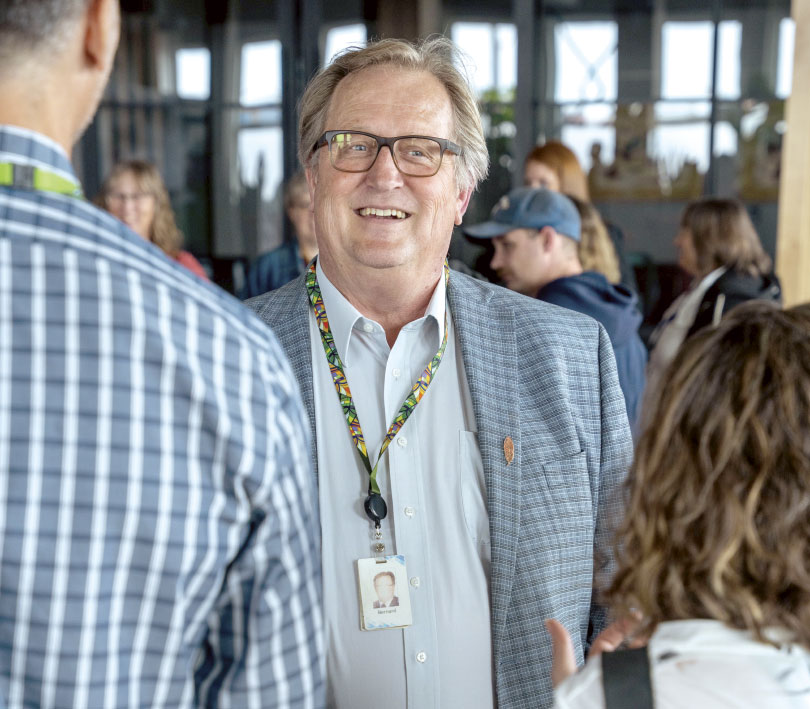
Bernard Gartner, who recently retired as SRC’s director of strategic growth and business development after a 47-year career with the council, knows the importance of growing alongside industry. With nearly five decades of experience, Bernard has acted as one of SRC’s strongest advocates for how important it is to embrace challenges, develop relationships and strive to find solutions to complex problems.
In 1978, Gartner walked into SRC Geoanalytical Laboratories as a young, eager technician and spent the next 47 years with a front-row view from which he became a driving force in the laboratory’s evolution. The lab is now the largest of its kind in the province, handling geoanalytical testing and automated mineralogy for mining and mineral companies across Saskatchewan and beyond. It has also branched off into diamond services, and Geoanalytical Laboratories Diamond Services has grown into the world’s largest commercial diamond laboratory.
“I watched the Geoanalytical Lab grow over the years from a small team to a large group of experts, who bring a wealth of knowledge to the table and work on developing and optimizing a variety of analyses for Saskatchewan’s exploration companies,” said Gartner. “All while building relationships and a reputation globally.”
Gartner has witnessed and led exciting innovations, an influx of experts and professionals, the implementation of leading-edge technologies and the growth of emerging markets few thought possible – all of which have made SRC one of Saskatchewan’s most valuable assets.
Saskatchewan’s potash and uranium industries
SRC has been building collaborative relationships with Saskatchewan’s mining and minerals industry since Day One, and Gartner has been at the forefront of promoting this over the decades. “From potash to uranium, SRC was built on our expertise in these industries over the years, but also our approach to relationship building with clients,” said Gartner. “You need to support clients accordingly and always put the client first. That’s what makes SRC different.”
Beneath Saskatchewan’s soil lies one of the world’s largest deposits of potash, a naturally occurring compound of potassium salts. This pinkish, crystalized evaporite was first discovered in Saskatchewan by an oil company while drilling near Radville in the 1940s. Over the next decade, more potash was discovered across central and south-central Saskatchewan, in what is now known as the Prairie Evaporite Deposit.
At the time, the newly minted SRC was less than a decade old. Still, the council took to the ground running, conducting field work on potash, building laboratory tests and helping in the development of potash-based fertilizer.
“Our ability to work through challenges, to be nimble and client-focused at every step of the project, it’s what makes SRC unique and one of Saskatchewan’s biggest assets.”
– Bernard Gartner, the Saskatchewan Research Council
In the 1960s, SRC began to develop potash characterization techniques for the budding industry and worked on projects to improve mining approaches. These have gone on to become worldwide industry standards. However, it wasn’t just potash. Saskatchewan’s rich uranium industry has also been a focus of SRC since the early years. SRC’s first laboratory building included a pilot plant project for uranium separation in 1958, and uranium ore processing has been a reliable service ever since.
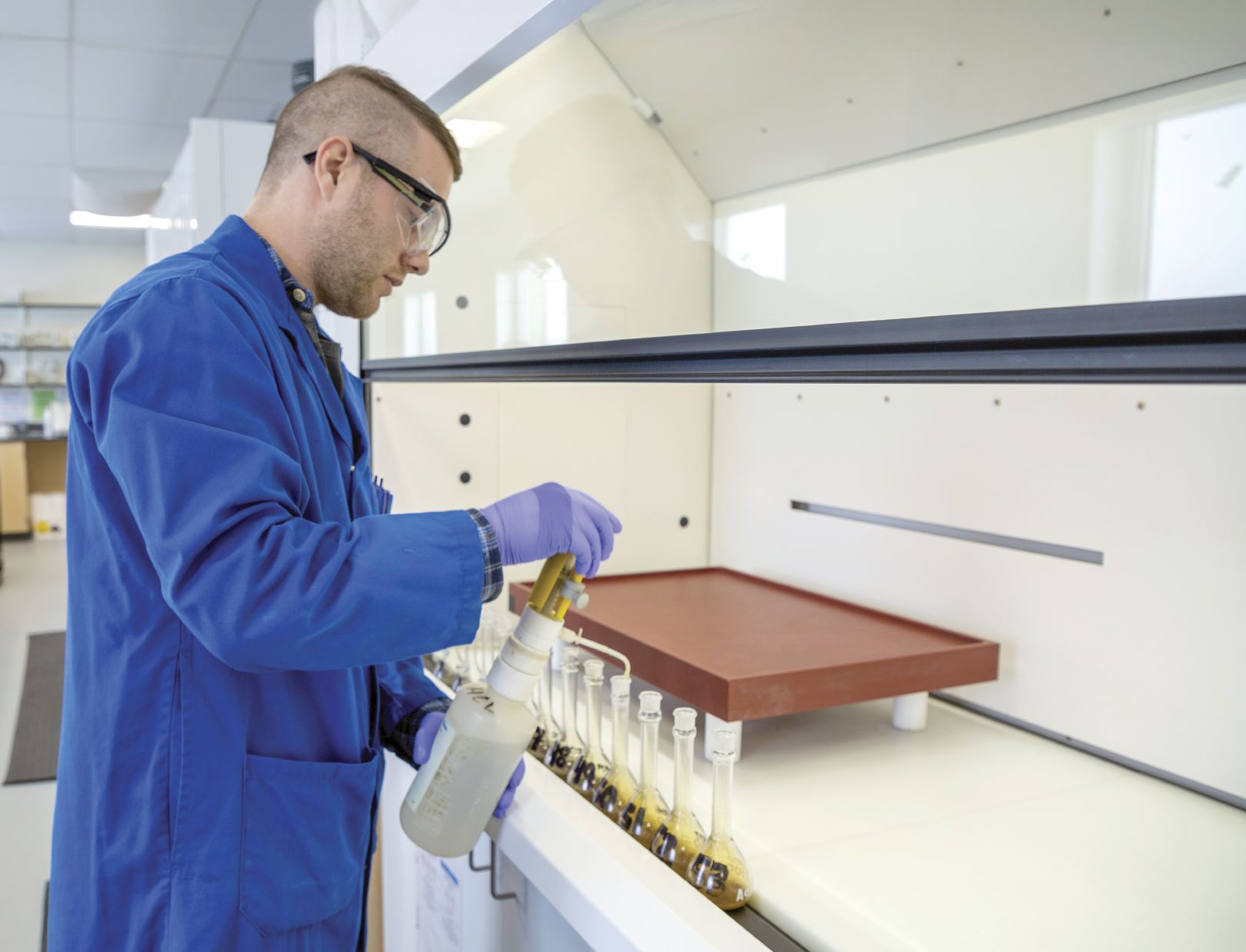
With the opening of SRC Geoanalytical Laboratories in 1973, work expanded with an influx of skilled geologists and technicians looking for a challenge and seeking new ways to meet and exceed the needs of local and global industries. Many of the methods developed by SRC in the early days of research in uranium analytical techniques continue to be used today. Over the years, Gartner led the lab through several expansions, including a high-security facility built for kimberlite indicator mineral processing and diamond recovery to the Advanced Microanalysis Centre™ to a Dense Media Separation (DMS) Facility.
“If a service wasn’t something we already offered, then it was a good opportunity to explore how we could make it happen, how we could develop those services and grow with the industry,” said Gartner. His goal has always been growth through value-added services. “This remains true of our facilities and services to this day,” he said.
Digging for uranium and discovering diamonds
Until the 1990s, diamonds were not part of Saskatchewan’s mining and mineral landscape. “In the 1990s, a uranium exploration company was looking at some anomalies in Fort à La Corne,” said Gartner. “Since SRC was involved with the analysis of their uranium exploration samples, they approached us to look at these samples.” These samples turned out to be kimberlite – a rock that may contain diamonds. At that time, SRC Geoanalytical Laboratories had a minerals separation group that was focused on gold exploration in tills. Since SRC was already separating minerals, it transitioned the group to start focusing on extracting and identifying kimberlite indicator minerals.
The kimberlite discovery in Saskatchewan set off excitement throughout the province, and SRC immediately seized the opportunity and the challenge of setting up a kimberlite indicator mineral processing lab. Today, SRC’s Diamond Laboratory is recognized worldwide for its diamond characterization work.
As exploration for kimberlite indicator minerals increased, and the exploration company initiated a more advanced drilling program, SRC was once again asked to look at the processing of kimberlite core for possible diamonds. To expand its services, SRC hired an experienced processing engineer who specialized in diamond recovery. “With a team in place, we proceeded to develop and build a pilot plant to deal with kimberlite core from Saskatchewan,” said Gartner. “That was the beginning of SRC’s diamond laboratory.”
Rare earth elements and beyond
To this day, the potash, diamond and uranium sectors remain at the heart of SRC Geoanalytical Laboratories. As the lab grew, it remained essential for SRC to continue providing services to the exploration industry. As exploration projects progressed, it soon became clear to the lab that an opportunity existed to provide the next step that industry needed: a more advanced mineral processing group in Saskatchewan. “Our diamond lab grew from our uranium expertise, and our mineral processing services grew from the various mineral commodities the lab was involved in,” said Gartner.
The growth of that knowledge and expertise is recognized and acknowledged by industry, which has helped SRC continue to expand its services to different minerals, such as rare earth elements and lithium.
The future of sorting testwork
SRC’s venture into diamonds helped grow its expertise, including the testing, piloting and operation of sensor-based sorting technology. This expertise led to diversification into the application of sorting for other commodities, key collaborations with manufacturers and the launch of SRC’s Minerals Liberation Sorting Centre.
Along with sorting capabilities, SRC has developed testing facilities for preconcentration services, including its DMS Bulk Sample plant – one of the only continuous testing DMS facilities in Canada that can process a variety of commodities. Gartner’s focus on client relationships was instrumental in getting the DMS facility up and running. In discussions with several companies, Gartner found that clients lacked the facilities necessary for large volumes of bulk samples. These discussions led to SRC managing the installation of a DMS bulk sample plant, working closely with support from industry clients and manufacturers.
Since then, SRC has evolved to offer a full suite of sorting services and solutions with a three-stage sensor-based sorting test method to help meet the evolving needs of the mining and mineral industry.
An unwavering commitment to solving industry challenges
Over its lifetime, SRC has been a strong steward for Saskatchewan’s environment, with analysis and testing, remediation efforts and emissions monitoring. In the last decade, SRC has reached significant milestones, expanding its services into sustainability and energy transition. “Our ability to work through challenges, to be nimble and client-focused at every step of the project, it’s what makes SRC unique and one of Saskatchewan’s biggest assets,” said Gartner.
To learn more about SRC’s full suite of mining services, visit src.sk.ca.
Canada’s second largest research and technology organization supporting innovation and industrial commercialization.