by SHCA SHCA

WCB’s 2020–22 COVID-19 Cost Relief to Conclude This Month

For more than two years in 2020, through 2021 and through the first six months of 2022, the Saskatchewan Workers’ Compensation Board (WCB) provided cost relief for employers with accepted COVID-19 claims. The WCB will conclude providing COVID-19 cost relief for employers with accepted COVID-19 workplace injuries that occur on or after July 1, 2022. Accepted COVID-19 workplace injuries that occur prior to July 1 are still eligible for cost relief.

“The WCB has worked to support employers and workers over the course of the COVID-19 pandemic. This included covering all claim costs for accepted COVID-19 workplace injury claims in 2020, 2021 and the first six months of 2022,” said the WCB’s chair Gord Dobrowolsky. “As the pandemic has evolved, claims related to COVID-19 exposures in the workplace have started to taper off. At the same time, high vaccination rates and effective risk management by employers have helped to limit the time lost to COVID-19 and the resulting costs.”

The number of COVID-19 claims requiring workers to be away from work for more than 10 days has dropped significantly, from 41.9 per cent of claims in 2021 to 24.5 per cent of claims in the first part of 2022.

The WCB has implemented relief measures for employers and workers since the beginning of the COVID-19 pandemic, including providing cost relief for employers. For claims that occurred from 2020 to May 10, 2022, the WCB has provided more than $7.5 million in cost relief for COVID-19 injury claims. The cost relief is funded through the WCB’s occupational disease reserve as a temporary measure to aid Saskatchewan employers.

“While we will conclude the temporary cost relief measures for COVID-19 claims after two and a half years, employers and workers can still submit eligible COVID-19 workplace injury claims to the WCB,” says the WCB’s CEO Phillip Germain.

A worker may be entitled to WCB benefits if they contract COVID-19 and there is a confirmed link between the worker’s exposure and their employment. Based on WCB policy Injuries – Communicable Disease (POL 02/2010), the following conditions must be met:

  • There is confirmed exposure to the disease in the workplace
  • The time period that the illness is contracted is in close proximity to the confirmed workplace exposure
  • The nature of employment creates a greater risk of exposure for the worker than to the general population

“COVID-19 presented each one of us with challenges unique to our lifetimes over the past two years, affecting the way we conduct business in Saskatchewan,” said Germain. “Thank you to the workers, employers, employer associations and unions for your health and safety efforts. Together we can all help keep each workplace safe.”

Frequently asked questions for employers on COVID-19 workplace injury claims are available at wcbsask.com.

by SHCA SHCA

The Saskatchewan Chamber of Commerce Welcomes New CEO

The Saskatchewan Chamber of Commerce is pleased to welcome Prabha Ramaswamy as its new CEO. Ramaswamy is a champion of Saskatchewan business, a passionate community leader and organizational visionary.

Prabha Ramaswamy

“I look forward to collaborating with all our stakeholders to build the strongest business eco-system in Canada,” said Ramaswamy. “Saskatchewan has what the world needs and is well-positioned to be a leader – particularly at this juncture. Our continued growth will transform the business landscape and create opportunities to enhance competitiveness, and boost investments and trade. I have been a staunch champion of women-owned businesses and now I look ahead to advocating for all businesses in our province.”

The CEO of non-profit, membership-based organization Women Entrepreneurs of Saskatchewan (WESK) since 2014, Ramaswamy has demonstrated a strong commitment to helping Saskatchewan realize its economic potential by driving change to close the gender entrepreneurship gap and the resulting gender economic gap in the province.

During her eight-year tenure at WESK, Ramaswamy launched several breakthrough programs to support the business community, including Matchstick, the first program in Western Canada to support Indigenous women entrepreneurs, and Charter Champions, the first charter designed to enhance the support of Saskatchewan’s women-owned businesses.

“Prabha brings to this role extensive experience in transforming organizations, advocating on behalf of the business community and leading with a strategic vision,” said Thomas Benjoe, chair of the Saskatchewan Chamber of Commerce. “We are confident that she will shape the future of the Saskatchewan Chamber of Commerce as an organization and strengthen our network, voice, and province as a whole.”

Ramaswamy will assume her role on June 20, 2022.

by SHCA SHCA

SRC Celebrates 75 Years of Technology and Innovation

This year, the Saskatchewan Research Council (SRC) is reaching a major milestone – 75 years of providing valuable research, development and demonstration to Saskatchewan industry and beyond. SRC is focused on providing services that support the province’s key economic sectors, such as mining, minerals, energy, oil and gas, agriculture and biotechnology, as well as meeting the environmental needs of industry.

Saskatchewan Research Council

Throughout its history, SRC has been a part of many important firsts for the province. In the 1970s, SRC was a leader in energy efficient housing research and its work formed the basis for the development of the R-2000 standard for energy efficient homes. In the 1980s, SRC played a large role assisting the Saskatchewan energy industry by enabling the implementation of horizontal wells in and the use of carbon dioxide (CO2) for enhanced oil recovery.

SRC Geoanalytical Laboratories’ ISO/IEC 17025:2017 accredited secure diamond laboratory was established in the early 2000s and is now the largest such facility in the world. SRC’s Rare Earth Processing Facility, supported with $31 million in funding from the Government of Saskatchewan, will be the first-of-its-kind in North America as it comes online early in 2023.

Today, SRC’s environmental remediation work in northern Saskatchewan also leads industry with its community engagement, project management and environmental practices, some of which have translated to other government programs like the Ministry of Energy and Resources’ Accelerated Site Closure Program (ASCP).

These are just a few examples of how SRC has pioneered initiatives that benefit Saskatchewan over the past 75 years. Going forward, SRC is strongly committed to continuing to create positive impacts for the province while it supports government and industry in new and emerging strategic areas including the energy transition and critical minerals.

SRC is Canada’s second largest research and technology organization. With nearly 300 employees, $137 million in annual revenue and 75 years of experience, SRC provides services and products to its 1,500 clients in 27 countries around the world.

For more information on SRC’s history, view our blog at https://src.nu/75atsrc.

by SHCA SHCA

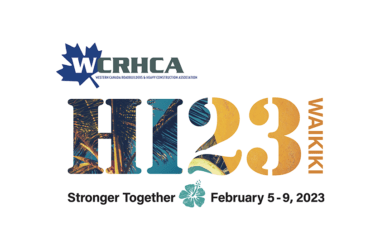
Stronger Together Conference: See you in Waikiki!

The Western Canadian Roadbuilders & Heavy Construction Association (WCR&HCA) are heading to Waikiki, Feb. 5–9, 2023 for the Stronger Together Conference. Joined by hundreds of delegates from across Western Canada, the conference offers industry speakers, education and an array of networking events. Don’t miss out on this opportunity to connect!

Click here for more information about the conference; we hope to see SHCA members there! Interested in becoming a sponsor? Find out more.

WCRHCA Stonger Together Conference poster
by SHCA SHCA

Off the Clock?

Dealing with employees’ off-duty conduct

By Danny Alcom, Miller Thomson LLP

The rise of social media and access to the Internet has enabled people to connect and share information, opinions and beliefs with one another in an unprecedented manner. Individuals can document activities and post content virtually instantly. In many ways, this enhanced connectivity is positive; however, it can also create an uncomfortable situation for employers who may not always agree with their employees’ social media activity. Employers are increasingly faced with public scrutiny and pressure to act when their employees post offensive content or engage in offensive conduct that becomes public. Employers must deal with the unenviable task of balancing public scrutiny and pressure on the one hand, with their duties and obligations to their employees on the other. Determining what to do can be a difficult task.  

Off-duty conduct, including off-duty public comments, can warrant discipline up to and including termination under the right circumstances. The primary consideration is whether the employee’s off-duty conduct or comments had a negative effect on the company’s reputation or its ability to operate effectively. When relying on reputational harm to ground discipline, the employer must establish a real and material connection between the conduct and the workplace, and the harm caused must be substantial.

Comments or conduct that are offensive to some, but that are not otherwise tied to the workplace, are not necessarily sufficient to ground just cause for termination.

Importantly, it is not necessarily the risk of reputational harm or harm to business, but actual harm that is most relevant.

In wrongful dismissal disputes involving terminations for off-duty conduct, in addition to the key considerations of harm to reputation and business, adjudicators will also consider whether: 

  1. The employee’s conduct renders them unable to perform their duties satisfactorily; 
  2. The employee’s conduct results in a refusal, reluctance or inability of other employees to work with them; or 
  3. Whether the employee has been found guilty of a serious breach of the Criminal Code such that the conduct is injurious to the general reputation of the employer and its employees.

Negative or offensive public comments by employees about co-workers, superiors and the employer have grounded just cause for termination under the right circumstances. These types of comments are more likely to have a sufficient connection to the workplace and are more likely to harm the employer’s reputation or business interests.

Comments or conduct that are offensive to some, but that are not otherwise tied to the workplace, are not necessarily sufficient to ground just cause for termination in the absence of extenuating circumstances, such as a history of progressive discipline, particularly when associated with similar conduct or proof of actual harm to the employer’s reputation or business interests.

An employer may establish a sufficient connection to the workplace if the employee makes a comment on a personal social media platform that references their employment with the employer, or where their conduct or comment draws substantial public attention. Of course, sufficient connection may not be enough on its own in the absence of actual harm to the employer. 

Further, labour and employment law favours progressive discipline. Employers should consider whether alternatives to termination exist that would adequately address the employee’s conduct. Labour and employment adjudicators will consider an employee’s disciplinary history in considering whether termination is justified. 

In every case, an employer must be able to show that the discipline engaged in is proportionate to the misconduct in question. Termination for cause is understood to be the “capital punishment” of employment law. An employer choosing to terminate an employee for cause for their off-duty conduct or comment must demonstrate a balance between the severity of the misconduct and the sanction imposed. 

In a non-unionized workplace, employers are generally entitled to terminate employees without cause, subject to the specific terms of the employment agreement. This is not the case in unionized workplaces, where the collective agreement generally requires cause for termination. The ability to terminate without cause provides more leeway to employers to terminate an employee for off-duty conduct or public comments because the employer is not required to justify the termination. Employers in the non-unionized environment who cannot establish just cause but fear that future harm may occur as a result of their employee’s off-duty conduct or comment may consider terminating the employee without cause.

Although the employer is not required to provide a reason for the termination, they are required to provide adequate notice of the termination, or pay in lieu of notice. Employers in the non-unionized context are well-advised to include a clause in their employment contracts limiting the employee’s notice to that offered in the relevant employment standards legislation. Failure to do so may result in liability to the employee for additional pay in lieu of notice, depending on the circumstances.

Employers concerned about an employee’s off-duty conduct would be wise to not act rashly. Even where an employee’s conduct or comment is highly publicized, the employer must consider whether there is actual damage to its business interests or significant damage to its reputation, and whether the conduct in question is sufficiently connected to the employment relationship. An employer seeking to terminate an employee for cause should conduct a thorough investigation to satisfy itself that the relevant criteria are met before proceeding with terminating for cause.

Employers must also consider whether the conduct resulting in discipline is related to a protected ground under relevant human rights legislation. Discipline for off-duty conduct that is associated with a protected ground may result in a finding that the employer has discriminated against the employee. 

In all circumstances, employers can help protect themselves by establishing clear policies outlining the type of conduct that is prohibited and the form of discipline employees will face if they breach the policy. Social media and other public comment policies have become commonplace. 

When in doubt, employers should contact a lawyer for advice on how to proceed and how to mitigate their risks. 

Miller Thomson has a reputation for providing practical, timely and responsible advice and services to its clients. For inquiries about the subject matter covered in this article, contact Danny Alcorn, an associate in the Saskatoon office at dalcorn@millerthomson.com.

Disclaimer: This publication is provided as an information service and may include items reported from other sources. We do not warrant its accuracy. This information is not meant as legal opinion or advice.

by SHCA SHCA

Community Engagement

A vital role in successful projects

By Ian Wilson Saskatchewan Research Projects

For companies operating in the construction, mining and energy sectors, community engagement is an important component of many projects and sites, from exploration through operation to remediation. A key to success is the integration of local knowledge into operational and closure plans. However, before this knowledge can be integrated, local trust and project understanding must be established. This can only be developed through a principle-centred approach to a shared project vision, two-way communication of knowledge, alignment of project goals, and understanding the local needs early in the project. Once community confidence is obtained, this local trust and project understanding must be maintained throughout the entirety of the project. 

An important principle of this approach is to co-generate plans and activities with communities and not just develop them on the communities’ behalf. During exploration and environmental assessment phases, integration of local knowledge can include: the development and implementation of land use surveys to determine realistic travel and occupancy needs, specific traditional knowledge and land use studies to develop a detailed working knowledge of local land use, resource utilization, country food intake and human history of the site(s). The local knowledge gained during the assessment process is invaluable as it provides the information required to support project planning, such as: valued ecosystem components, human trophic utilization, length of site occupancy, cultural value assessment and future land use considerations. This approach requires an open planning method that requires the proponent to not only communicate with local communities but be open and prepared to adjust the project planning to accommodate the direction provided through these processes. For meaningful dialogue to take place, a relationship of trust and joint understanding must be built. Building trust through community presence and open communication is very easy to say, but very hard to do and takes a lot of time and effort. Gaining trust means you have the social license needed to work in the region. Not only is it important to gain trust, but it also takes work to maintain it. 

Gaining trust means you have the social license needed to work in the region. Not only is it important to gain trust, but it also takes work to maintain it. 

The role SRC is playing

The Saskatchewan Research Council (SRC) is managing Project CLEANS (Cleanup of Abandoned Northern Sites) – a multi-year, multimilliondollar project aimed at assessing and reclaiming the Gunnar mine and mill site, Lorado mill and 35 satellite mine sites in northern Saskatchewan near Lake Athabasca. The project is funded by the Governments of Saskatchewan and Canada. Uranium from these sites was mined by private companies from the early 1950s to the mid-1960s. When the mines and mills were abandoned, there was very little decommissioning completed. Because of this, the sites pose potential risks to the surrounding communities and environment. SRC has been working since 2006 to safely reduce these risks through extensive decommissioning, remediation and monitoring work. Engagement of local communities has been key as SRC’s Project CLEANS team maintains working relationships with local residents and their leadership within the communities. SRC holds regular community meetings to provide updates and receive feedback from northern residents. Key concerns addressed through this engagement process include human and environmental health, employment and business opportunities, remediation options and potential site end-uses. SRC holds regular community meetings to provide updates and receive feedback from northern residents. 

The way forward

SRC developed an adaptive and open process to engage local communities that continues to evolve as community leadership changes, local expectations increase with project success, and the project parameters progress and change. Although SRC’s approach to the development of communications, trust, and traditional knowledge integration has been specifically applied to Project CLEANS, the approach and concept is applicable through the entirety of the mining cycle (exploration, assessment, construction, operations, remediation and divestment) in any geographic region.  

For more information on SRC’s community engagement work with Project CLEANS, go to www.src.sk.ca/project-cleans.

by SHCA SHCA

Renewing Rural Infrastructure is Key to Canada’s Recovery

By Joanne Venderheyden, Federation of Canadian Municipalities

After everything Canadians have been through in the last few years, they deserve a recovery they can see and feel in their daily lives. Rural communities have a key role to play in that. With a strong and united municipal voice, the Federation of Canadian Municipalities (FCM) is advocating for the tools needed to strengthen communities.

Municipalities own 60 per cent of the core infrastructure in our country. Rural communities know that our infrastructure renewal needs often outstrip the 10 cents of Canada’s tax dollar that we receive. The Saskatchewan Association of Rural Municipalities (SARM) has done a great job raising awareness of the need for more support for rural roads and bridges, and beyond that many SARM members also have responsibilities related to infrastructure for wastewater, solid waste management, broadband connectivity and local facilities.

Investments in core infrastructure have long been recognized as a cornerstone of economic stimulus. Even after projects are built, they have an ongoing benefit to local industries and residents. Rural communities in Saskatchewan have been seeing a growing need for exporting key commodities from the agriculture, energy and manufacturing sectors. Meeting that need requires reliable infrastructure that benefits our local and national economies.

In 2019 and again in 2021, the FCM welcomed the federal government’s one-year doubling of the Canada Community-Building Fund (CCBF, formerly the federal Gas Tax Fund). These investments were in direct response to FCM’s relentless advocacy. They’ve meant an additional $62,571,380 for municipal infrastructure in Saskatchewan last year alone.

The fund name was changed to better reflect the program’s evolution over time (it has long been delinked from fuel taxes), but the objectives and administration remain the same. The CCBF is the permanent, predictable federal funding tool that empowers municipalities of all sizes to renew core infrastructure. It works because its flexibility leverages the expertise of local leaders – the ones closest to people’s daily lives. 

Investments in core infrastructure have long been recognized as a cornerstone of economic stimulus. Even after projects are built, they have an ongoing benefit to local industries and residents.

In Saskatchewan, the fund is heavily used for work on rural roads and bridges, but we’ve also seen communities make good use of the funding to expand and upgrade facilities like the Ormiston Community Hall kitchen (R.M. of Excel No. 71). The R.M. of Chesterfield No. 261 used it to install water pumping sites for rural residents to obtain clean drinking water. And the R.M. of Willowdale No. 153 put the fund to work retrofitting the municipal office to reduce annual energy usage.

As we look towards economic recovery from the COVID-19 pandemic, FCM, along with our provincial partners like SARM, is calling for the federal government to permanently grow this

tool, increasing the annual transfer in 2022–23 to $4.6 billion – and boosting its annual growth index from 2.0 to 3.5 percent to reflect construction inflation realities. This will directly empower local leaders to create jobs and build better lives.

We’re also calling for targeted new investments to water/wastewater infrastructure and rural and northern infrastructure, recognizing there are significant unmet needs in these areas. Small communities in particular are looking for predictability for infrastructure solutions that can’t be fully funded through other federal programs.

Small communities in particular are looking for predictability for infrastructure solutions that can’t be fully funded through other federal programs.

There are a couple of things you can do to support this advocacy ahead of the upcoming 2022 federal budget and to raise overall awareness of the importance of predictable funding for core infrastructure renewal. The first thing you can do is reach out to your local MP to let them know that you’re looking to see funding for rural infrastructure in future budgets. Let them know what you’d be able to do with a bit of extra support and how that work would benefit your mutual constituents. Second, I want to urge you to take time to promote the work you do with the CCBF. Something like resurfacing a stretch of road might seem unremarkable but it’s vitally important. Sharing your CCBF success stories with your residents and MPs goes a long way to helping us make the case for more funding in Ottawa.

Let me conclude by thanking the many Saskatchewan members who have already taken these steps. Your voice has real influence. 

Joanne Vanderheyden is the  president of the FCM and mayor of Strathroy-Caradoc, Ont. She’s also a councillor for Middlesex County, Ont. FCM is the national voice of Canada’s local governments, with more than 2,000 members representing 90 per cent of Canadians.

This article originally appeared in the Spring 2022 edition of Rural Councillor magazine, the official publication of the Saskatchewan Association of Rural Municipalities. It is reprinted with permission.