by SHCA SHCA

“Status Quo” Budget Could Spell Doom for Industry

The 2019-20 budget estimate tabled in March by the Saskatchewan Ministry of Highways of Infrastructure provided a familiar refrain.

The Saskatchewan Heavy Construction Association didn’t expect any surprises or a significant shift in infrastructure spending for this upcoming season. That’s exactly what was delivered, which could present positive and dramatically negative outcomes for the industry in the near future.

“This was a status quo budget,” said Shantel Lipp, SHCA president. “Taking into account the challenges the government is facing with Covid-19, we realize the budget could have been a lot worse.”

“(The government) should be commended for sticking to its Growth Plan and trying to advance it despite these challenges and circumstances.”

The overall budget for the Ministry of Highways and Infrastructure for 2019-20 is $648 million, a drop of more than $50 million from last year’s budget. However, the $358 million set aside for capital expenditures slightly increased from 2018-19.

The Urban Highway Connectors program also saw a slight bump from $6.7 million to $7.3 million. The Rural Integrated Roads for Growth program received $1-million boost in funding and the Community Airport Partnership saw an increase of $150,000.

“In terms of municipal spending, this is a positive budget,” Lipp said.
The government remained dedicated to safety by providing $13 million to enhance intersection safety and $7 million in safety improvements to alleviate frequency and severity of collisions. This is the second year of the government’s five-year, $100-million commitment to highway safety.

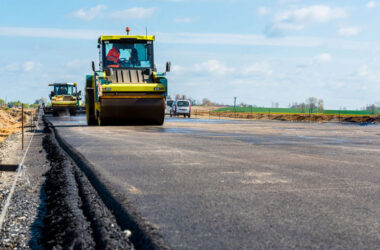
Where this budget could spell doom for Saskatchewan contractors is related to the major projects for the upcoming construction season. The major projects that were announced this year are carried over from the previous year, meaning there is no new work available for what is already an extremely competitive market.
Lipp noted that neighbouring provinces Alberta and Manitoba are struggling with member retention. She said it’s not because their respective associations are not delivering the services required. It’s because the investment in infrastructure isn’t there.

“The amount of infrastructure that is being built hasn’t increased,” Lipp said. “The challenge for our industry is not the dollars being spent but the number of kilometres the industry has the capability to build. If there is no commitment to increasing the number of kilometres that the government is going to build or maintain, we’re going to see more companies go out of business.”

A dried-up market forced several Saskatchewan-based contractors to cease operations in 2019. Lipp expects that trend to continue this year.

“Competition levels are going to be incredible this year because everybody is looking for work and everybody is struggling to find work,” she said. “Any prolonged delays in building is only going to cost taxpayers more and going to deplete the capacity of the industry.”

For more information:
Shantel Lipp
President, Saskatchewan Heavy Construction Association
slipp@saskheavy.ca
306-586-1821

by SHCA SHCA

Federal/Provincial COVID-19 Support Programs

At the beginning of April, Federal Finance Minister Bill Morneau, Minister of Small Business Mary Ng and Minister of Innovation Navdeep Bains announced details relating to the Canada Emergency Wage Subsidy and provided updates on other previously announced programs.

The Emergency Wage Subsidy will cover 75 per cent of salaries for qualifying businesses for up to three months retroactive to March 15, 2020. Charities, not for profits and businesses (big and small) will all be eligible IF their revenues drop by 30 per cent when compared to the same time period in 2019. For organizations that do not meet the 30 per cent threshold, they may qualify for the previously announced Temporary Wage Subsidy of 10 per cent that is paid from March 18 to June 20, 2020.

Also earlier in April, Manitoba increased security for renters by putting a freeze on rent increases and postponing eviction hearings. As well, they released their list of essential services.

Please view the updated infographic below for an overview of all programs released to date (including links to the appropriate government websites).

by SHCA SHCA

Sask. WCB Offers Relief Measures for Employers

The Saskatchewan Workers’ Compensation Board (WCB) is introducing additional relief measures for employers who are unable to pay their WCB premium payments. Effective April 1 until June 30, 2020, the WCB will waive penalties and interest charges for late premium payments.

The Government of Saskatchewan announced various measures to support provincial business owners during the COVID-19 crisis. To provide further relief for Saskatchewan employers, the WCB is:

  • Forgiving interest and penalties for late payments on 2020 premiums applied in the month of March.
  • Prioritizing employer payroll revisions to help employers reduce their premiums.
  • Suspending payroll audits until further notice except in situations where an employer may be eligible for a refund.

“We are dealing with extraordinary circumstances throughout the province of Saskatchewan. Recognizing the economic challenges many employers are facing, we are introducing these relief measures for covered employers while balancing our financial obligations,” said the WCB’s CEO Phil Germain. “By giving employers extra time to submit their payments without facing any penalties, they will be able to communicate their revised payroll estimates to the WCB and determine payment plan options.”

Employers who have reduced their workforce are encouraged to submit revisions to their 2020 assessable payroll estimates, which the WCB will use to recalculate their required premiums. Employers who have concerns about paying their 2020 premiums should contact the WCB to discuss their options.

Effective immediately, to ensure employers can release payment to their contractors promptly during the COVID-19 crisis, clearance letters will be available for employers that meet specific criteria, even in cases where the contractor’s WCB account has not been paid. Employers will not be liable for any outstanding WCB premiums the contractor owes.

Under the WCB’s legislation, The Workers’ Compensation Act, 2013, the WCB is required to be fully funded at all times.

The WCB will continue to monitor this situation and make decisions that balance the needs of employers and injured workers.

Learn more on the WCB’s website.

by SHCA SHCA

Collecting Masks for Frontline Healthcare Workers

The Saskatchewan Health Authority (SHA) has picked up almost 700 respirators from a stockpile provided by construction companies, according to the Saskatchewan Heavy Construction Association (SHCA).

SHCA president Shantel Lipp said the stockpile had grown to 1,400 since she put out a call to member companies and partner associations on March 21.

Read the rest of the article from the Leader-Post here.

SHCA members with supplies to donate can drop them off at the SHCA office for pick-up by the SHA.

by SHCA SHCA

Essential Now and Later

If anything is certain today, it is that we are living in uncertain times.

When will we see a light at the end of this seemingly endless COVID-19 tunnel? What will our economy look like when we do? How will we recover?

When life does return to normal – and it will one day – Canadians will look to our industry as one that can lead us to a stronger economic future.

We know there’s an infrastructure deficit in this country that ranges anywhere from $125 billion to $600 billion. That spells a massive opportunity for those in our industry and it may just be the spark to reloading the Canadian economy once the pandemic has been defeated.

In previous economic meltdowns, public-sponsored projects played a major role in stimulating jobs and firing up the consumer economy. It’s one of the reasons Saskatchewan has more roads than just about anywhere – we built them in the 1930s.

These roads are in need of maintenance and new roads are begging to be built.

Yes, a number of communities within our province and our country have announced business closures and have stated that only organizations necessary to provide essential services are permitted to operate.

Thankfully, that includes our industry.

Many of us can forge ahead with our projects this season, albeit under strict health and safety guidelines. Canada’s National Strategy for Critical Infrastructure lists transportation infrastructure as an essential service to the health, safety, security and economic wellbeing of Canadians and the effective functioning of government.

Services and functions essential to preserving life, health and basic societal functioning also are included. Our first responders, healthcare workers, hydro and natural gas workers and those who supply food and medicines all rely on our network of roads and highways to perform.

It is critical that these services continue to operate, just as it’s critical for our industry to continue to operate.

The money being spent now at all levels of government will get us through the immediate challenges we face. However, that money will leave no long-term assets behind. Building infrastructure will create a legacy serving the economy for the next 50 years.

And that’s when it will be our time to shine. Be ready.

I wish all of our members good health during these challenging times.