by Lisa Laronde, Canadian Association of Women in Construction Lisa Laronde, Canadian Association of Women in Construction


Building a Community of Women in Construction

Women in Construction

A great deal has changed since 2005, when the Canadian Association of Women in Construction (CAWIC) was formed. We have witnessed the emergence of a new digital economy, an enhanced focus on health, safety and mental wellness, and an increased demand for skilled workers. The one thing that has not changed is our association’s commitment to support women across the industry.  

Based on feedback CAWIC collected from those involved in the association in late 2023, we know that women in the construction industry are looking to be part of a community; they want to network, bond, share and grow with fellow women. 

This year, CAWIC and the entire construction industry can and will build a stronger community for women working in the construction field. For CAWIC, we will focus our efforts on supporting women and helping them advance their careers by providing professional development, networking and mentorship from coast to coast. With a new two-year strategic plan in place, CAWIC is firmly and rapidly expanding on our foundation and our focus to better support women including racialized women, those living with disabilities and members of the 2SLGBTQ+ community.

As many have heard me say, if the construction industry does not continue to make progress to attract, support and retain women, the industry will not thrive, let alone survive. We as a collective need to hold companies, individuals and organizations accountable to ensure women are getting the opportunities they not only deserve but have earned.

Women are a growing and essential segment in the construction industry. As many have heard me say, if the construction industry does not continue to make progress to attract, support and retain women, the industry will not thrive, let alone survive. We as a collective need to hold companies, individuals and organizations accountable to ensure women are getting the opportunities they not only deserve but have earned. 

Our industry is facing extensive demand as we try to ensure we have a workforce available to meet the needs of today and tomorrow. With the realities of an aging population, looming retirements on the horizon and a growing competitive job market, now more than ever we need to attract and retain women in the construction industry. However, we can only draw and retain women on our teams and in our leadership roles when our companies provide the right culture and environment that is supportive for women. 

A vital part of this is ensuring that organizations offer opportunities for their teams to continually learn. This opportunity to learn cannot be achieved in isolation. Having a network to rely on and share lived experiences is crucial. For women in construction, CAWIC is further developing that community to learn, live and grow in. Each day across the industry, we see the immense pride that women in construction have for their job, their organizations and the role they play in building and strengthening our country.  We must continue to harness that pride and the opportunities that exist to attract the next generation of women to our sector. 

While there are still enormous challenges and barriers that must be solved, including childcare, pay equity, title equity, PPE availability and fit, and discrimination and harassment in the workplaces, we are seeing true progress. With our united voices, persistent actions, ongoing outreach and partnerships with allied construction organizations, we will cultivate a supportive community for women to work and thrive. Through this focus and action, we will bring about lasting and meaningful change. 

Lisa Laronde is president of RSG International, a global leader in road safety infrastructure, and a powerful advocate for women in leadership. She is also president of the Canadian Association of Women in Construction (CAWIC). In fall 2023, she was recognized as one of Canada’s Most Powerful Women by WXN (Women’s Executive Network).

by SHCA SHCA

Digging to Sask 1st Call’s history

Six months after Saskatchewan Common Ground Alliance transfer

By Shannon Doka

Sask 1st Call began a new chapter in June when – after two decades of running the service – SaskEnergy transferred ownership to the Saskatchewan Common Ground Alliance (SCGA).

SaskEnergy launched the organization with its familiar “Call Before You Dig” messaging on Jan. 2, 2003.

“There were notification companies in other provinces like Ontario and Alberta. Companies that crossed over borders really saw the value in having a notification service in Saskatchewan, too,” said Shawn Fairman, general manager, distribution customer services, and vice-president of the new Sask 1st Call board of directors. “It made sense for SaskEnergy to be a part of it because we have a lot of underground infrastructure and because safety is a core value for our company.” 

Sask 1st Call can help enhance safety for people and businesses doing construction in Saskatchewan. They can request a line locate free of charge, either by calling a 1-800 phone number or submitting a request online. Within three business days, any underground infrastructure will be marked using flags, stakes or paint. If an area is marked, this is a clear signal to not dig in or obstruct the area. 

Sask 1st Call can also help protect subscribing companies’ underground facilities.

“Sask 1st Call enables dependable, cost-effective communication between subscribers and those intending to disturb the ground,” said Shannon Doka, executive director, SCGA. “This service greatly enhances public safety, as many facilities may exist underground that landowners are unaware of.”

With this mission of safety for both users and subscribers, Sask 1st Call has grown over the years. It began when SaskEnergy saw underground facilities continuing to grow in complexity, and the company worked to build the organization throughout 2002. In April that year, it was lauded in the provincial legislature as a “valuable service to pipeline companies.” 

“This is another example of the people of Saskatchewan’s public industry serving the public good and helping to encourage more investment and expansion in our province,” Member of the Legislative Assembly Keith Goulet stated at the time. 

When it launched eight months later, Sask 1st Call had just two registered member companies – SaskEnergy and TransGas. Others quickly joined, and today, Sask 1st Call has more than 120 subscriber companies.

In the early years, “Call Before You Dig” was the primary option for Sask 1st Call. However, people could also request a locate by fax machine. In the service’s first year, more than 49,000 fax requests were received. 

SaskEnergy’s customer service representatives  answered the toll-free calls, then consulted a screening database to determine which subscriber companies had infrastructure at the customer’s location. In early 2020, a master services agreement with Utility Safety Partners in Alberta provided a more consistent approach to the one-call service.

In August 2004, online requests became an option. That year, there were more than 97,000 online locates requested and the service grew to include 20 subscriber companies. 

Also in 2004, SaskTel joined Sask 1st Call – the first non-oil and gas company to become a member. 

Five years later, another Crown corporation, SaskPower, signed on. By 2010, line locate requests had grown five-fold. 

Over the years, the organization continued to expand its reach and support its mandate of public safety and damage prevention.

In 2014, a safety patrol program was launched with the goal of reducing incidents in new urban neighbourhoods in Regina, Saskatoon, Moose Jaw and suburban communities of Regina. 

In vehicles decorated with Sask 1st Call branding, the contracted patrollers actively checked in with people in the new areas. When landscaping, building a fence or deck, or pouring a new driveway, people were asked if they had completed a line locate. The program contributed to a steady decline in third-party line hits.

Nowadays, technology makes it more convenient to request line locates.

“Over time, we try to make it as easy as possible and promote the online requests instead of calling in. We have found that far fewer incidents happen when requests are made online instead of by phone,” said Fairman. “It’s really about making sure the customers are safe. Many times, there are high voltage power lines or gas lines, and it’s in everyone’s best interest when we’re doing the projects in our yard that we’re being safe.”

Twenty years after it was launched, Sask 1st Call  extended the line locate expiry date from 10 business days to 30 calendar days to make things more efficient and convenient for customers and subscribers.

This change aligns Saskatchewan with other provinces and jurisdictions that already had a 30-day window for line locates. 

“All parties agree this change will safely help deal with the unexpected, such as weather-
related delays, equipment breakdown and needed crew downtime,” said Doka.

The most recent substantial change took place in June 2023, when the SCGA began managing the service.

“The SCGA is a good fit to oversee the service, as a non-profit organization that shares SaskEnergy’s dedication to public safety, environmental protection and damage prevention,” said Fairman. 

As a newly-formed non-profit corporation, Sask 1st Call now has a board of directors – appointed by the SCGA – to provide strategic direction to the business and governance. 

The Sask 1st Call board of directors are:

  • James Cameron, Crescent Point Energy, Calgary – president
  • Shawn Fairman, SaskEnergy, Regina –  vice-president
  • Bryan Abel, BH Telecom/FlexNetworks, Kitchener –  secretary-treasurer
  • Kyle Schmalenberg, SaskTel, Regina
  • Kevin Lalonde, SaskPower, Saskatoon
  • Jodi Long, Kingston Midstream, Estevan
  • Kim Brady, Whitecap Resources Inc., Weyburn
  • Jennifer Wilkinson, City of Weyburn, Weyburn

“Establishing Sask 1st Call was a great initiative, and it’s grown over the years to something that’s going to be a legacy for SaskEnergy,” said Fairman.

In addition to the new board, Sask 1st Call also has a new director to manage the service and day-to-day operations. Lisa Kosolofski started in this role in October 2023.

“[Kosolofski] brings a lot of experience to promote and provide customer service to Sask 1st Call users and subscribers,” said  Doka. “The SCGA and Sask 1st Call are looking forward to what the next 20 years will bring!” 

For more information on Sask 1st Call, visit sask1stcall.com or email firstcalldirector@scga.ca. 

For more information on SCGA, visit scga.ca or email executivedirector@scga.ca.

by Taylor Moroz and Troy Baril, Procido LLP Taylor Moroz and Troy Baril, Procido LLP

Contracts in Emoji Era

groups of emojis

Contracts. The magical world where handshakes can legally bind people and emojis carry the weight to impact a party’s financial obligations. Before one can fully appreciate contracts, and more specifically the act of accepting a contract, it is necessary to understand what a contract is. Fundamentally, contracts require three components: an offer, acceptance and consideration.

The advent of technological breakthroughs has ushered in a new era of challenges for the three foundational components of contract law, demanding innovative and unconventional thinking for effective adaptation. Artificial intelligence, biometrics and virtual reality have the power to significantly reshape the landscape of contract law. 

Offer

An offer is the spark that starts the magic. It is the first piece of the three-piece puzzle to create a contract. The utility of an offer lies in its specificity. Offers should outline essential terms in a contract, such as price, quantity and conditions, all of which aid in creating a roadmap for the parties to follow. When an offer is before a party, they can accept, decline, propose modifications, or abstain from responding. At the offer stage, parties contemplate bringing a contract into existence. However, an offer alone is not enough for one to leverage the power of the legal system against another. The creation of a contract is a three-part affair, and acceptance and consideration will be necessary for this contract to make it into the realm of legally-binding existence.

Acceptance

Contractual acceptance is the act of agreeing to be legally bound by an agreement based on the offer of another party. Acceptance is a crucial component of a contract –  the contract cannot become legally binding without acceptance. Acceptance crystalizes the party’s intent to engage in legally-binding commitments. The acceptance of a contract solidifies preliminary negotiations into a valid agreement, affirming the mutual consent of both parties. 

Consideration

Consideration is the third vital element in the formation of a contract. Consideration in contract law is the exchange of value between parties, serving as the final legal glue that binds the parties. Reciprocity is crucial to demonstrating consideration. There needs to be an exchange of value, whether that comes in the form of money, a promise or a tangible item. The idea that one is being exchanged for another is essential to demonstrating valid consideration and sustaining the existence of a newly-formed contract.

Is a thumbs-up emoji legal acceptance of a contract?

While traditional methods for contractual acceptance are generally used, such as a handshake, signature or verbal confirmation, contract law has had to jarringly adapt to accommodate the current digital revolution. An example of this is the case South West Terminal Ltd. v. Achter Land & Cattle Ltd., 2023 SKKB 116, where an emoji was held to legally bind a farmer to pay $61,442 for an unfulfilled contract.

Justice Keene of the Court of King’s Bench in Saskatchewan heard this matter concerning a grain buyer, South West Terminal Ltd., who sent a mass text to clients seeking to purchase 87 tonnes of flax at a price $669.26 per tonne. The buyer spoke to the farmer and sent a picture of a contract with the message “please confirm flax contract.” The farmer responded with a thumbs-up emoji but failed to deliver the flax as per the “contract.”

The use of an emoji to accept a contract is the tip of the iceberg of how contract law is going to have to adapt to survive the digital renaissance.

The farmer argued the thumbs-up emoji only indicated he had received the contract and not that he was accepting it. Accepting a contract should be done with clear indications, conveying the consent of the contracting parties. Ambiguity is best resolved earlier in the process, which clearly is not always the case. In this case, Justice Keene found the following: “This court readily acknowledges that a thumbs-up emoji is a non-traditional means to ‘sign’ a document but nevertheless under these circumstances this was a valid way to convey the two purposes of a ‘signature.’” Just like that, the courts now recognize a thumbs-up emoji as a valid way of accepting contracts.

What will “acceptance” look like moving forward? 

The use of an emoji to accept a contract is the tip of the iceberg of how contract law is going to have to adapt to survive the digital renaissance. Technology is going to stretch the confines of the historically slow-moving and adapting area of contract law, specifically AI, biometrics and VR.

Virtual reality

As Justice Keene has considered and allowed emojis to constitute contractual acceptance, there is now a higher degree of likelihood that contracts signed in a virtual space could have the capacity to become valid and legally binding contracts. While these immersive technologies promise unparalleled experiences, their integration into the realm of contractual acceptance raises a plethora of legal concerns. As we step into the virtual frontier, the legal community must grapple with the implications of VR and augmented reality on the formation and acceptance of contracts.

VR and AR technologies redefine the boundaries between the physical and virtual worlds. In the context of contractual acceptance, the challenge lies in determining the equivalence of actions performed in these immersive environments to traditional forms of acceptance. The legal community must ask: can a nod or gesture in VR be as legally binding as a written signature in the physical world?

One of the core concerns revolves around the authentication and verification of parties in virtual and augmented spaces. How can the legal system ensure the actions undertaken by avatars accurately reflect the intentions of the purported real-world individual behind them? Establishing the authenticity and authority of these virtual identities becomes a pivotal task in determining the valid legal acceptance of contracts within these environments. Balancing the promise of innovation with the need for legal clarity will be essential to ensure contractual relationships formed in the virtual realm are robust, secure and aligned with established legal principles. 

Biometrics

Biometrics could very easily be incorporated into contract law. Contracts could be signed through facial scans and fingerprint scans in the not-too-distant future. Various concerns stem from this. Would the use of biometrics result in an increase in piracy and identity theft? Would the acceptance of facial scans and fingerprints lead to more contracts being “accidentally accepted,” similarly to what was argued by the defendants in South West? 

The integration of biometric authentication into contractual acceptance introduces concerns about the sensitivity and security of biometric data. Legal frameworks will need to address issues related to consent, storage and potential misuse of biometric information in the context of contractual relationships. 

Automated systems and AI

As ChatGPT has bulldozed its way into popular culture and schools have struggled to react to the advent of AI-generated essays, contract law, as it exists today, could find itself ill-equipped to deal with AI.  In the near future, AI may function as an autopilot, guiding users through their online experiences and automatically accepting boilerplate contracts to streamline access to content. This raises a fundamental question: is an AI capable of accepting contracts on behalf of its individual user, and would AI accepting such a contract be considered true legally binding acceptance?

This scenario poses unique challenges for Canadian contract law, which has recently grappled with issues related to the significant power imbalances between large corporate entities like Facebook or Uber and individual users. The enforceability of boilerplate contracts has been called into question based on these power disparities. With the removal of a human component in accepting these terms of service or other boilerplate contracts necessary to use popular websites, this could lead to boilerplate contracts becoming entirely unenforceable.

With our legal system now recognizing an emoji as a valid form of acceptance, it becomes uncertain whether AI-assisted web browsing, acting as a proxy for users in accepting contracts, would be exempt from the principles of contractual acceptance. As technology continues to redefine the boundaries of traditional legal concepts, individuals and corporations may find themselves, grappling with novel questions about the nature of contractual acceptance in a world increasingly influenced by AI.

Conclusion

The court’s adoption of emojis as a valid form of contractual acceptance marks the dawn of a new era in the evolution of contract law. Embracing these digital symbols as legitimate expressions of intent expands the traditional boundaries of how contractual offers are extended, accepted and the consideration that underpins them. This shift not only broadens the avenues for formalizing agreements but also invites a broader conversation on how technology and contemporary modes of expression can influence the very essence of contractual relationships. 

As technology continues to advance, contract law will inevitably face novel challenges and opportunities. Legal frameworks will need to adapt to ensure the principles of contract law can address the intricacies introduced by emerging technologies.

Businesses, corporations and individuals will have to take proactive measures in response to these technological advances. Parties will have to alter how they draft and interpret contracts, as well as keep up to date on technological advances to understand, interpret and ultimately enforce contracts moving forward. Failing to stay up to date on how contract law evolves with these technological advances could lead to unintended consequences, possibly surfacing as an innocuous emoji causing unexpected and legally binding contractual obligations.  

Procido LLP is a law firm that prides itself on its tech savviness. Procido LLP’s technology, intellectual property, corporate/commercial, privacy, and contract experts are uniquely positioned to assist clients with their future legal concerns.

Disclaimer: This publication is provided as an information service and may include items reported from other sources. We do not warrant its accuracy. This information is not meant as legal opinion or advice. Contact Procido LLP (www.procido.com) if you require legal advice on the topics discussed in this article.

by SHCA SHCA

Navigating Safety in Trenching

Ensuring workers leave the construction site in the same condition they arrived

By Jon Waldman

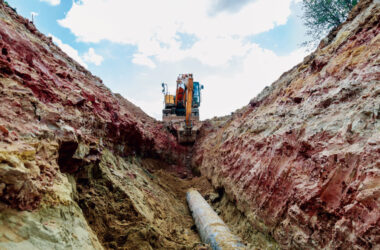
Trenching is a vital facet of any heavy construction project, but it can be dangerous. It’s essential for safety to be top-of-mind when companies embark on trenching as part of their project. 

Fatalities are extreme cases, but other incidents see serious wounds, lacerations or broken bones.  

“Common injuries from trenching typically occur when there is ground fall as a result of changing conditions, or collapse of the trench because it was not sloped properly for the soil type of conditions,” said Jonathan Sherman, director, prevention at Saskatchewan Workers’ Compensation Board. “Falls are also a risk, either during access or egress or by those working next to the trench. There is the risk as well of the environment becoming oxygen deficient as a result of fumes replacing the air, if the trench is not properly ventilated, or when working in more confined spaces like with a trench box, particularly around septic systems.”

Safety procedures

Recognizing the risks and hazards that trenching carries, there are several preventative measures that companies have to take.

“The type of soil determines the slope of the trench walls based on the depth of the trench,” Sherman said. “Conducting a pre-job safety analysis or hazard assessment before work begins each day, or when conditions change, will also help prevent work being done in a trench that is unstable.”

Alongside soil evaluation are other factors that are part of the worksite, including underground services. This may include gas, communication and power lines, as well as sewer and water mains. In Safety in Excavations and Trenches, a publication from WorkSafe Saskatchewan, it is outlined that “underground services must be identified and accurately located before excavation work begins.”

Sherman says it’s essential that companies not only examine the ground before a project begins but perform ongoing analysis as work continues –  especially if or when the climate shifts. 

“When conditions change, particularly when it rains, any excavation should be inspected to ensure that the water has not caused damage, eroded the edges or caused other risks to the integrity of the trench,” he said. “Continuous supervision of work should also be done to ensure those in the trench are protected at all times, as well as to keep others from entering the trench accidentally.”


“Conducting a pre-job safety analysis or hazard assessment before work begins each day, or when conditions change, will also help prevent work being done in a trench that is unstable.”

– Jonathan Sherman, Saskatchewan Workers’ Compensation Board

Conditions are part of the consideration –  worker communication is another piece of the puzzle. As a project continues and as depth increases, supervision and dialogue become vital. 

“Where workers are in a trench more than 1.2 metres deep, an employer shall ensure a competent worker is stationed on the surface to alert workers in the trench of any unsafe conditions or assist in an emergency,” said Bryan Lloyd, executive director of the Government of Saskatchewan’s Occupational Health and Safety, a division of the Ministry of Labour Relations and Workplace Safety.

Just as important is knowing that there are inevitabilities in trenching, and one of those can be deadly –  cave-ins. As described in Safety in Excavations and Trenches, cave-ins can be caused by multiple factors such as moisture content, vibration and adjacent weight. The effects of cave-ins can be devastating, with only moments to avoid injury without proper planning. 

“Many victims are suffocated after being buried in a cave-in,” the document states.  “Survivors often receive severe crushing injuries. Once a trench or excavation begins to cave-in, workers may have only seconds to escape.”

Big assists

Similar to other areas in construction, trenching has had numerous advancements that companies today can utilize as part of their safety procedures.  Lloyd says  these opportunities include advancements in temporary protective structures. Compared to older apparatus, these constructs are lighter, making them easier to move, yet they still function to the high standards necessary for trenching.

Lloyd says there are benefits for companies that are contemplating upgrading this part of their equipment.

“The use of temporary protective structures are being used more and more every day as it cuts down in overall excavation costs and [is] less invasive in urban communities,” he said. “When it comes to open trenching, we are seeing the use of more ‘V’ buckets. Not only does the bucket hold more yardage of material,  it also assists in the cutting back the walls of the trench and having less loose material build-up.”

Preparation, training, ongoing communication and proper equipment must be utilized by companies to reduce the risks of trenching. All businesses should keep an integral mission at the forefront of all operations –  that workers are to leave the construction site in the same condition they arrived in.  

by Jill Harris Jill Harris

Woman of Asphalt

Engineering, science and construction have historically been male-dominated industries – and while that continues to be true today, change is happening. The asphalt industry is no exception; men comprise the majority of the workforce, and women working in the industry saw a need to support one another.

Amy Miller, P.E., MBA, is the president of the Asphalt Contractors Association of Florida. In 2017, she discussed the idea of forming Women of Asphalt, a platform to help recruit, educate and promote women in the asphalt community. “For me, I’ve often found myself being the only woman in the room or the only woman on a team,” said Miller. “I have a great appreciation of working with men but was missing the collaboration and opportunity to bounce ideas and thoughts off of other women.”

Miller connected with a group of ladies who believed the asphalt industry needed an established group to support women. The group hosted a couple of events during World of Asphalt in 2017 – a roundtable and an expo mixer – which sparked a lot of interest. “We knew we needed to move forward,” said Miller. “[Today,] Women of Asphalt is an established 501c-6 organization that focuses on empowering women in asphalt careers.”

Miller says that the challenges women face in the asphalt industry pivot around working in a male-dominated field. “Women tend to think differently than men and often have personal responsibilities different than men,” she said. “Women of Asphalt provides support through our ‘Lead and Inspire’ webinar series, mentoring program and through state branches that give women opportunities to create relationships and friendships with other women facing the same challenges.”

Local branches

Miller says the state branches of Women of Asphalt are the organization’s greatest achievement. “After starting the national organization, we quickly realized we needed [local presence],” said Miller. “At the national level, we bring a host of resources, but we felt people needed face-to-face interaction. The branches provide opportunities for relationship growth and career enhancement, and many of these branches are hosting philanthropic activities to help their communities.”

Currently, there are 22 state branches, representing 26 states, with the organization’s goal being to reach all 50 states. And eyes are on Canada. Canadian women have been involved in Women of Asphalt since the organization’s inception, and over the years, interest has continued to grow. Ania Anthony, M.Sc., P.Eng., is the director, Materials and Surfacing for the Ministry of Highways in Saskatchewan. She, too, knows how challenging it can be to be the only woman on a crew, on a project, in a meeting or in an office. “It’s especially hard when you are new to the industry,” she said. “Even when you’re made to feel welcome, it’s a different dynamic than when there are more women present.”

Ania Anthony, M.Sc., P.Eng.

“It’s getting more and more challenging to attract and retain skilled workers, and competition for good people is high. The trick is not only to hire [women], but to create an environment where women want to come and work, where they feel like they belong, feel valued, want to stay, and can grow and thrive.”

– Ania Anthony, M.Sc., P.Eng., Saskatchewan Ministry of Highways

Anthony met a U.S. colleague during a technical conference in 2022, who, after hearing about her background in asphalt pavements and materials, suggested that she connect with Women of Asphalt. Anthony reached out to Miller, and with more than 50 Canadian members of Women of Asphalt at the time, the pair agreed it would be beneficial to form an official Canadian chapter.

“As an active and long-time member of the Canadian Technical Asphalt Association [CTAA], I immediately saw the opportunity to partner – with mutual benefits to both organizations – to create a Canadian chapter of Women of Asphalt under the CTAA umbrella,” said Anthony. “After pitching the idea to several CTAA board members – four of whom are women – we put forward a written proposal for the CTAA board’s consideration.”

The board approved the proposal and is currently in the process of finalizing the branch’s structure. “We are so excited to be starting the Canadian chapter,” said Anthony. Their first official event took place during the CTAA 2023 conference in Charlottetown, P.E.I., in November 2023. CTAA plans to hold a Women of Asphalt event annually during CTAA’s conferences. “CTAA conferences are known for quality technical content and excellent networking opportunities,” said Anthony. “The conferences are held in a different province each year. The 2024 conference is in Edmonton – consider sending your staff and spread the word!”

Women of Asphalt will also host its first “Women of Asphalt Day” in conjunction with the 2024 World of Asphalt event in Nashville, Tenn., which takes place March 25–27. 

Benefits to industry

It’s not only women who benefit from groups like Women of Asphalt. “Supporting women in the Canadian asphalt industry promotes diversity of our workplaces,” said Anthony. “Countless studies confirm that diversity – at all levels, including in senior leadership roles – is good for business.” She points out that women are an untapped well of capable workers in the asphalt industry.

 Amy Miller, P.E., MBA

“I have a great appreciation of working with men but was missing the collaboration and opportunity to bounce ideas and thoughts off of other women.”

– Amy Miller, P.E., MBA

“It’s getting more and more challenging to attract and retain skilled workers, and competition for good people is high,” said Anthony. “The trick is not only to hire [women], but to create an environment where women want to come and work, where they feel like they belong, feel valued, want to stay, and can grow and thrive.”

Miller agrees, adding that Women of Asphalt aims not only to increase the workforce, but also to improve it. “We network and create stronger relationships between people and companies, and we provide resources that enhance the industry’s employees through career and personal growth,” she said. “Knowing you are not alone, sharing interests and ideas, mentoring and learning from each other – these are all important supports to help women stay and thrive in the asphalt industry,” said Anthony.

Get involved

Women of Asphalt does not charge for membership – to join, simply visit womenofasphalt.org and click “Join Now!” Membership is open to women as well as men. “Our model is different than other organizations,” said Miller. “We have generous partners who provide funding to support our efforts, allowing us to extend membership to more than 3,000 people. We’re so appreciative of the financial support offered by our partners – we couldn’t exist without them.”

Anthony agrees, adding that the Canadian branch will need support. “We want to provide opportunities for interaction between our Canadian members, in person and online, and are already planning our activities for 2024 and beyond,” she said. “We welcome industry support and participation, and in fact, without it, I cannot imagine a successful and thriving branch.” Anthony says that the biggest form of support is to promote the organization internally within the workplace, and to support women and allies who want to become members and participate in Women of Asphalt activities. Miller also asks for current and future Women of Asphalt members to consider committee participation.

“We will be sending out a solicitation to our members asking for assistance in some of our committees,” she said. “The participation will be solely through online meetings. We would love to have some of our Canadian members participate. This will give us the opportunity to get help and input from our members and offer them the chance to meet other women. Keep your eyes open!” 

by SHCA SHCA

Making the Construction Site Feel Welcome

Looking to emerging populations to fill the employment gap

By Jon Waldman

The face of the construction industry is changing. As an aging population of workers retires, the need to fill vacancies becomes vital for continued success, and this often means looking to new and emerging populations to fill the employment gap.

As cited by the Canadian Construction Association (CCA) in their 2019 business case, titled The Value of Diversity and Inclusion in the Canadian Construction Industry, the populations that will assist in the need for on-site workers are women, Indigenous populations and new Canadians, three demographics that have traditionally shied away from the trade. 

Bringing in workers is only half the battle; retaining a new employee must be top of mind in a job economy that provides endless opportunities. However, all the free pizza lunches will only do so much if a staff member does not feel comfortable among their co-workers.

“Exclusionary behaviours work directly against the need to belong, and effectively make an employee or colleague feel like they don’t belong, aren’t welcome, and are not part of the group,” CCA wrote in the business case. “That has a direct impact on productivity, and revenue. Exclusion diminishes employee engagement – the mental and emotional connection employees feel toward their place of work – and that’s just bad for business.”

Not a simple solution

Creating an open environment can be tricky in an industry where tough and rugged are common characteristics. Whether looking to address behaviours on-site or seeking guidance in an off-site issue, workers need to feel they can come to their co-workers or leadership and not feel inferior to their peers. 

“It sounds cliche, but change begins at the top, the leadership level. Leaders have to set clear expectations for what respectful communication looks like in their business and then demonstrate those same values in their own behaviour.”

– Natalie Bell, People and Culture Consulting

“The biggest obstacles are the fear of retaliation or being perceived as ‘weak,’” said Natalie Bell, a People and Culture Consulting consultant and leadership coach. “In many male-dominated industries, that cultural norm typically values toughness over vulnerability. This results in employees being hesitant to speak up about it and be seen in a different light by their peers.”

The good news for business owners is that steering the ship to improved communication starts with having the right people on staff or brought in as consultants. These human resources or labour relations professionals are in place to assist business owners, directors and managers with the opportunity to create a proper, open environment. 

“HR has to assist leaders with working towards creating a culture where raising a concern is seen as a strength, and ensuring confidentiality in the process,” Bell said.

Language as a barriera

Two construction workers shaking hands

One of the issues that can be prevalent at the work site is off-colour language and risque topics. Unfortunately, this can be a major hurdle in a culture prone to dialogue. It’s not just the construction industry dealing with this concern. 

“The construction sector is not alone! There are a few other industries in the same predicament,” Bell said. 

She says that etiquette changes are more likely to occur if high-ranking employees encourage a clean-language environment and, just as importantly, live by example. 

“It sounds cliche, but change begins at the top, the leadership level,” Bell said. “Leaders have to set clear expectations for what respectful communication looks like in their business and then demonstrate those same values in their own behaviour.” 

Language change isn’t something that can happen like the flick of a switch, but proper training and enforcement are a good place to start. 

“Regular training and workshops that focus on a respectful workplace and how to communicate in a workplace setting can gradually shift the culture,” Bell said. “Establishing and enforcing policies against inappropriate behaviour firmly and consistently is also key.”

Policies can certainly help break any walls down, but creating a welcoming environment runs deeper than that.

“In any environment, people need to feel as though they can express themselves, and be themselves within the guidelines of a respectful workplace,” Bell said. “Creating a persona to come to work each day is stressful. People start to feel isolated or alienated, and over time that affects not only the individual’s wellbeing but the team dynamics and can impact work performance in a negative way.”

Giving every staff member the opportunity to shed that worker persona and feel like they can be true to themselves can only help your business, as CCA concludes in their business case.

“A thoughtful and practical cultural shift toward diversity and inclusion can drive bottom-line profit by sparking innovation, increasing productivity, reducing turnover, improving safety, increasing your market share and customer base, and enhancing your reputation,” CCA wrote. 

by SHCA SHCA

Building Relationships

A presentation from Mark Nesbitt at the SHCA 2023 Infrastructure Summit

By Martin Charlton Communications

Building relationships matters when employers are trying to develop their employees and advance their own career and business, Mark Nesbitt explained to those who gathered to hear him on the first morning of the 2023 SHCA Infrastructure Summit & Trade Show.  

Nesbitt focused on what today’s leaders in the construction industry can do to create the next generation of leaders. He has worked in the aggregate, mining, trucking and construction industry for more than 30 years and directly supervised and managed people in the construction industry. Seeking out some leadership training to become a better manager is what got him on the path of becoming a public speaker to deliver lessons he learned from his years of experience.

While it is easy to text or email someone, Nesbitt says that written text is not a substitute for conversations and in-person interactions. Those moments matter when demonstrating to the other person you value them. 

That is one of the benefits of attending an event like the Infrastructure Summit & Trade Show. Nesbitt encouraged those at the Summit to get out and meet with suppliers and other attendees because you never know how those relationships will help you make connections that bring you closer to achieving your goals.

Nesbitt encouraged those at the Summit to get out and meet with suppliers and other attendees because you never know how those relationships will help you make connections that bring you closer to achieving your goals.

He told a story about how getting a haircut helped him schedule an appointment to have his hearing loss investigated. He thought he would have to wait for a couple of years to get an appointment with a hearing specialist and mentioned this to the woman cutting his hair. She had a hearing specialist scheduled to get a haircut and offered to mention his situation. Not long after that, Nesbitt got a call about an appointment.  One relationship led to another, and he had his hearing loss addressed sooner than he expected. 

Those who don’t make the effort to form connections and build relationships with people who matter to them risk losing out to those who do. Nesbitt recommended some areas that employers could focus on with employees they want to develop. 

He pointed to some other companies that are clear about what they do as well as their values as an organization. He says looking to other companies for inspiration can help employers clarify what matters to them so they can then communicate that to their employees. Those other companies can be in very different industries from construction, but still offer valuable lessons. For example, The Ritz-Carlton has 12 service values it reinforces with employees. Some of those could apply to those outside of the hospitality industry – such as being empowered as an employee to own and resolve issues.

The easiest way to change the world is through your words, Nesbitt says and while knowing what you want to say is important, saying it repeatedly is as important if it is to be memorable and create change. Nesbitt did not need to remind everyone of the constant messages delivered during the pandemic to use hand sanitizer and maintain social distancing. People were told this message so often they still remember it now. 

Consistently dedicating yourself to a high level of attention and effort and doing what matters to other people is how you can maintain success that you have achieved.

It is not just words that signal your values. Nesbitt used Ritchie Bros. Auctioneers as an example of this. At every equipment sale, all of the equipment up for auction is precisely arranged in lines to allow buyers to view it. 

“At every sale, they see beauty,” said Nesbitt. He says this is evidence that success leaves clues. 

When you know where you want to go, keeping that in mind can help you find the resolve to carry on when facing difficulties. Nesbitt is a runner. He says that those who run know that when you are in a marathon, after a while, you start to get sore, blistered and chafed. But knowing the route you have to complete in order to cross the finish line keeps you going. You just take the next step to get that much closer. 

Sharing that vision with others helps them see where you are going too. It is not enough to know your values. You must describe them to others, including your employees, so they can embrace them and act in ways that reflect them. 

Consistently dedicating yourself to a high level of attention and effort and doing what matters to other people is how you can maintain success that you have achieved. He reminded the Summit’s attendees of how much time and attention people pay to their appearance, manners and behaviour when going out on a first date with someone compared to the effort they put in for that person when they’ve been married to them for several years. This can also happen with long-term employees. Managers get complacent about the relationship and neglect to check in and show the same interest in them that they did when they started out.

The same is true in business. In a conversation after his talk, Nesbitt recalled a gas station he enjoyed stopping at to purchase a particular kind of coffee. Over time, the service and offerings at the gas station started to slip. Then, one day, they quit selling the coffee he would stop in to buy. When he inquired about it, he was told they had fewer customers now, so they gave up selling that coffee. He had very little reason to continue buying from them.

Some businesses don’t change because they don’t have to adjust. They are making too much money to notice it is at risk. Nesbitt encourages people to change before they have to if they want to maintain their success. Sometimes, those who need help most are the ones who want it the least. 

Negative developments such as the rising cost of living and growing environmental concerns can weigh heavy on younger generations as they try to build their lives. That creates a sense of fear and a lack of hope, which makes it easy for them to want to give up when facing overwhelming burdens and indifference from their employer. 

Nesbitt says people want to work for a leader who is honest, forward-looking, inspiring and competent. He encourages employers to demonstrate a positive attitude about the future and to share that outlook with their young employees to encourage them to feel confident about the careers ahead of them. 

He says employees also want to be recognized and appreciated for what they have to offer and that the employer and employee are in a relationship where that shared appreciation for one another matters. Employees want more than a paycheck. They need to know they matter as an individual to the people who employ them. 

It is important to recognize that young people are influenced by their use of social media. As a generation who can live for likes, when they show up at a job, they expect to receive acknowledgement that what they are doing that is appreciated by others. Their need for appreciation can be ongoing and they may need to be appreciated frequently. What is rewarded is repeated, so offering employees compliments and encouragement can inspire the effort and accomplishments an employer requires from them.  

The time between construction seasons is an important time of year for employers, who can reflect on their wins and losses during the earlier construction season and decide what needs improving during the next season. Doing this can help employers avoid making the same mistakes season after season. 

Everyone wins when the leader gets better at what they bring to the business. 

by Martin Charlton Communications Martin Charlton Communications

How Trade and Transportation Infrastructure Intersect in Canada’s Economic Growth Strategy

Infrastructure Summit 2023

There is growing pressure on the federal government ahead of its next budget to recognize the need to plan and invest in trade infrastructure to grow Canada’s economy. 

Advocacy work initiated by the Western Canada Roadbuilders & Heavy Construction Association (WCR&HCA) has strong momentum. Several national groups dedicated to trade, business, construction, manufacturing and more joined it to form a coalition that is pressing politicians across the country to take this need seriously. Premiers of provincial and territorial governments have confirmed they are on board. 

That need for planning and investment and the effort to have it recognized by the federal government was discussed during a panel discussion held the first day of the SHCA 2023 Infrastructure Summit & Trade Show. Titled  “How Trade and Transportation Infrastructure Intersect in Canada’s Economic Growth Strategy,” the panel brought together representatives of some of those groups in the coalition – John Law, senior fellow with Canada West Foundation and co-author of From Shovel Ready to Shovel Worthy: The Path to a National Trade Infrastructure Plan for the Next Generation of Economic Growth, Mary Van Buren, president of the Canadian Construction Association (CCA) and Chris Lorenc, president of the WCR&HCA.

They were joined by two deputy ministers from the Saskatchewan government, Kyle Toffan of the Ministry of Highways and Jodi Banks of the Ministry of Trade and Export. Opening and moderating the panel was Gary Mar, president of Canada West Foundation. He says broadly speaking there is infrastructure Canadians want, such as parks. There is infrastructure Canadians need, which includes hospitals and schools. Then there is infrastructure that creates wealth that allows a country to be able to afford the other types of infrastructure. 

Two-thirds of Canada’s GDP depends on trade, which relies on trade and transportation infrastructure. Mar says this reality is not lost on Canada’s premiers. What Canadians produce must be moved to ports to be shipped out of country for Canada to be able to participate in trade. The important role trade infrastructure plays in Canada’s economy and its future growth is expressed in the Shovel Ready to Shovel Worthy report authored by Law. In his brief overview of the report, he explained that Canada depends on road, rails, airports, bridges and other forms of trade infrastructure to get products to market. 

“Every country needs good quality trade and transportation infrastructure, but it matters more for Canada,” said Law. “It matters to the extent of being three times more important to Canada from a GDP perspective than it is for the United States, for example, who are not only our major trading partner, but also our major competitor.”

The U.S. has paid significant attention to its infrastructure with the Infrastructure Investment and Jobs Act being passed, which the White House calls a “once-in-a-generation investment in our nation’s infrastructure and competitiveness.” This legislation will drive forward the rebuilding of American roads, bridges and rails, strengthening supply chains by improving the country’s ports, airports, rails and roads to grow its economy “sustainably and equitably.”  Law says that level of attention and investment is being made by other countries Canada competes against in trade as well.

“Our argument in the Shovel Ready report is that we need something that is not simply focussed on short-term, but rather is a long-term permanent solution for how we do this,” said Law. 

Housing is the federal government’s current infrastructure priority, as evidenced by its 2023 Fall Economic Statement, Van Buren says. There are plans in motion to change the federal Department of Infrastructure to the Department of Housing, Infrastructure and Communities, which Van Buren says is a “very strong signal” of the Liberal government’s focus. She says there is acknowledgement of the civil infrastructure that must be developed to support new housing, but she says there is a need to advocate for the federal government to recognize that trade-enabling infrastructure is a benefit to all Canadians. 

Working together is necessary when advocating for change, Lorenc says, citing a proverb that says, “If you want to go fast, go alone, but if you want to go far, go together.”

“No matter where you are in Canada, goods and services have to move out and we also need them to come in,” said Van Buren. “We’re working hard [with the other organizations] to make sure that trade-enabling infrastructure is on the table. We want a balanced approach. We can’t just put all of our money now into housing. We have to also look at trade-enabling infrastructure as well as community infrastructure.”

Banks and Toffan spoke about Saskatchewan’s focus on trade and transportation, with Banks highlighting the Saskatchewan Growth Plan and the work being done by her ministry to tell Saskatchewan’s story to the world and encourage trade to strengthen the provincial economy. “We have a huge amount of gross domestic product that depends on trade infrastructure,” said Toffan. “Saskatchewan has been doing about $37 billion in trade a year through and we have targets to grow that. That means more transportation infrastructure, not less.”

He outlined the challenges and opportunities from the perspective of the Ministry of Highways, including reduced federal funding of infrastructure, strained capacity in all areas of the supply chain to develop more infrastructure, rising costs due to inflation, the impact of carbon tax and insufficient national trade and transportation planning, as well as geopolitical considerations that can impact the quantity of resources, such as potash, that are needed by other nations. 

Toffan also touched upon the memorandum of understanding (MOU) on economic borders signed by Saskatchewan, Alberta and Manitoba in April 2022. The key priorities of the three provinces are planning, investment and partnership opportunities with the private sector as well as harmonizing the regulatory environment, but elections held in Alberta and Manitoba since the signing have significantly slowed progress. Advocating for federal investment into economic corridors is another priority. 

“If Alberta, Saskatchewan and Manitoba can find three or four quick wins, some really big-ticket items that need investment, we’ll have a much better chance at getting investment than if we went at it alone, so we are trying to figure out a way to coordinate that as well,” said Toffan. 

Infrastructure Summit 2023

He says some judge major investments in infrastructure projects that are expected to serve the province for 100 years after just two to three years of operation, which is short-sighted. “These investments are being made for our kids, our grandkids, and our great grandkids, no different than the investments made in the 1800s and early 1900s,” said Toffan. “We have to think differently about these investments. They are nation-building and they have the opportunity to unlock all kinds of economic potential.”

Working together is necessary when advocating for change, Lorenc says, citing a proverb that says, “If you want to go fast, go alone, but if you want to go far, go together.” He says the three provinces signing the MOU is an important example of that. Successful advocacy work includes patience, principles, commitment, a stated purpose and resources. It is also important to understand your audience and harness public opinion. The message you deliver must be tailored to meet their needs, Lorenc says, otherwise they have very little appetite to listen. Going where voters are and gently persuading them to see your point of view is also necessary. 

Getting to this point of a coalition of like-minded organizations coming together to deliver a shared message to politicians, and having the Canada Trade Infrastructure Plan (CTIP) developed to present them, has taken about four years of advocacy work. It started when representatives of the WCR&HCA met with Van Buren to discuss the need for research related to trade and transportation. That is when Canada West Foundation was approached about developing a report, which Law authored. It was released in May 2022. 

The next groups to be approached were the Business Council of Canada, Canadian Chamber of Commerce and the Canadian Manufacturers & Exporters. They were asked to be part of a nation-building exercise that recognizes that two-thirds of Canada’s GDP is trade dependent and that three billion jobs coast to coast are sustained by this trade activity. It was pointed out that Canada’s reputation as a trading partner has fallen and needs repair to ensure Canada stays competitive and is viewed as a reliable trading partner. As a nation, Canada produces more than it consumes, and it must be moved to market. All of those principles along with the contents of Law’s report were used to develop CTIP.

CTIP urges the Council of the Federation to pursue a federally-leveraged, nation-building plan to revitalize Canada’s trade-enabling infrastructure to support sustained economic growth and expand and diversify Canada’s global trade profile.  It says Canada should adopt globally recognised best practices and harness recommendations flowing from the Shovel Ready report to “usher in an era of long-term, predictable and high-value investments in Canada’s trade infrastructure.”

“These investments are being made for our kids, our grandkids, and our great grandkids, no different than the investments made in the 1800s and early 1900s.”

– Kyle Toffan, Ministry of Highways

The process of getting this plan to the federal government began in January 2023 with a meeting with then-premier of Manitoba, Heather Stefanson, who was serving as chair of the Council of the Federation, which is made up of all 13 provincial and territorial premiers in Canada. She was presented CTIP and asked to support and champion it at a July meeting of the council. She agreed to that request.

At that July meeting, there was unanimous support for CTIP from the premiers who explicitly endorsed its principles. They urged Prime Minister Justin Trudeau to convene a First Ministers’ Meeting dedicated to the linked priorities of competitiveness and strategic infrastructure. The next premier to take over as chair of the council was Nova Scotia premier Tim Houston, who sent a letter in August to Trudeau reminding him of that request. It was again repeated in fall 2023. At the same time, meetings have been held with federal opinion leaders, deputy ministers and assistant deputy ministers across the country, organized and led by the coalition of organizations behind CTIP (Business Council of Canada, Canada West Foundation, Canadian Chamber of Commerce, CCA, Canadian Manufacturers & Exporters, Civil Infrastructure Council Corporation and the WCR&HCA).

Lorenc says the objective of those meetings is to push for the 2024 federal budget to include an announcement of an investment that is sustained, predictable, incremental and driven through a lens of the return on investment to the GDP and nation-building. This would not be an investment based on per capita requirements, but rather one that looks at what the country needs to develop and enhance a strategic trade-enabling infrastructure network that will result in growth and wealth generation. 

“That is advocacy at work. No single entity can do it on its own,” said Lorenc. “Saskatchewan can’t do what you heard the deputy minister speak to on its own. It has an MOU with two colleague provinces. Western premiers can’t do it individually. They meet as Western premiers. Provincial and territorial premiers can’t do it individually on their own. They do it through the Council of the Federation. Heavy construction associations, business organizations, manufacturers and exporters, rail, air, you pick your industry, can’t do it on their own, but together we can go further make a significant contribution to building this country. That’s what this advocacy is all about.” 

by SHCA SHCA

Infrastructure Summit

SHCA wants to thank all of the wonderful sponsors, exhibitors, presenters and attendees for making the inaugural Infrastructure Summit a resounding success! The goal of the Summit was to feature the excellent companies and individuals of the industry that have helped build Saskatchewan and Canada from the ground up. Check out photos from the Summit: