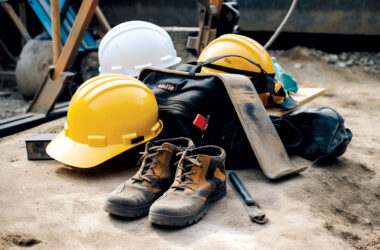
In Saskatchewan, all workers are protected by three fundamental rights under The Saskatchewan Employment Act that are crucial for maintaining safety on the job.
The right to know
If you are employed in Saskatchewan, you have the right to know about any safety hazards in your workplace. Hazards in construction and trades can range from operating heavy machinery to working at heights. Being informed about these risks is essential to protect yourself and your fellow workers.
You also have the right to receive the necessary training, information and supervision to do your job safely. Before you start a job or begin work on a new project, your employer should ensure you understand how to work safely. Safety information, including training and instructions, can be provided online, in writing or in person. It might come from a supervisor, a co-worker or an external expert, but your employer must cover the cost of all job-related training.
Do not be afraid to speak up if you believe a task is too dangerous. Your safety and the safety of those around you are paramount. You cannot be disciplined or fired for refusing unsafe work.
Clear communication is key. Your employer must give you safety information in a way that you can understand. If any safety instructions are unclear, it is your right to ask questions until you fully understand how to perform your tasks safely. If you are unsure how to do a task safely, do not hesitate to ask for clarification or additional training. This right ensures that you can speak up whenever necessary, especially when you are assigned a new task, tool or material.
The right to participate
As a worker in heavy construction, you have the right to participate in your workplace’s health and safety activities. Your insights and observations can help make your workplace safer for everyone. There are various ways to exercise your right to participate:
Report any safety concerns that could cause harm to you or your co-workers to your supervisor or manager.
Offer suggestions to your supervisor or occupational health committee on how to improve workplace safety.
Join your workplace’s occupational health committee (if one is required).
Volunteer as an occupational health and safety representative if the opportunity arises.
The right to refuse
Construction sites and other trade workplaces inherently have hazards, but when a situation presents an unusually dangerous risk, you have the right to refuse to perform the work. An unusual danger could be something like:
Operating a crane or heavy equipment that hasn’t been properly maintained.
Working at heights without the necessary fall protection.
Undertaking a task for which you have not received proper training or where you do not have the correct equipment to do it safely.
This right allows you to refuse work that you believe is unusually dangerous to yourself or others. It is a protection enshrined in The Saskatchewan Employment Act, meaning you cannot be fired or penalized for exercising it. The right to refuse should be used when the other two rights – knowing and participating – have not addressed a safety issue. It is a serious step, but it is there to protect you and your colleagues when other measures have failed.
Clear communication is key. Your employer must give you safety information in a way that you can understand. If any safety instructions are unclear, it is your right to ask questions until you fully understand how to perform your tasks safely.
Do not be afraid to speak up if you believe a task is too dangerous. Your safety and the safety of those around you are paramount. You cannot be disciplined or fired for refusing unsafe work. If you decide to refuse unsafe work, follow these steps:
Stop the task and inform your supervisor about what you believe to be the unusually dangerous condition.
If you and your supervisor cannot resolve the issue, consult with your workplace’s occupational health committee.
If the issue remains unresolved, contact the Ministry of Labour Relations and Workplace Safety’s Occupational Health and Safety Division at 1-800-567-7233. An occupational health officer will review the situation and provide a written decision.
If you disagree with the occupational health officer’s decision, you have the right to appeal.
Each year, more than 21,000 workers in Saskatchewan are injured on the job. WorkSafe Saskatchewan is focused on ensuring the health, safety and well-being of all workers in the province, with the goal of working together to make Saskatchewan the safest place to work in Canada.
The Government of Saskatchewan has proclaimed Sept. 23 to 27 as Saskatchewan Construction Week. The week has been proclaimed to celebrate the extensive economic and social contributions made by the province’s dynamic construction industry.
“Saskatchewan’s construction industry is not only a major contributor to jobs in the province, but [it] also plays a crucial role in building the infrastructure necessary for a growing economy,” Trade and Export Development Minister Jeremy Harrison said. “As we work toward achieving and surpassing our Growth Plan goals of growing the provincial population to 1.4 million people and creating 100,000 new jobs, the construction industry will further excel this growth by building the offices, facilities, housing and more, which contribute to our strong and vibrant communities.”
The construction industry in Saskatchewan is a key driver of economic growth. Last year, real GDP for the sector grew by 13.6 per cent, with the sector’s real GDP reaching $6 billion. Currently, there are over 43,000 (seasonally adjusted) people employed in the province’s construction industry, making it one of the most important economic sectors in Saskatchewan in terms of job creation.
“During Saskatchewan Construction Week, we celebrate the dedicated professionals who form the backbone of our province’s economy,” Construction Associations of Saskatchewan co-CEO Shannon Friesen said. “These skilled workers, often behind the scenes, build the infrastructure that drives our communities forward.”
“Their contributions are vital, not just in constructing roads, schools and hospitals, but in shaping the very foundation of our future,” Construction Associations of Saskatchewan co-CEO Kevin Dureau said. “This week, we honour their commitment, resilience and the essential role they play in ensuring Saskatchewan remains strong and prosperous.”
The growth the construction industry has experienced recently has had an overall positive impact on Saskatchewan’s economy, with Statistics Canada’s latest GDP numbers indicating that the province’s 2023 real GDP reached an all-time high of $77.9 billion, increasing by $1.2 billion, or 1.6 per cent. This places Saskatchewan second in the nation for real GDP growth, and above the national average of 1.2 per cent.
Private capital investment is projected to reach $14.2 billion in 2024, an increase of 14.4 per cent over 2023. This is the highest anticipated percentage increase in Canada.
The Government of Saskatchewan also recently unveiled its new Securing the Next Decade of Growth – Saskatchewan’s Investment Attraction Strategy. This strategy, combined with Saskatchewan’s trade and investment website, InvestSK.ca, contains helpful information for potential investors and solidifies the province as the best place to do business in Canada.
Survey tool proves effective in predicting injuries and improving safety performance
maxxasatori/123rf
The Saskatchewan Construction Safety Association (SCSA) and EHS Analytics are proud to share the success of an innovative Safety Culture Survey tool, designed to predict injuries and enhance Occupational Health and Safety (OHS) performance. With the participation of almost 800 construction companies, making it the largest survey of its kind administered at an industry scale, the tool has proven to be an effective leading indicator for safety performance.
The survey tool uses the Institute for Work & Health Organizational Performance Metric (IWH-OPM), an eight-item questionnaire developed by IWH to assess values and beliefs around safety within workplace culture. The large-scale participation of the Saskatchewan construction industry provided data collected over three years, through six rounds of the survey. EHS analyzed the data to gain insights and further support the industry’s safety efforts.
Key findings include:
A strong correlation between high survey scores and lower future lost time injury rates.
Identification of areas where safety improvements can significantly reduce injury risks.
Enhanced ability for firms to benchmark their safety performance against industry standards and peers. Confirmation of the effectiveness of COR® certification.
Shortcomings in Canadian OHS performance are not highly related to a lack of tools or equipment.
“Our analysis has proven that the Safety Culture Survey is a true leading indicator of safety performance,” said Mohammad Khalkhali, data science team lead at EHS Analytics. “Finding easy-to-measure, effective leading indicators in safety is incredibly challenging, and the Safety Culture Survey provides companies with the ability to foresee and mitigate potential hazards before they result in incidents. Leading indicators are often considered the ‘Holy Grail’ in safety for predicting risk, and this tool achieves that goal.”
Every SCSA member company is invited to participate in the survey and view their results in a custom analytics dashboard. Companies can see how their score compares to peers, find follow-up questions to make proactive adjustments to their safety program and monitor their performance over time.
“Having insights into one’s own company in a way that can predict incidents is a game changer,” said SCSA president Collin Pullar. “We encourage all of our members to utilize this simple, but insightful culture survey to better understand where they are doing well, but also better recognize and address weakness in their culture to prevent potential injuries. This is a powerful Canadian-built tool, and we would love to see as many companies as possible use it and learn from it to prevent accidents within their workforces.”
“At the Institute for Work & Health, our mission is to conduct and mobilize research that supports policy-makers, employers and workers in creating healthy, safe and inclusive work environments,” said Peter Smith, president of IWH. “To that end, it is heartening to see health and safety organizations such as the SCSA use the IWH-OPM to both understand organizational health and safety practices over time, and to better understand the relationships between these practices and safety outcomes in Saskatchewan.”
The survey is delivered twice a year to SCSA members, each fall and spring.
Saskatchewan, Alberta and Manitoba continue collaboration on the joint memorandum of understanding
ronniechua/123rf
Ministers for highways and transportation in Saskatchewan, Alberta and Manitoba in Saskatoon to continue work to strengthen economic corridors that support Canada’s supply chains. It has been a year since a memorandum of understanding (MOU) was signed by the three provinces.
The MOU commits the partners to jointly working to improve the shared transportation system, to ensure the strength and competitiveness of the Prairie provinces.
Over the past year, the focus has been on regulatory harmonization, advocacy and regional planning. These priorities will continue with additional work on improving multi-modal transport infrastructure for the efficient movement of exports and imports.
The provinces are working on co-ordinated improvements that benefit the entire region, and they link producers more efficiently to markets across the globe. They are creating a prairie regional economic corridor to guide strategic investments in transportation.
The MOU commits the partners to jointly working to improve the shared transportation system, to ensure the strength and competitiveness of the Prairie provinces.
“By keeping the momentum of the Prairies’ MOU going, we can continue to improve western economic corridors that will enable the efficient movement of Prairie exports and imports to and from markets around the world,” Alberta Minister of Transportation and Economic Corridors Devin Dreeshen said.
“For Saskatchewan people, improving transportation efficiency with initiatives like these supports our strong and growing export-based economy,” Saskatchewan Highways Minister Lori Carr said. “A strategic approach helps the province invest in key services and helps build and protect our quality of life.”
Saskatchewan has already achieved its Growth Plan pledge to increase exports by 50 per cent. The province continues to expand export infrastructure to increase the mobility of Saskatchewan’s products to international markets over the next decade. Exports support a vibrant business community and ensure an improving quality of life for Saskatchewan people.
Seventy per cent of Saskatchewan’s economy is dependent on exports. In 2023, Saskatchewan exported $49.3 billion in goods. Saskatchewan goods reached 163 countries, with 32 of those countries receiving over $100 million in provincial exports.
Canada’s construction industry unveils critical report on climate resilience
smshoot/123rf
On Sept. 9, 2024, the Canadian Construction Association (CCA) released a report emphasizing the urgent need for increased investment and stronger policies to protect Canadians and their critical infrastructure from the increasing threats of climate change.
The report, titled Climate resilience in construction: Building for a sustainable future, stresses the importance of building resilient infrastructure that can withstand extreme weather events, protect lives and support community well-being. Recent incidents, like the flooding in Toronto and wildfires in Jasper, show these threats are real and disrupt the everyday lives of Canadians. Calgary’s broken water main signals even deeper problems with Canada’s aging infrastructure.
“Canada’s infrastructure is the backbone of our communities, but it’s under threats from climate-related disasters,” said Rodrigue Gilbert, CCA president. “With much of our infrastructure aging or in poor condition, we must act now to future-proof our infrastructure and meet our environmental goals.”
The construction industry is already working to build sustainably, but it cannot do it alone. Significant investment, strategic planning and collaboration are needed to build infrastructure that is both resilient and sustainable.
“The construction industry is making progress in reducing our environmental impact,” Gilbert said. “But to reach our net-zero objectives and protect our infrastructure, we need support from both stakeholders and all levels of government.”
Key points from the report include:
Urgent need for investment: To protect infrastructure assets and address the rising strain from increasing population and housing developments, substantial investment is essential.
Industry progress and challenges: The construction sector is actively working to reduce its environmental impact, but long-term sustainability requires broader support and collaboration. Incentives to pilot new processes and technologies are also needed.
Policy environment: We need effective policies to ensure infrastructure is built to last. This includes addressing issues like labour shortages, procurement, alternative delivery models and supply chain challenges.
“Too often, infrastructure investment decisions are based on what’s politically expedient, not what’s genuinely needed in a given region of Canada,” said Gilbert. “We need to focus on projects that are ‘shovel-worthy,’ not just ‘shovel-ready’ to ensure Canadians have the infrastructure they depend on.”
Highway Hotline introduces new highway condition terminology
fierylily/123rf
Saskatchewan’s Highway Hotline has updated the terminology it uses to describe winter driving conditions.
The new terminology offers more clear and concise messaging that will help drivers make decisions about winter travel. The updated language is also more consistent with neighbouring provinces, which will make using the Hotline easier for people travelling across Western Canada.
“The construction industry is making progress in reducing our environmental impact. But to reach our net-zero objectives and protect our infrastructure, we need support from both stakeholders and all levels of government.”
– Rodrigue Gilbert, CCA president
“The Highway Hotline is used millions of times throughout the year to help travellers plan ahead,” Highways Minister Lori Carr said. “These changes will help drivers make an informed decision while having better consistency with our neighbouring provinces and national standards.”
The new primary conditions include:
Bare: Road appears black, meaning all wheels of a passenger vehicle are on a bare surface.
Partly Covered: Road appears yellow, meaning two wheels of a passenger vehicle are on a snow or ice-covered surface.
Covered: Road appears pink, meaning all wheels of the vehicle are on snow or ice.
Travel Not Recommended: Road appears blue, meaning that visibility is less than 250 metres and could become impassable.
Closed: Road appears red, meaning the highway is impassable.
The colour white was removed because it did not show up well on the digital maps. The maps will continue to indicate poor visibility using a dotted line.
During the winter driving season, road conditions are updated a minimum of four times daily or whenever there are known changes that affect drivers.
The Highway Hotline has existed for more than 50 years. It provides information on highway conditions, road closures, construction zones, ferries and border crossings. As of February 2024, it now allows users to track the progress of plows involved in snow removal and ice treatment. This real-time information helps drivers make informed decisions to protect their safety.
Company Charged, Fined $100,000 for Serious Worker Injury
Adler Firestopping Ltd. was charged for contravening subsection 12-5 (2) (a) of the regulations (being an employer failed to ensure that every scaffold is designed, constructed, erected, used and maintained so as to perform safely any task that the scaffold is required to perform, resulting in the serious injury of a worker).
Three other charges were withdrawn.
As a result of this charge, the court imposed a fine of $71,428.57, with a surcharge of $28,571.43, for a total amount of $100,000.
The charge stemmed from a worksite incident that took place on Nov. 28, 2022, on the Thunderchild First Nation in Saskatchewan. A worker was seriously injured as a result of a fall from a work platform.
Integrating comprehensive safety training into construction onboarding

musman007/123RF
Mike was eager to start his new job at a construction site, ready to dive into the work that awaited him. However, his first day was far from what he expected. Instead of receiving proper safety training, he was handed a generic handbook and told to get to work. Unfamiliar with the specific hazards of the site and the protocols to follow, Mike felt lost and anxious.
Within his first week, Mike witnessed a serious accident when a colleague, also poorly trained, mishandled equipment and got injured. This incident highlighted the severe consequences of inadequate safety training. Not only did the injured worker face significant medical issues, but the company also had to deal with substantial financial repercussions, including medical costs, legal fees and potential fines. Moreover, the morale of the entire team plummeted, and the company’s reputation was tarnished.
This story underscores the critical importance of comprehensive safety training during the onboarding process in the construction industry. Effective onboarding is not just about integrating new hires into the workforce; it’s about ensuring their safety and minimizing legal liabilities. Here’s how construction firms can integrate comprehensive safety training into their onboarding programs.
The critical role of safety training in construction onboarding: Best practices for delivering safety training
1. Site-specific training
Each construction site has unique hazards. Providing site-specific training ensures that new employees understand the particular risks and safety measures relevant to their work environment.
Hazard identification: Conduct a thorough review of the site to identify potential hazards.
Custom training programs: Develop training sessions tailored to address these specific risks.
Interactive learning: Use visual aids, site tours and hands-on demonstrations to enhance understanding. Ensure training materials are digitally available on demand for employees to review.
2. Reinforcing safety protocols
Reinforcement of safety protocols is crucial for maintaining a culture of safety.
Regular toolbox talks: Hold daily/weekly safety meetings to review protocols and address any new risks.
Accessible safety information: Ensure that safety guidelines and procedures are readily available to all employees. Use digital platforms to distribute information in a timely and accurate manner.
Role-specific training: Provide additional training tailored to specific job roles and responsibilities.
3. Fostering a culture of safety
Building a safety-first mindset from Day 1 encourages employees to prioritize safety in all their tasks.
Leadership commitment: Ensure that company leaders actively promote and model safety practices.
Employee involvement: Encourage workers to take ownership of their safety and that of their colleagues.
Continuous improvement: Regularly review and update safety protocols based on feedback and incident reports.
Newly hired workers face a heightened risk of injuries and fatal accidents due to their unfamiliarity with the field or workplace. Approximately half of all reported workplace injuries involve construction workers who have been employed for less than a year. Source: pinnacol.com
Enhancing learning and retention with interactive methods
1. Digital and virtual reality simulations
Virtual reality (VR) simulations provide an immersive learning experience that can significantly improve safety training outcomes.
Realistic scenarios: VR can recreate site-specific hazards in a controlled environment, allowing employees to practice responses without risk.
Engaging experience: Interactive VR training can be more engaging than traditional methods, improving retention.
Performance tracking: VR systems can track performance and provide feedback, helping to identify areas needing improvement.
2. Hands-on training
Practical, hands-on training sessions are essential for ensuring employees can apply safety protocols in real-world situations.
Equipment operation: Provide hands-on training with the actual equipment employees will use.
Emergency drills: Conduct regular emergency response drills to ensure preparedness.
Safety demonstrations: Use live demonstrations to show proper techniques and procedures.
3. Digital health and safety technology
Digital health and safety apps within the construction sector provide a multifaceted approach to enhancing workplace safety.
They offer features such as real-time hazard reporting, access to safety guidelines and regulations, interactive training modules, incident documentation and communication tools for reporting emergencies or seeking assistance.
These apps facilitate proactive risk management, empower workers to stay informed about safety protocols and enable efficient incident response, ultimately fostering a safer work environment for all.
musman007/123RF
Implementing a comprehensive safety training program
Safety should be the top priority for construction companies, as the industry accounts for 20 per cent of workplace fatalities annually in Canada. By implementing a comprehensive safety training program, organizations can significantly reduce accidents, injuries and associated costs.
Here’s how:
1. Assess and plan
Identifying site-specific hazards is crucial for effective training. Develop a detailed plan covering general safety topics as well as job-role specific modules tailored to your workforce.
2. Deliver engaging training
Use qualified trainers with extensive knowledge of safety regulations and industry best practices.
Invest in high-quality training materials like manuals, videos and presentations for better knowledge retention.
Make training interactive with hands-on simulations, VR modules and digital technology, which can increase knowledge retention by up to 75 per cent.
3. Monitor and improve
Regularly evaluate the program’s effectiveness through observations and worker feedback.
Track key performance indicators like incident rates, lost time injuries and near-misses to measure the training’s impact.
Update the program regularly based on new regulations, feedback and incident reports to maintain its relevance and effectiveness.
By integrating site-specific training, reinforcing safety protocols and fostering a culture of safety, construction firms can significantly reduce the risk of accidents and legal liabilities.
By implementing a comprehensive safety training program, construction companies can cultivate a strong safety culture. Studies show that organizations with robust safety practices experience up to 40 per cent fewer injuries and illnesses, leading to significant cost savings and improved productivity.
Conclusion
Effective safety training is a critical component of the onboarding process in the construction industry. By integrating site-specific training, reinforcing safety protocols and fostering a culture of safety, construction firms can significantly reduce the risk of accidents and legal liabilities. Interactive training methods, such as VR simulations, can further enhance learning and retention, ensuring that new hires are well-prepared to work safely.
AMC Services specializes in helping construction firms develop comprehensive safety training programs that protect their employees and their bottom line. Invest in robust safety training today and build a safer, more efficient workplace.
Strathcona Resources Ltd. was fined for contravening clause 3-12 (a) (ii) of the Act. As a result, the court imposed a fine of $60,714.29 with a surcharge of $24,285.71 for a total amount of $85,000. One other charge was withdrawn.
Steel View Energy & Industrial Services Ltd. was fined for contravening clause 3-1 (a) of the regulations (being an employer failed to comply with the duties of an employer at a place of employment, including the provision and maintenance of a plant, systems of work and working environments that ensure, as far as is reasonably practicable, the health, safety and welfare at work of the employer’s workers, resulting in the serious injury of a worker).
The court imposed a fine of $39,285.71 with a surcharge of $15,714.29, for a total amount of $55,000.
The charges for both companies stemmed from a single incident that occurred on Dec. 5, 2022, near Major, Sask., when a worker was seriously injured when they were struck by an ejection clamp.
The company was fined for contravening clause 3-1 (a) of the regulations (being an employer at a place of employment failed to provide and maintain of a plant, systems of work and working environments that ensure, as far as is reasonably practicable, the health and safety and welfare at work of the employer’s workers, resulting in a serious injury to a worker). As a result, the court imposed a fine of $89,285.71 with a surcharge of $35,714.29, for a total amount of $125,000. Four other charges were withdrawn.
The charges stemmed from an incident that occurred on Feb. 20, 2023, near Brownlee, Sask. when a worker was seriously injured when they fell from an elevated platform.
Adler Firestopping Ltd. was charged for contravening subsection 12-5 (2) (a) of the regulations (being an employer failed to ensure that every scaffold is designed, constructed, erected, used and maintained so as to perform safely any task that the scaffold is required to perform, resulting in the serious injury of a worker).
Three other charges were withdrawn.
As a result of this charge, the court imposed a fine of $71,428.57, with a surcharge of $28,571.43, for a total amount of $100,000.
The charge stemmed from a worksite incident that took place on Nov. 28, 2022, on the Thunderchild First Nation in Saskatchewan. A worker was seriously injured as a result of a fall from a work platform.
The Saskatchewan Construction Safety Association (SCSA) and EHS Analytics are proud to share the success of an innovative Safety Culture Survey tool, designed to predict injuries and enhance Occupational Health and Safety (OHS) performance. With the participation of almost 800 construction companies, making it the largest survey of its kind administered at an industry scale, the tool has proven to be an effective leading indicator for safety performance.
The survey tool uses the Institute for Work & Health Organizational Performance Metric (IWH-OPM), an eight-item questionnaire developed by IWH to assess values and beliefs around safety within workplace culture. The large-scale participation of the Saskatchewan construction industry provided data collected over three years, through six rounds of the survey. EHS analyzed the data to gain insights and further support the industry’s safety efforts.
Key findings include:
A strong correlation between high survey scores and lower future lost time injury rates.
Identification of areas where safety improvements can significantly reduce injury risks.
Enhanced ability for firms to benchmark their safety performance against industry standards and peers.
Confirmation of the effectiveness of COR® certification.
Shortcomings in Canadian OHS performance are not highly related to a lack of tools or equipment.
“Our analysis has proven that the Safety Culture Survey is a true leading indicator of safety performance,” said Mohammad Khalkhali, data science team lead at EHS Analytics. “Finding easy-to-measure, effective leading indicators in safety is incredibly challenging, and the Safety Culture Survey provides companies with the ability to foresee and mitigate potential hazards before they result in incidents. Leading indicators are often considered the ‘Holy Grail’ in safety for predicting risk, and this tool achieves that goal.”
Every SCSA member company is invited to participate in the survey and view their results in a custom analytics dashboard. Companies can see how their score compares to peers, find follow-up questions to make proactive adjustments to their safety program and monitor their performance over time.
“Having insights into one’s own company in a way that can predict incidents is a game changer,” said SCSA president Collin Pullar. “We encourage all of our members to utilize this simple, but insightful culture survey to better understand where they are doing well, but also better recognize and address weakness in their culture to prevent potential injuries. This is a powerful Canadian-built tool, and we would love to see as many companies as possible use it and learn from it to prevent accidents within their workforces.”
“At the Institute for Work & Health, our mission is to conduct and mobilize research that supports policy-makers, employers and workers in creating healthy, safe and inclusive work environments,” said Peter Smith, president of IWH. “To that end, it is heartening to see health and safety organizations such as the SCSA use the IWH-OPM to both understand organizational health and safety practices over time, and to better understand the relationships between these practices and safety outcomes in Saskatchewan.”
The survey is delivered twice a year to SCSA members, each fall and spring. The next round begins on Sept. 23, 2024.
For more information, including an infographic of industry results and white paper, visit scsaonline.ca/resources/safety-culture-survey.
The Saskatchewan Common Ground Alliance (SCGA) often hears, “What can I share at a safety meeting?” or “What is a good topic to discuss during our tailgate meetings?”
The SCGA has many made-in-Saskatchewan videos prepared for anyone’s use, why not check out the SCGA YouTube channel and choose a playlist! There is great content for any safety related meetings.
The SCGA and its 109 members, which include the province’s pipeline and utility companies, continue to advocate for Click Before You Dig and Dig Safe Best Practices.
The SCGA wants to be sure those frontline workers, safety managers, emergency personnel and the public are aware of the importance of working safely around underground and overhead infrastructure.
On July 10, 2024, the Village of Laird pleaded guilty in Rosthern provincial court to two violations of The Occupational Health and Safety Regulations, 2020.

The village was fined for contravening subsection 3-6(1) of the regulations (being an employer, failure to ensure that all work at a place of employment is sufficiently and competently supervised, resulting in the serious injury of a worker), as well as contravening clause 11-4(b) of the regulations (being an employer, failure to ensure that if a defect or unsafe condition that may create a hazard to a worker is identified in the powered mobile equipment, steps are taken immediately to protect the health and safety of any worker who may be at risk until the defect is repaired or the unsafe condition is corrected and as soon as is reasonably practicable, the defect is repaired or the unsafe condition is corrected, resulting in the serious injury of a worker).
The court imposed a fine of $53,571.43 with a surcharge of $21,428.57 for each violation, for a total amount of $150,000.
Two other charges were withdrawn.
The charges stemmed from an incident that occurred on July 19, 2022, in Laird, Sask., when a worker was seriously injured after they were ejected from the seat of a mower and became trapped beneath it